Department of Surgical Oncology, Institute of Medical Sciences, Banaras Hindu University, Varanasi, 221005, India.
World J Surg Oncol. 2024 Jan 11;22(1):18. doi: 10.1186/s12957-023-03284-3.
Head and neck cancer (HNC) is one of the most frequent malignancies in Asian males with a poor prognosis. Apart from well-known prognostic indicators, markers of tumor hypoxia can help us predict response to treatment and survival.
A review of the literature on the present evidence and potential clinical importance of tumor hypoxia in head and neck cancer was carried out. The data obtained from the literature search is presented as a narrative review.
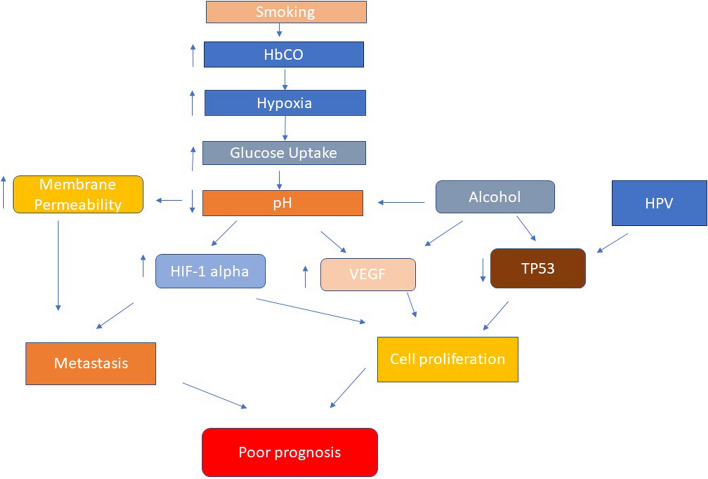
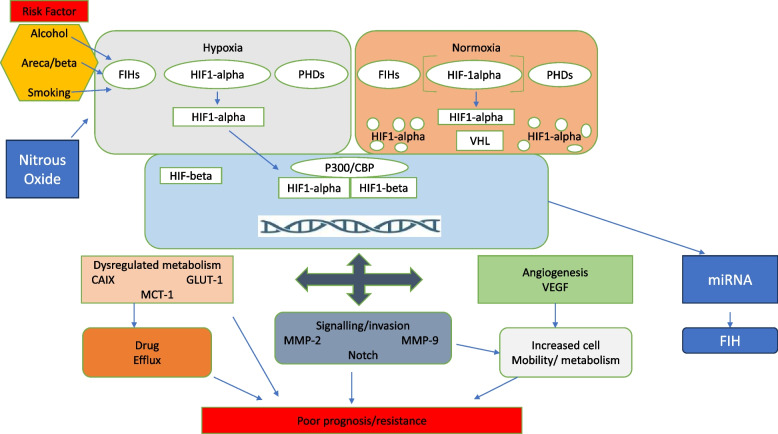
The literature shows possible associations between prognosis and low tumor oxygenation. Intermediate hypoxia biomarkers like HIF-1, GLUT-1, miRNA, and lactate, can help in predicting the response to therapy and survival as their altered expression is related to prognosis.
Hypoxia is common in HNC and can be detected by use of biomarkers. The tumors that show expression of hypoxia biomarkers have poor prognosis except for patients with human papilloma virus-associated or VHL-associated cancers. Therapeutic targeting of hypoxia is emerging; however, it is still in its nascent stage, with increasing clinical trials hypoxia is set to emerge as an attractive therapeutic target in HNC.
头颈部癌症(HNC)是亚洲男性中最常见的恶性肿瘤之一,预后较差。除了众所周知的预后指标外,肿瘤缺氧标志物还可以帮助我们预测治疗反应和生存。
对目前头颈部癌症肿瘤缺氧的证据和潜在临床重要性进行了文献复习。从文献检索中获得的数据以叙述性综述的形式呈现。
文献表明预后与低肿瘤氧合之间存在可能的关联。中间缺氧生物标志物,如 HIF-1、GLUT-1、miRNA 和乳酸,可以帮助预测治疗反应和生存,因为它们的异常表达与预后相关。
缺氧在 HNC 中很常见,可以通过生物标志物检测到。除了人乳头瘤病毒相关或 VHL 相关癌症患者外,表达缺氧生物标志物的肿瘤预后较差。缺氧的治疗靶向正在出现;然而,它仍处于起步阶段,随着临床试验的增加,缺氧有望成为 HNC 治疗的一个有吸引力的靶点。