Kähn Charlotte, Meyerhoff Nina, Meller Sebastian, Nessler Jasmin N, Volk Holger A, Charalambous Marios
Department of Small Animal Medicine and Surgery, University of Veterinary Medicine Hannover, 30559 Hannover, Germany.
Animals (Basel). 2023 Dec 27;14(1):103. doi: 10.3390/ani14010103.
Dogs with idiopathic epilepsy experience not only the preictal and ictal seizure phases but also the postictal phase. To date, research has primarily focused on the preictal and ictal semiology and therapeutic control of ictal events. Research into the postictal phase's pathophysiology, as a therapeutic target and how it impacts the quality of life, is sparse across different species. Interestingly, even if anecdotally, owners report the postictal period being an impactful negative factor on their quality of life as well as their dog's quality of life.
HYPOTHESIS/OBJECTIVES: We aimed to assess the semiology and the impact of postictal signs on the quality of life of owners and dogs.
This observational study was carried out using surveys of owners of dogs with seizure disorders.
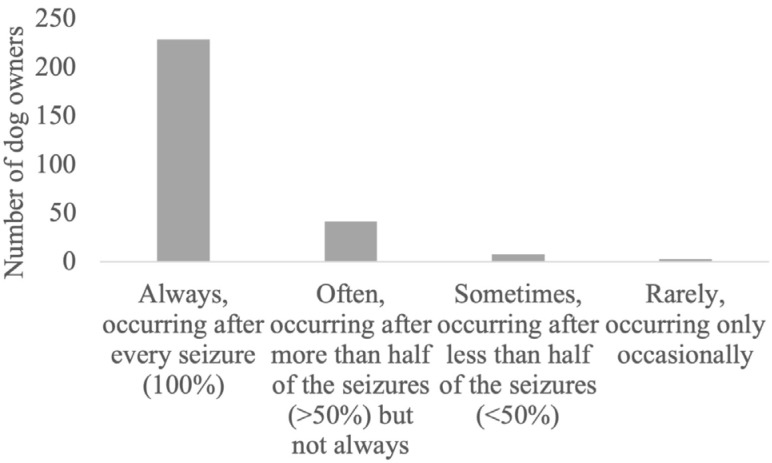
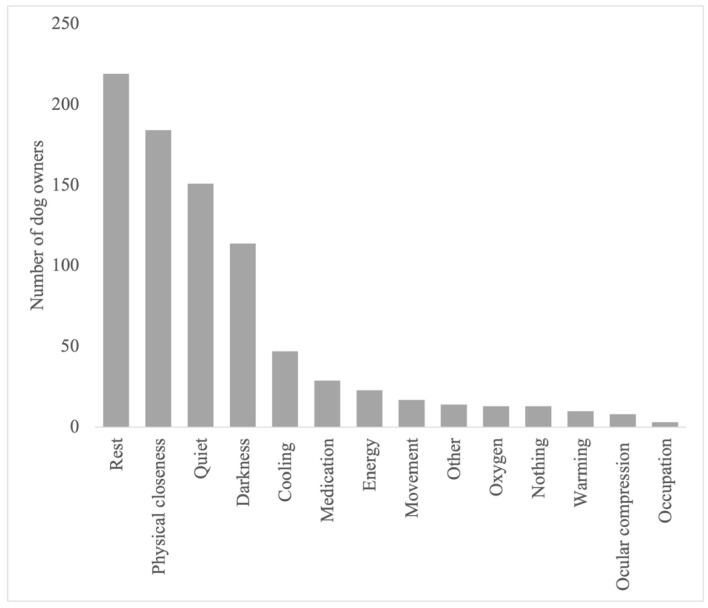
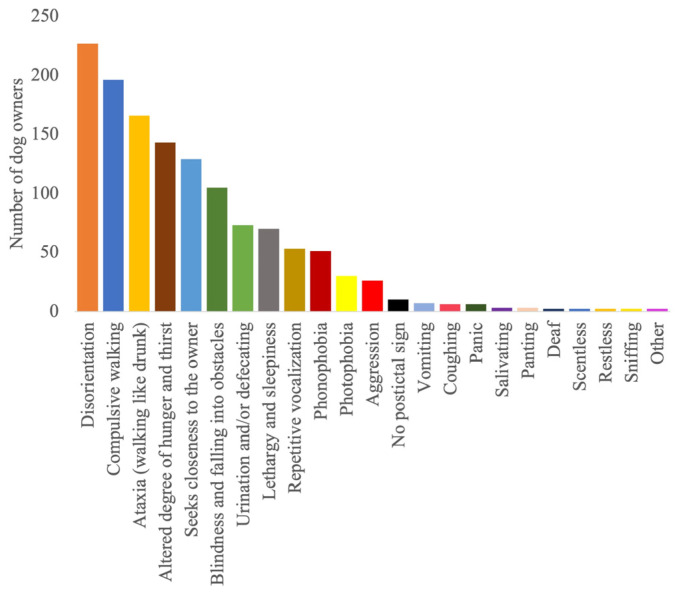
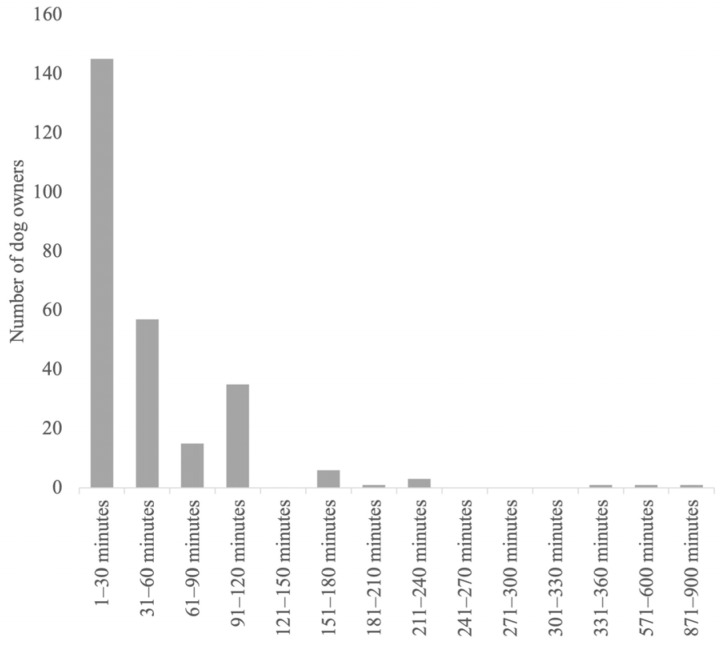
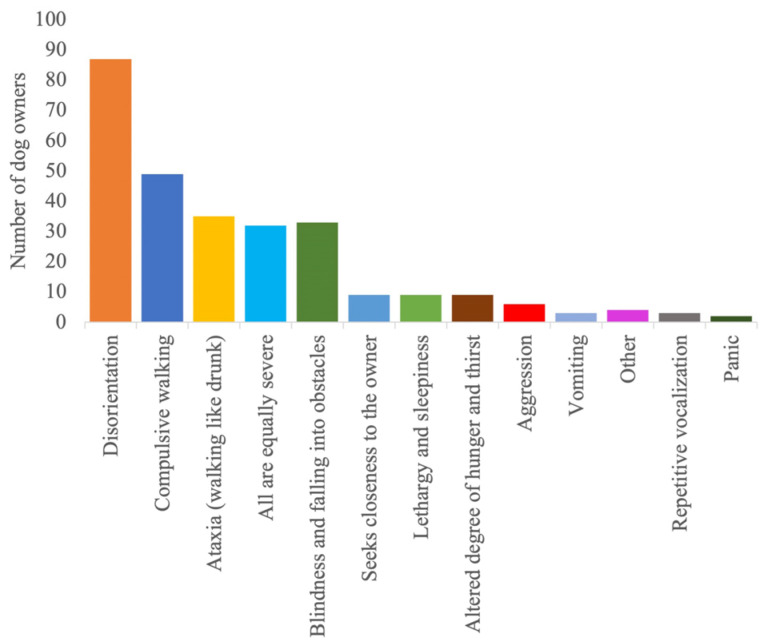
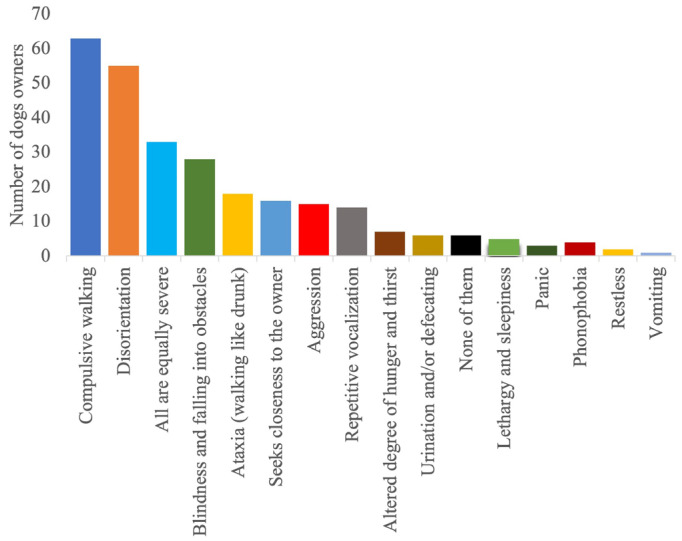
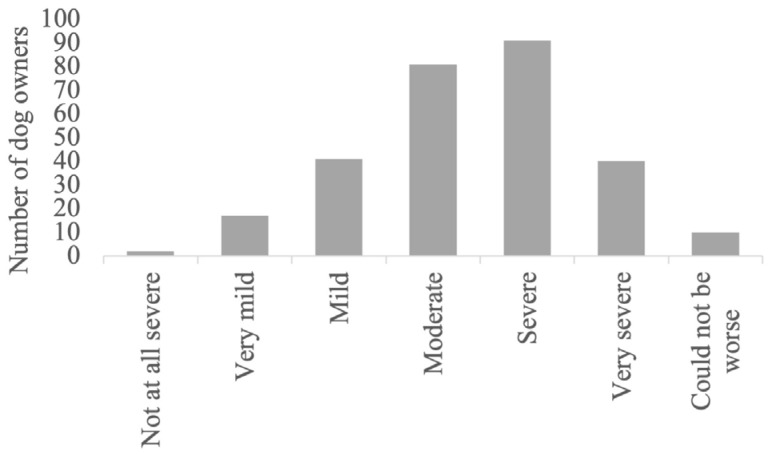
The questionnaire was filled out by 432 dog owners, 292 of whom provided complete responses that could be analysed. More than nine out of ten owners (97%) reported the presence of various postictal clinical signs. The dog's and the owner's quality of life was mainly affected by specific postictal signs, i.e., disorientation (dog: 31%; owner: 20%), compulsive walking (dog: 17%; owner: 22%), ataxia (dog: 12%; owner: 6%), and blindness (dog: 17%; owner: 10%). Nearly 61% of the owners felt that the severity of postictal signs was moderate or severe. Rescue antiseizure medications did not have an effect on controlling the postictal signs based on 71% of the responders. In contrast, 77% of the respondents reported that other measures such as rest, physical closeness, and a quiet and dark environment had a positive impact on the postictal phase.
Overall, this survey shows that specific postictal signs are common and have a notable impact on the perceived quality of life of both dogs and their owners. According to the respondents, antiseizure medication might have no influence on the postictal phase in most cases, in contrast to other nonpharmacological measures. Further research on the management of the postictal phase is vital for improving the quality of life of dogs with seizure disorders and their owners.
患有特发性癫痫的犬不仅会经历发作前和发作期,还会经历发作后期。迄今为止,研究主要集中在发作前和发作期的症状学以及发作期事件的治疗控制上。对于发作后期的病理生理学、作为治疗靶点以及它如何影响生活质量的研究,在不同物种中都很稀少。有趣的是,即使是 anecdotal,主人也报告说发作后期对他们自己以及他们狗狗的生活质量都是一个有重大影响的负面因素。
假设/目标:我们旨在评估发作后期的症状学以及发作后体征对主人和狗狗生活质量的影响。
这项观察性研究通过对患有癫痫症的犬的主人进行调查来开展。
432 位犬主人填写了问卷,其中 292 位提供了可分析的完整回复。超过十分之九的主人(97%)报告说存在各种发作后的临床体征。狗狗和主人的生活质量主要受到特定的发作后体征的影响,即定向障碍(狗狗:31%;主人:20%)、强迫行走(狗狗:17%;主人:22%)、共济失调(狗狗:12%;主人:6%)和失明(狗狗:17%;主人:10%)。近 61%的主人认为发作后体征的严重程度为中度或重度。根据 71%的受访者,急救抗癫痫药物对控制发作后体征没有效果。相比之下,77%的受访者报告说其他措施,如休息、身体亲近以及安静黑暗的环境,对发作后期有积极影响。
总体而言,这项调查表明特定的发作后体征很常见,并且对狗狗及其主人的生活质量有显著影响。根据受访者的说法,在大多数情况下,抗癫痫药物可能对发作后期没有影响,这与其他非药物措施形成对比。对发作后期管理的进一步研究对于提高患有癫痫症的狗狗及其主人的生活质量至关重要。