Obesity and Cancer Research Group, Max Planck Institute for Metabolism Research, Gleueler Strasse 50, 50931 Cologne, Germany.
Policlinic for Endocrinology, Diabetes, and Preventive Medicine (PEDP), University Hospital Cologne, 50924 Cologne, Germany.
Cells. 2024 Jan 4;13(1):102. doi: 10.3390/cells13010102.
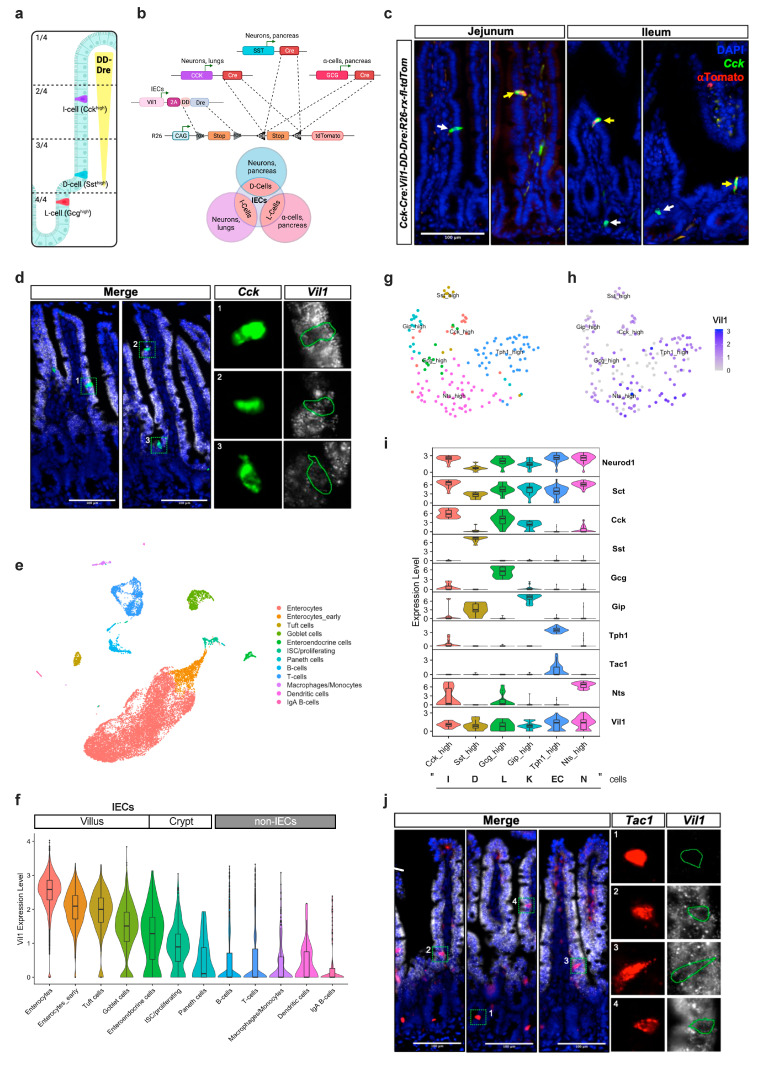
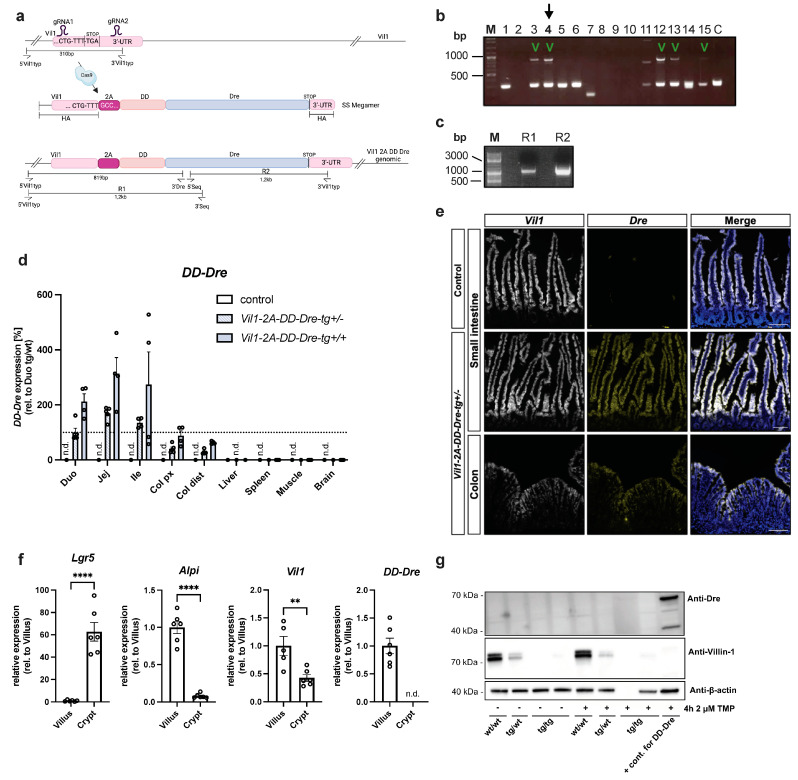
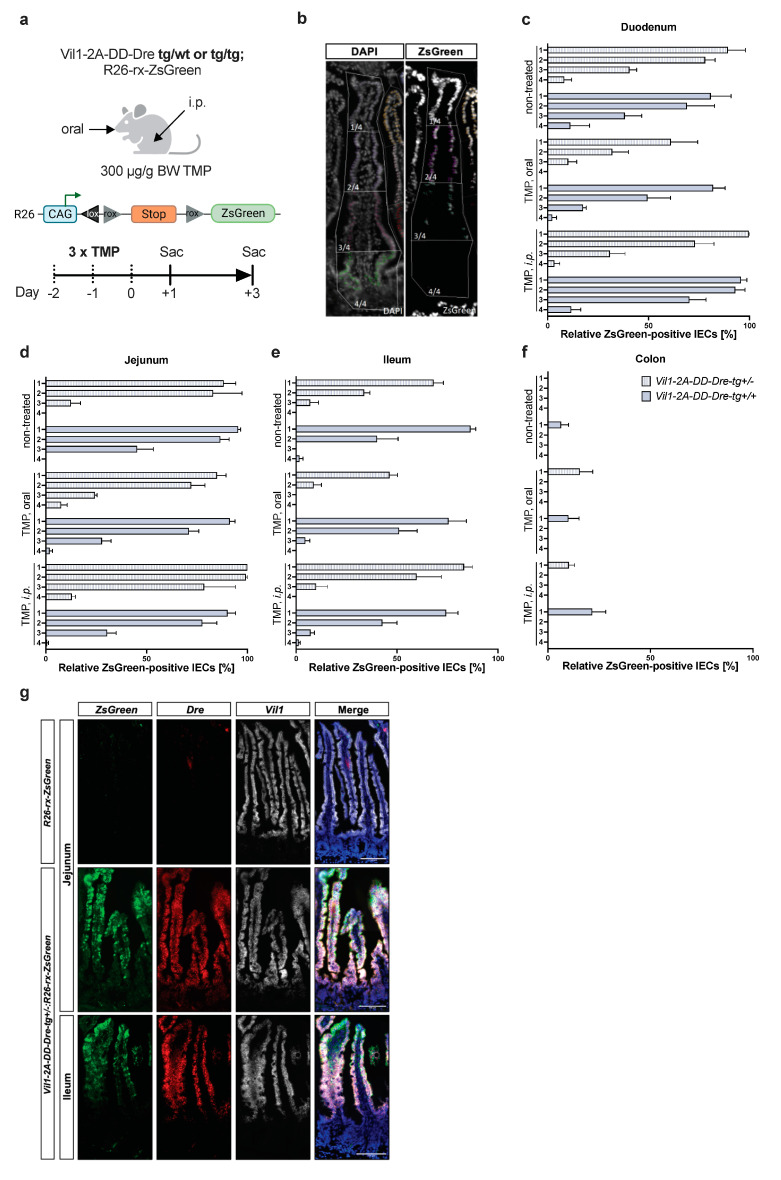
Enteroendocrine cells (EECs) constitute only a small proportion of -expressing intestinal epithelial cells (IECs) of the gastrointestinal tract; yet, in sum, they build the largest endocrine organ of the body, with each of them storing and releasing a distinct set of peptides for the control of feeding behavior, glucose metabolism, and gastrointestinal motility. Like all IEC types, EECs are continuously renewed from intestinal stem cells in the crypt base and terminally differentiate into mature subtypes while moving up the crypt-villus axis. Interestingly, EECs adjust their hormonal secretion according to their migration state as EECs receive altering differentiation signals along the crypt-villus axis and thus undergo functional readaptation. Cell-specific targeting of mature EEC subtypes by specific promoters is challenging because the expression of EEC-derived peptides and their precursors is not limited to EECs but are also found in other organs, such as the brain (e.g., and ) as well as in the pancreas (e.g., and ). Here, we describe an intersectional genetic approach that enables cell type-specific targeting of functionally distinct EEC subtypes by combining a newly generated Dre-recombinase expressing mouse line () with multiple existing Cre-recombinase mice and mouse strains with rox and loxP sites flanked stop cassettes for transgene expression. We found that transgene expression in triple-transgenic mice is highly specific in I but not D and L cells in the terminal villi of the small intestine. The targeting of EECs only in terminal villi is due to the integration of a defective 2A separating peptide that, combined with low EEC intrinsic expression, restricts our mouse line and the intersectional genetic approach described here only applicable for the investigation of mature EEC subpopulations.
肠内分泌细胞 (EECs) 仅构成胃肠道表达 - 的肠道上皮细胞 (IECs) 的一小部分;然而,它们总共构成了身体最大的内分泌器官,每个细胞都储存和释放一组独特的肽,用于控制进食行为、葡萄糖代谢和胃肠道蠕动。与所有 IEC 类型一样,EEC 从隐窝底部的肠道干细胞不断更新,并在向隐窝 - 绒毛轴移动的过程中终末分化为成熟亚型。有趣的是,EEC 会根据其迁移状态调整其激素分泌,因为 EEC 沿着隐窝 - 绒毛轴接收改变的分化信号,从而进行功能再适应。通过特定启动子对成熟 EEC 亚型进行细胞特异性靶向是具有挑战性的,因为 EEC 衍生肽及其前体的表达不仅限于 EECs,还存在于其他器官中,如大脑(例如,和 )以及胰腺(例如,和 )。在这里,我们描述了一种交叉遗传方法,该方法通过将新生成的 Dre 重组酶表达小鼠系 () 与多个现有的 Cre 重组酶小鼠和带有 Rox 和 loxP 位点的小鼠品系结合使用,能够实现功能不同的 EEC 亚型的细胞特异性靶向,这些小鼠品系带有用于转基因表达的停止盒。我们发现,在三重转基因小鼠中,转基因表达在小肠末端绒毛的 I 细胞而非 D 和 L 细胞中具有高度特异性。EEC 仅在末端绒毛中的靶向是由于整合了有缺陷的 2A 分离肽,该肽与低 EEC 固有 表达相结合,限制了我们的 小鼠系和本文描述的交叉遗传方法仅适用于成熟 EEC 亚群的研究。