Wu Tianyu, Fang Tao, Dong Yuanhang, Mao Jingxia, Wang Jia, Zhao Ming, Wu Ruijin
Department of Gynecology, Women's Hospital, School of Medicine, Zhejiang University, Hangzhou 310006, China.
J Clin Med. 2023 Dec 22;13(1):73. doi: 10.3390/jcm13010073.
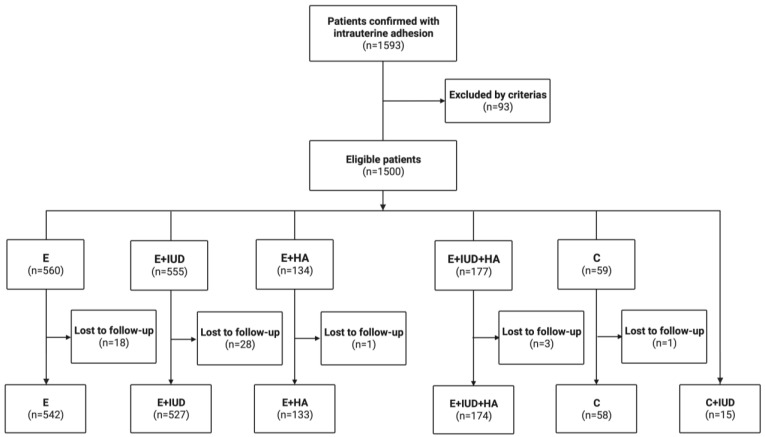
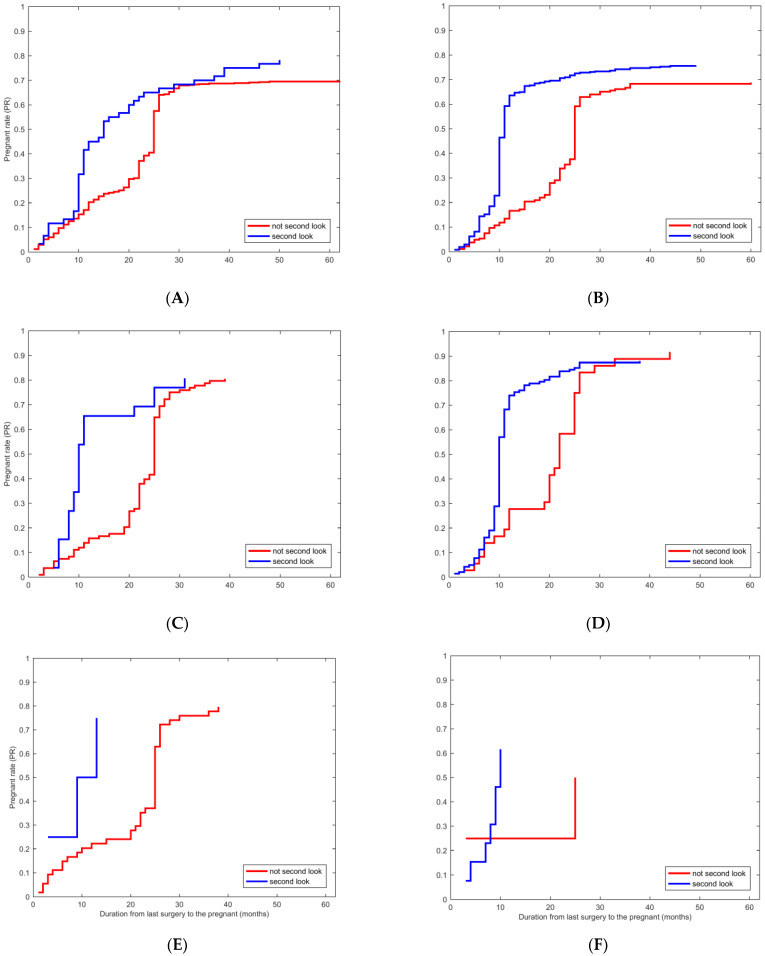
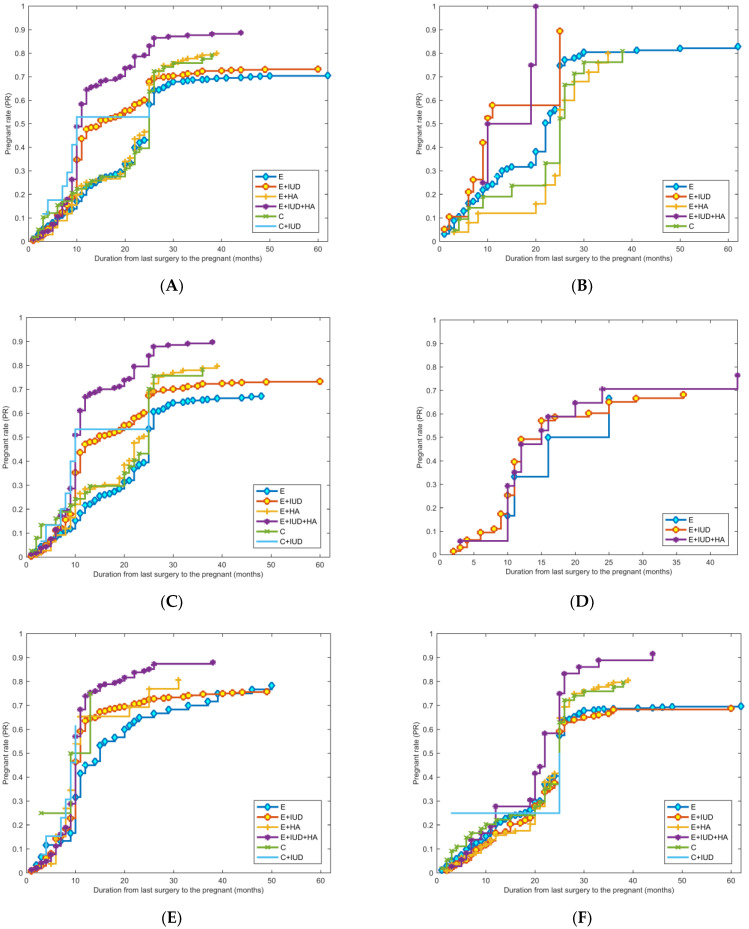
Intrauterine adhesion (IUA) is primarily caused by endometrial injury, and hysteroscopic adhesiolysis is presently the main treatment. However, postoperative recurrence and poor pregnancy outcomes remain intractable. In this study, we aim to assess the effects of different treatments on clinical symptoms and reproductive outcomes in IUA. This retrospective study was conducted in a tertiary university-affiliated women's hospital. The study included 1449 consecutive women who desired to have a baby and were diagnosed with IUA through hysteroscopy from January 2016 to December 2021. Patients with IUA underwent hysteroscopic electric resection (E) or cold scissors separation (C), as well as hormone therapy and one or both of the following secondary prevention measures: intrauterine devices (IUD) and hyaluronic acid gel (HA). The pregnancy rate (PR) was significantly higher in the E + IUD + HA (90.23% CI: 85.82, 94.64%) than in other groups ( = 0.000) groups. The rates of full-term birth ( = 0.000) and live birth ( = 0.000) were significantly higher in the E + IUD + HA (67.82% and 68.97%, respectively) and E + HA (62.41% and 63.91%, respectively) groups. Multivariate logistic regression analysis revealed a significantly higher PR in women who received second-look hysteroscopy (OR 1.571, 95% CI: 1.009-2.224, = 0.013) and E + IUD + HA (OR 4.772, 95% CI: 2.534-8.987, = 0.000). Combining hysteroscopic electric resection with IUDs and HA gel could prevent adhesion recurrence and improve postoperative pregnancy and live birth outcomes in IUA. Furthermore, postoperative second-look hysteroscopy may increase the PR and shorten the waiting period.
宫腔粘连(IUA)主要由子宫内膜损伤引起,宫腔镜粘连松解术是目前的主要治疗方法。然而,术后复发和不良妊娠结局仍然难以解决。在本研究中,我们旨在评估不同治疗方法对IUA临床症状和生殖结局的影响。这项回顾性研究在一家三级大学附属医院的妇产科进行。该研究纳入了2016年1月至2021年12月期间连续1449例希望生育且经宫腔镜诊断为IUA的女性。IUA患者接受了宫腔镜电切术(E)或冷剪刀分离术(C),以及激素治疗和以下一种或两种二级预防措施:宫内节育器(IUD)和透明质酸凝胶(HA)。E + IUD + HA组的妊娠率(PR)(90.23%,CI:85.82,94.64%)显著高于其他组(P = 0.000)。E + IUD + HA组(分别为67.82%和68.97%)和E + HA组(分别为62.41%和63.91%)的足月分娩率(P = 0.000)和活产率(P = 0.000)显著更高。多因素逻辑回归分析显示,接受二次宫腔镜检查的女性PR显著更高(OR 1.571,95% CI:1.009 - 2.224,P = 0.013),E + IUD + HA组(OR 4.772,95% CI:2.534 - 8.987,P = 0.000)。宫腔镜电切术联合IUD和HA凝胶可预防IUA粘连复发,改善术后妊娠和活产结局。此外,术后二次宫腔镜检查可能会提高PR并缩短等待时间。