State Key Laboratory of Oncology in South China, Collaborative Innovation Center for Cancer Medicine, Sun Yat-Sen University Cancer Center, Guangzhou, China.
Department of Colorectal Surgery, Sun Yat-Sen University Cancer Center, Guangzhou, China.
BMC Cancer. 2024 Jan 17;24(1):88. doi: 10.1186/s12885-024-11836-3.
Recently, with the advancement of medical technology, the postoperative morbidity of pelvic exenteration (PE) has gradually decreased, and it has become a curative treatment option for some patients with recurrent gynecological malignancies. However, more evidence is still needed to support its efficacy. This study aimed to explore the safety and long-term survival outcome of PE and the feasibility of umbilical single-port laparoscopic PE for gynecologic malignancies in a single medical center in China.
PE for gynecological cancers except for ovarian cancer conducted by a single surgical team in Sun Yat-sen University Cancer Center between July 2014 and December 2019 were included and the data were retrospectively analyzed.
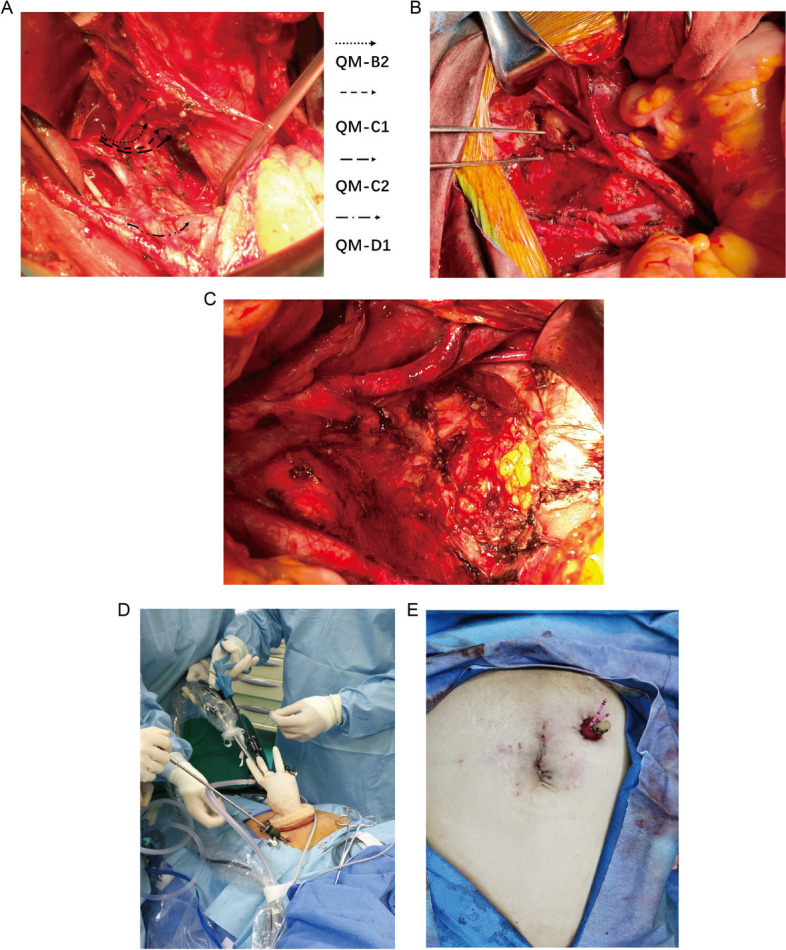
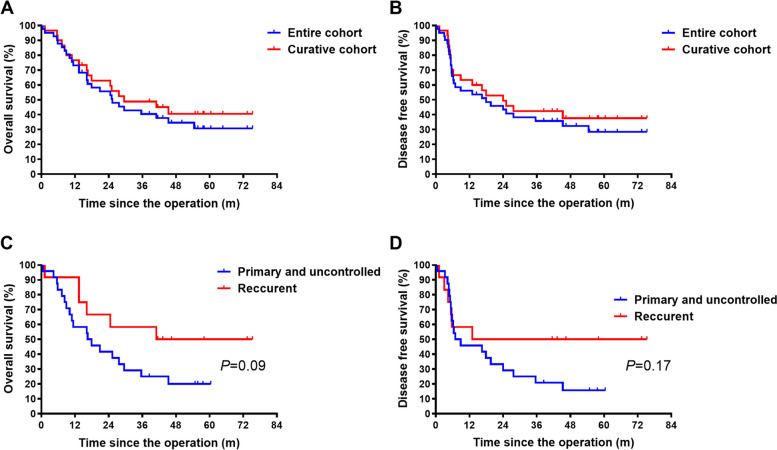
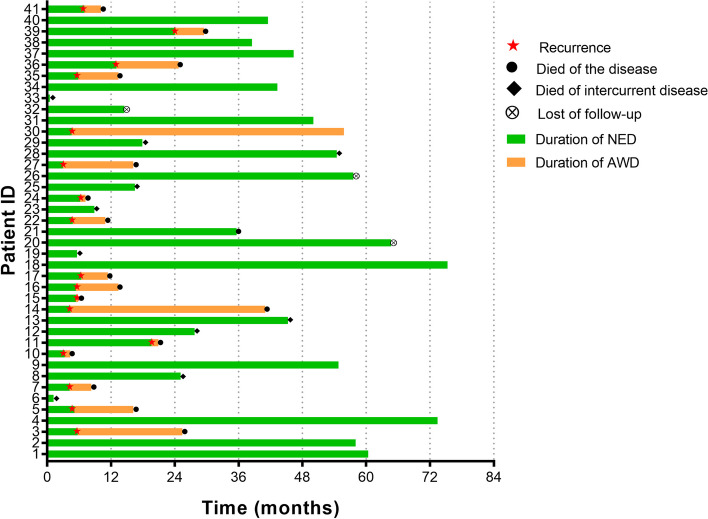
Forty-one cases were included and median age at diagnosis was 53 years. Cervical cancer accounted for 87.8% of all cases, and most of them received prior treatment (95.1%). Sixteen procedures were performed in 2016 and before, and 25 after 2016. Three anterior PE were performed by umbilical single-site laparoscopy. The median operation time was 460 min, and the median estimated blood loss was 600 ml. There was no perioperative death. The years of the operations was significantly associated with the length of the operation time (P = 0.0018). The overall morbidity was 52.4%, while the severe complications rate was 19.0%. The most common complication was pelvic and abdominal infection. The years of surgery was also significantly associated with the occurrence of severe complication (P = 0.040). The median follow-up time was 55.8 months. The median disease-free survival (DFS) was 17.9 months, and the median overall survival (OS) was 25.3 months. The 5-year DFS was 28.5%, and the 5-year OS was 30.8%.
PE is safe for patient who is selected by a multi-disciplinary treatment, and can be a curative treatment for some patients. PE demands a high level of experience from the surgical team. Umbilical single-port laparoscopy was a technically feasible approach for APE, meriting further investigation.
近年来,随着医学技术的进步,盆腔廓清术(PE)的术后发病率逐渐降低,已成为某些复发性妇科恶性肿瘤患者的一种治疗选择。然而,仍需要更多的证据来支持其疗效。本研究旨在探讨在中国某单一医疗中心,由单一手术团队进行的非卵巢癌妇科恶性肿瘤 PE 的安全性和长期生存结果,以及脐部单孔腹腔镜 PE 用于妇科恶性肿瘤的可行性。
纳入中山大学肿瘤防治中心 2014 年 7 月至 2019 年 12 月间由单一手术团队进行的妇科恶性肿瘤 PE,并对其数据进行回顾性分析。
共纳入 41 例患者,中位诊断年龄为 53 岁。所有病例中宫颈癌占 87.8%,多数患者接受过前期治疗(95.1%)。2016 年及以前有 16 例手术,之后有 25 例手术。3 例前盆腔廓清术采用脐部单孔腹腔镜进行。中位手术时间为 460 分钟,中位估计出血量为 600ml。无围手术期死亡。手术年份与手术时间显著相关(P=0.0018)。总并发症发生率为 52.4%,严重并发症发生率为 19.0%。最常见的并发症是盆腔和腹部感染。手术年份与严重并发症的发生也显著相关(P=0.040)。中位随访时间为 55.8 个月。中位无病生存(DFS)为 17.9 个月,中位总生存(OS)为 25.3 个月。5 年 DFS 为 28.5%,5 年 OS 为 30.8%。
PE 是经多学科治疗选择的患者安全有效的治疗方法,可作为某些患者的治愈性治疗手段。PE 需要手术团队具备较高的经验水平。脐部单孔腹腔镜是 APE 的一种可行技术方法,值得进一步研究。