Zhao Yichang, Liu Huaiyuan, Xiao Chenlin, Hou Jingjing, Zhang Bikui, Li Jiakai, Zhang Min, Jiang Yongfang, Sandaradura Indy, Ding Xuansheng, Yan Miao
Department of Clinical Pharmacy, The Second Xiangya Hospital of Central South University, Changsha, China.
Institute of Clinical Pharmacy, Central South University, Changsha, China.
Front Pharmacol. 2024 Jan 4;14:1323755. doi: 10.3389/fphar.2023.1323755. eCollection 2023.
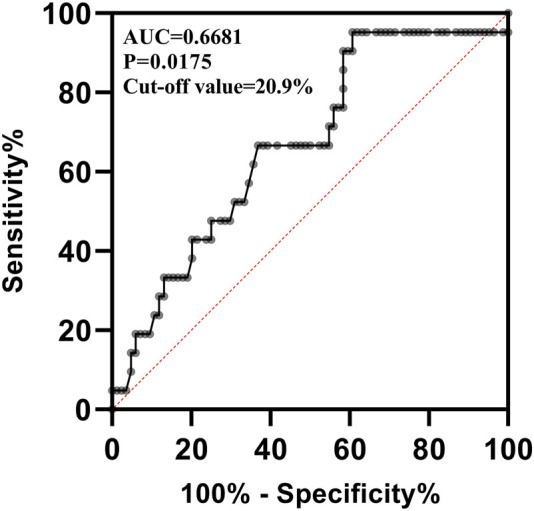
The application of voriconazole in patients with liver dysfunction lacks pharmacokinetic data. In previous study, we proposed to develop voriconazole dosing regimens for these patients according to their total bilirubin, but the regimens are based on Monte Carlo simulation and has not been further verified in clinical practice. Besides, there are few reported factors that significantly affect the efficacy of voriconazole. We collected the information of patients with liver dysfunction hospitalized in our hospital from January 2018 to May 2022 retrospectively, including their baseline information and laboratory data. We mainly evaluated the efficacy of voriconazole and the target attainment of voriconazole trough concentration. A total of 157 patients with liver dysfunction were included, from whom 145 initial and 139 final voriconazole trough concentrations were measured. 60.5% (95/157) of patients experienced the adjustment of dose or frequency. The initial voriconazole trough concentrations were significantly higher than the final (mean, 4.47 3.90 μg/mL, = 0.0297). Furthermore, daily dose, direct bilirubin, lymphocyte counts and percentage, platelet, blood urea nitrogen and creatinine seven covariates were identified as the factors significantly affect the voriconazole trough concentration. Binary logistic regression analysis revealed that the lymphocyte percentage significantly affected the efficacy of voriconazole (OR 1.138, 95% CI 1.016-1.273), which was further validated by the receiver operating characteristic curve. The significant variation in voriconazole trough concentrations observed in patients with liver dysfunction necessitates caution when prescribing this drug. Clinicians should consider the identified factors, particularly lymphocyte percentage, when dosing voriconazole in this population.
伏立康唑在肝功能不全患者中的应用缺乏药代动力学数据。在先前的研究中,我们建议根据这些患者的总胆红素制定伏立康唑给药方案,但这些方案基于蒙特卡洛模拟,尚未在临床实践中得到进一步验证。此外,鲜有报道指出显著影响伏立康唑疗效的因素。我们回顾性收集了2018年1月至2022年5月在我院住院的肝功能不全患者的信息,包括他们的基线信息和实验室数据。我们主要评估了伏立康唑的疗效以及伏立康唑谷浓度的达标情况。共纳入157例肝功能不全患者,其中测量了145次初始伏立康唑谷浓度和139次最终伏立康唑谷浓度。60.5%(95/157)的患者经历了剂量或给药频率的调整。初始伏立康唑谷浓度显著高于最终浓度(均值分别为4.47 μg/mL和3.90 μg/mL,P = 0.0297)。此外,每日剂量、直接胆红素、淋巴细胞计数及百分比、血小板、血尿素氮和肌酐这七个协变量被确定为显著影响伏立康唑谷浓度的因素。二元逻辑回归分析显示,淋巴细胞百分比显著影响伏立康唑的疗效(OR 1.138,95% CI 1.016 - 1.273),这通过受试者工作特征曲线得到了进一步验证。肝功能不全患者中观察到的伏立康唑谷浓度的显著差异使得在开具此药时需谨慎。临床医生在为该人群开具伏立康唑时应考虑已确定的因素,尤其是淋巴细胞百分比。