Department of Oncology, Molecular Biotechnology Center, University of Torino, Turin, Italy.
Present address: Boehringer Ingelheim RCV GmbH & Co KG, Vienna, Austria.
Genome Med. 2024 Jan 19;16(1):15. doi: 10.1186/s13073-023-01275-3.
Immunotherapy based on checkpoint inhibitors is highly effective in mismatch repair deficient (MMRd) colorectal cancer (CRC). These tumors carry a high number of mutations, which are predicted to translate into a wide array of neoepitopes; however, a systematic classification of the neoantigen repertoire in MMRd CRC is lacking. Mass spectrometry peptidomics has demonstrated the existence of MHC class I associated peptides (MAPs) originating from non-coding DNA regions. Based on these premises we investigated DNA genomic regions responsible for generating MMRd-induced peptides.
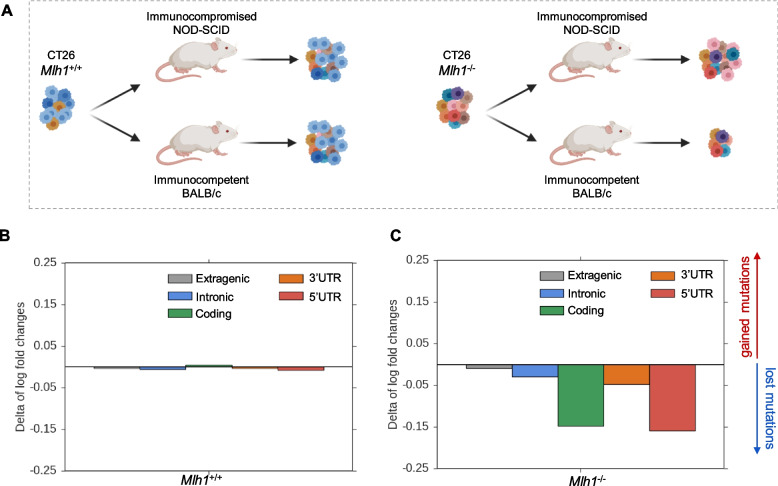
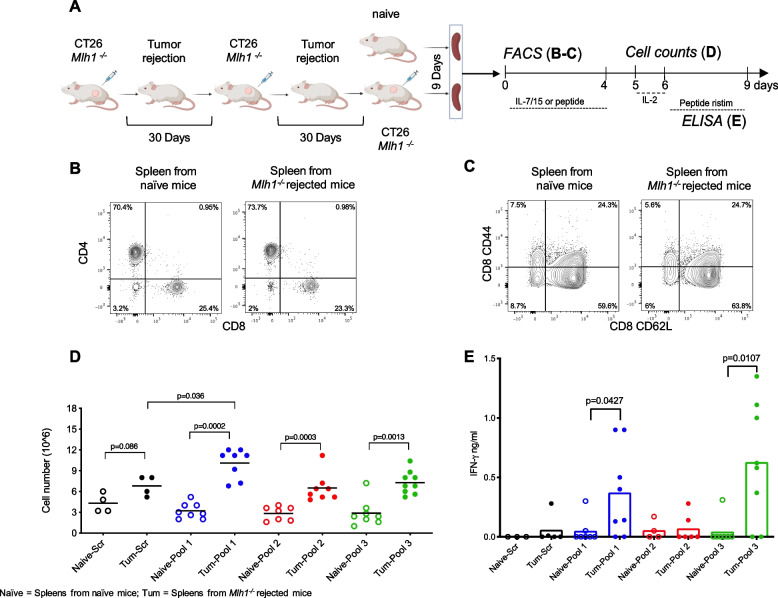
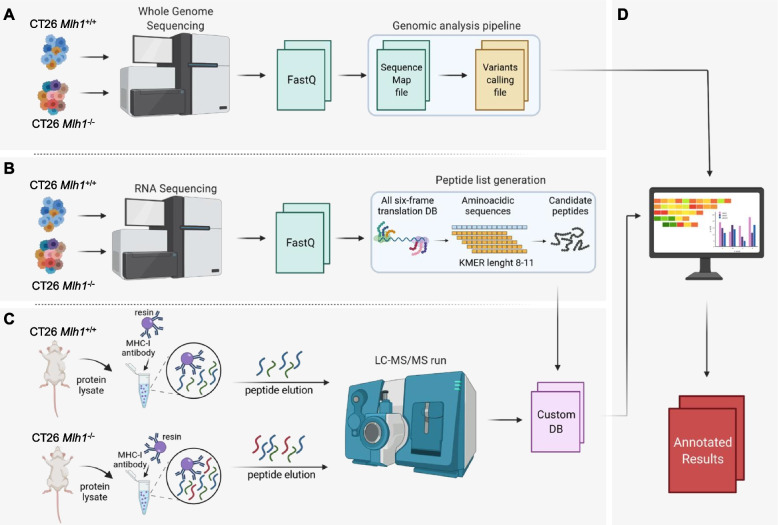
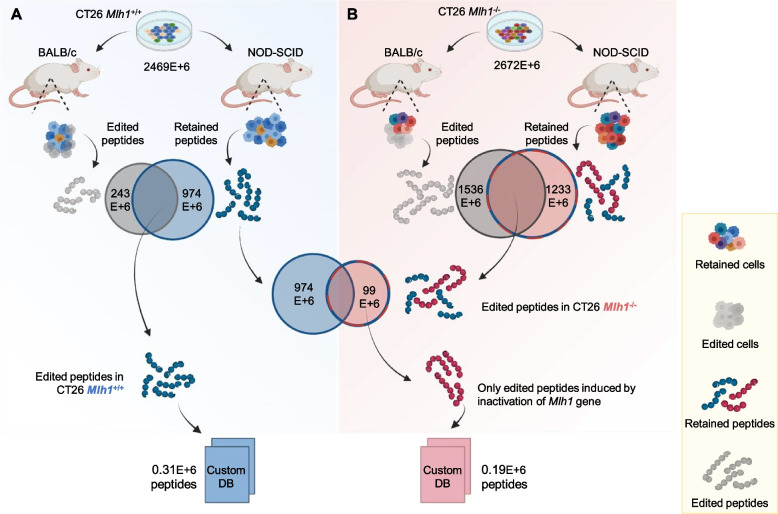
We exploited mouse CRC models in which the MMR gene Mlh1 was genetically inactivated. Isogenic cell lines CT26 Mlh1 and Mlh1 were inoculated in immunocompromised and immunocompetent mice. Whole genome and RNA sequencing data were generated from samples obtained before and after injection in murine hosts. First, peptide databases were built from transcriptomes of isogenic cell lines. We then compiled a database of peptides lost after tumor cells injection in immunocompetent mice, likely due to immune editing. Liquid chromatography-tandem mass spectrometry (LC-MS/MS) and matched next-generation sequencing databases were employed to identify the DNA regions from which the immune-targeted MAPs originated. Finally, we adopted in vitro T cell assays to verify whether MAP-specific T cells were part of the in vivo immune response against Mlh1 cells.
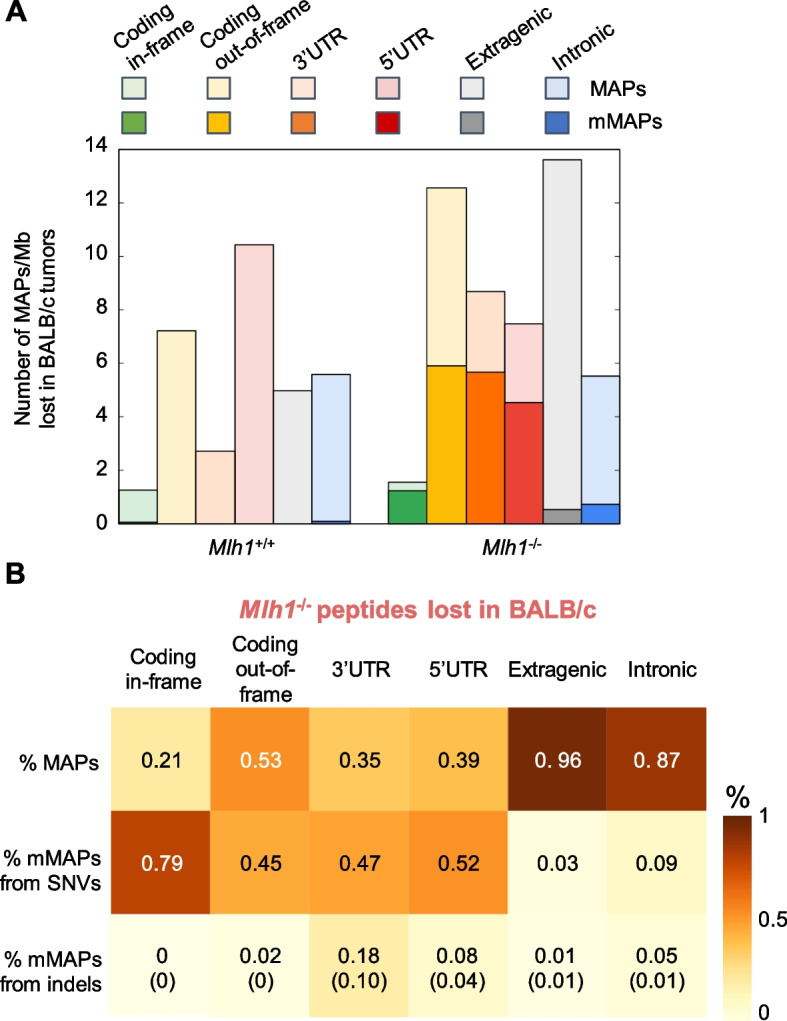
Whole genome sequencing analyses revealed an unbalanced distribution of immune edited alterations across the genome in Mlh1 cells grown in immunocompetent mice. Specifically, untranslated (UTR) and coding regions exhibited the largest fraction of mutations leading to highly immunogenic peptides. Moreover, the integrated computational and LC-MS/MS analyses revealed that MAPs originate mainly from atypical translational events in both Mlh1 and Mlh1 tumor cells. In addition, mutated MAPs-derived from UTRs and out-of-frame translation of coding regions-were highly enriched in Mlh1 cells. The MAPs trigger T-cell activation in mice primed with Mlh1 cells.
Our results suggest that-in comparison to MMR proficient CRC-MMRd tumors generate a significantly higher number of non-canonical mutated peptides able to elicit T cell responses. These results reveal the importance of evaluating the diversity of neoepitope repertoire in MMRd tumors.
基于检查点抑制剂的免疫疗法在错配修复缺陷(MMRd)结直肠癌(CRC)中非常有效。这些肿瘤携带大量突变,预计会转化为广泛的新抗原;然而,MMRd CRC 的新抗原谱缺乏系统分类。质谱肽组学已经证明了 MHC Ⅰ类相关肽(MAP)来源于非编码 DNA 区域的存在。基于这些前提,我们研究了负责产生 MMRd 诱导肽的 DNA 基因组区域。
我们利用 MMR 基因 Mlh1 在遗传上失活的小鼠 CRC 模型。同基因细胞系 CT26 Mlh1 和 Mlh1 接种于免疫缺陷和免疫功能正常的小鼠中。在注入小鼠宿主前后,从样本中生成全基因组和 RNA 测序数据。首先,从同基因细胞系的转录组中构建肽数据库。然后,我们编译了一个数据库,其中包含在免疫功能正常的小鼠中注射肿瘤细胞后丢失的肽,这些肽可能由于免疫编辑而丢失。采用液相色谱-串联质谱(LC-MS/MS)和匹配的下一代测序数据库来鉴定免疫靶向 MAP 起源的 DNA 区域。最后,我们采用体外 T 细胞测定法来验证 MAP 特异性 T 细胞是否是针对 Mlh1 细胞的体内免疫反应的一部分。
全基因组测序分析显示,在免疫功能正常的小鼠中生长的 Mlh1 细胞中,免疫编辑改变在整个基因组中呈不平衡分布。具体而言,非翻译(UTR)和编码区域表现出导致高度免疫原性肽的突变的最大比例。此外,综合计算和 LC-MS/MS 分析表明,MAP 主要源自 Mlh1 和 Mlh1 肿瘤细胞中典型翻译事件的异常。此外,UTR 和编码区无框架翻译产生的突变 MAP 高度富集在 Mlh1 细胞中。MAP 可在用 Mlh1 细胞致敏的小鼠中触发 T 细胞激活。
我们的研究结果表明,与 MMR 功能正常的 CRC 相比,MMRd 肿瘤产生的能够引发 T 细胞反应的非典型突变肽数量明显更多。这些结果揭示了评估 MMRd 肿瘤中新抗原谱多样性的重要性。