Nóvoa-Medina Yeray, Pérez-Lemes Alicia, Suárez-Ramírez Nerea, Barreiro-Bautista Marta, Fabelo Himar, López-López Sara, Quinteiro Sofia, Domínguez Angela, León Marta, González María A, Caballero Elisabeth, Wägner Ana M
Pediatric Endocrinology Unit, Complejo Hospitalario Universitario Insular Materno Infantil de Las Palmas de Gran Canaria, Las Palmas de Gran Canaria, Canary Islands, Spain.
Asociación Canaria para la Investigación Pediátrica (ACIP Canarias), Las Palmas de Gran Canaria, Canary Islands, Spain.
Front Nutr. 2024 Jan 5;10:1338601. doi: 10.3389/fnut.2023.1338601. eCollection 2023.
To evaluate the synergistic impact of diet, lifestyle and technology on glycemic control in children with type 1 diabetes (T1D).
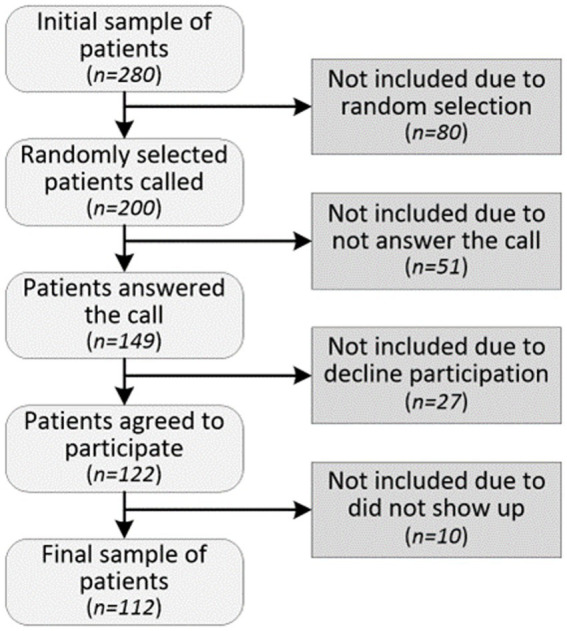
This cross-sectional study included 112 randomly selected patients with T1D from Gran Canaria (median age 12 years; 51.8% female). The study collected data on height, weight, body composition (bioimpedance), age, disease duration, and method of insulin delivery. Physical activity was evaluated using the Krece questionnaire and an accelerometer (GENEActiv). Adherence to the Mediterranean diet was assessed using the KIDMED Quick Nutrition Test. Glycemic control was evaluated using HbA1c and the percentage of time in range. SPSS version 21 and RStudio were used for statistical analysis of the data. Stepwise linear regression analysis (backwards) was used to identify factors independently associated with metabolic control.
Insulin pump use, age and adherence to the Mediterranean diet were found to be significantly and independently associated with better glycemic control, whereas years with T1D was associated with worse HbA1c values. No relationship was found between body composition and physical activity measured by accelerometry or questionnaire.
Adherence to the Mediterranean diet, insulin delivery methods, age, and number of years with T1D are important factors to consider in the management of T1D in children.
评估饮食、生活方式和技术对1型糖尿病(T1D)患儿血糖控制的协同影响。
这项横断面研究纳入了112名从大加那利岛随机选取的T1D患者(中位年龄12岁;51.8%为女性)。该研究收集了身高、体重、身体成分(生物电阻抗)、年龄、病程以及胰岛素给药方式的数据。使用克雷塞问卷和加速度计(GENEActiv)评估身体活动情况。使用KIDMED快速营养测试评估对地中海饮食的依从性。使用糖化血红蛋白(HbA1c)和血糖达标时间百分比评估血糖控制情况。数据的统计分析使用SPSS 21版和RStudio。采用逐步线性回归分析(向后法)来确定与代谢控制独立相关的因素。
发现使用胰岛素泵、年龄以及对地中海饮食的依从性与更好的血糖控制显著且独立相关,而患T1D的年限与更高的HbA1c值相关。通过加速度计或问卷测量的身体成分与身体活动之间未发现关联。
对地中海饮食的依从性、胰岛素给药方式、年龄以及患T1D的年限是儿童T1D管理中需要考虑的重要因素。