School of Biology and Biological Engineering, South China University of Technology, Guangzhou Higher Education Mega Centre, Panyu District, Guangzhou 510006, China.
Int J Mol Sci. 2024 Jan 11;25(2):919. doi: 10.3390/ijms25020919.
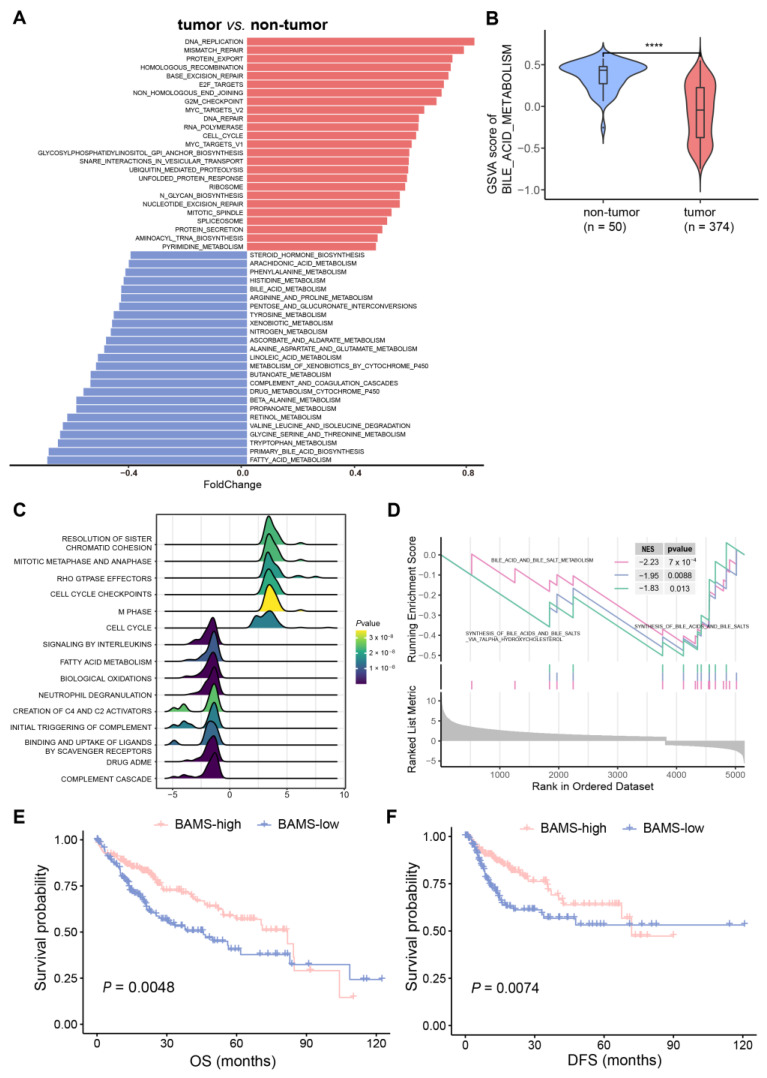
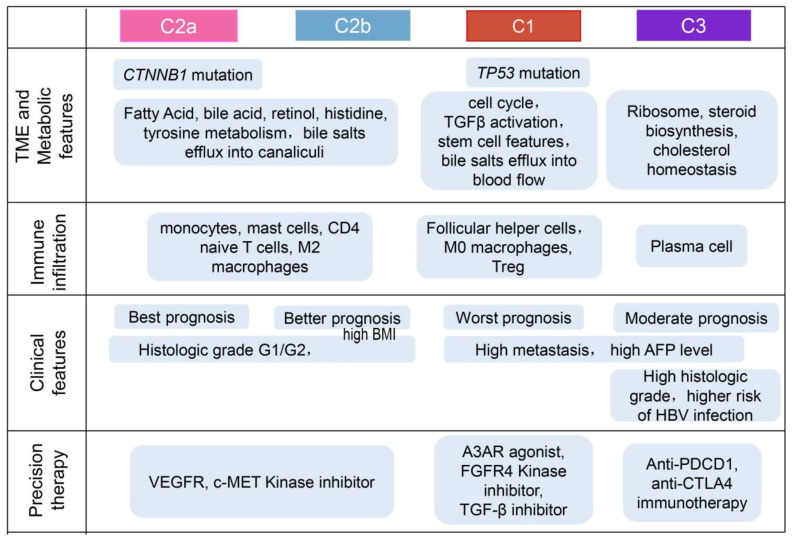
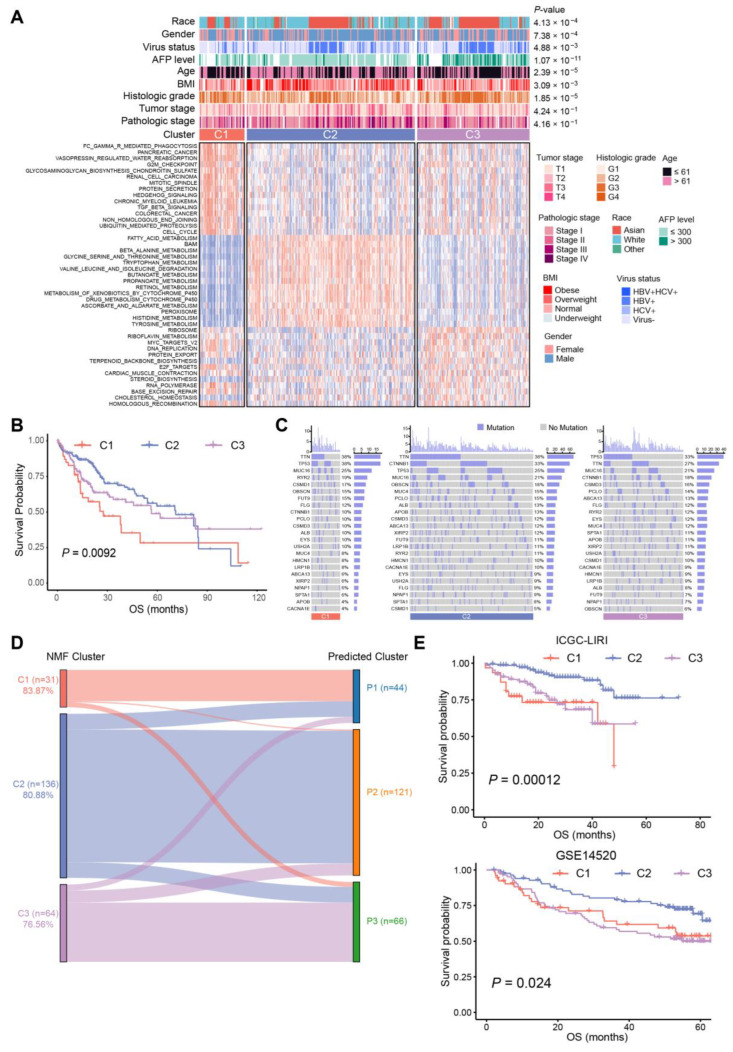
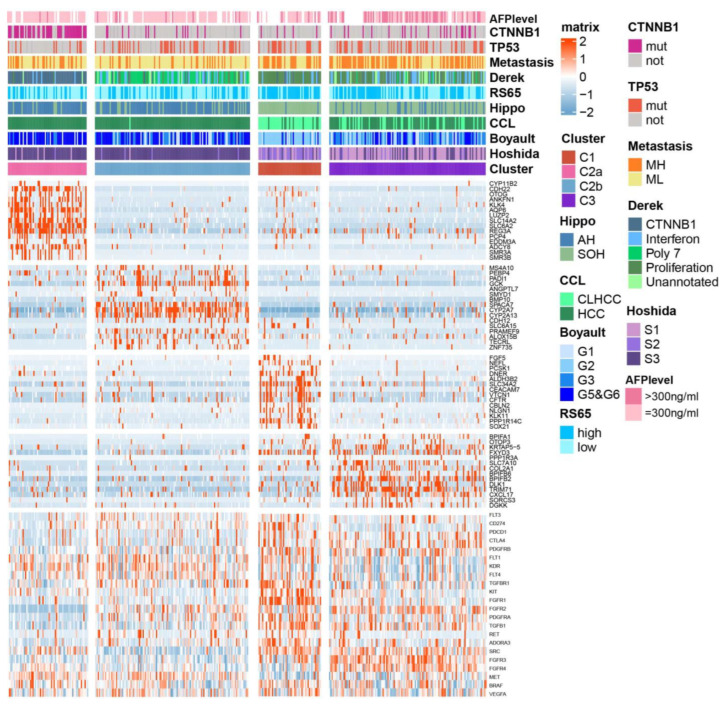
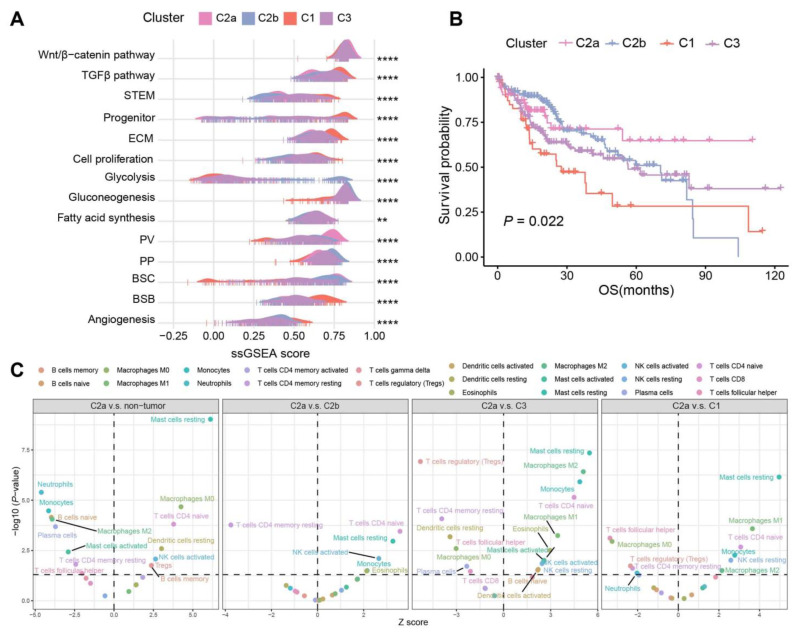
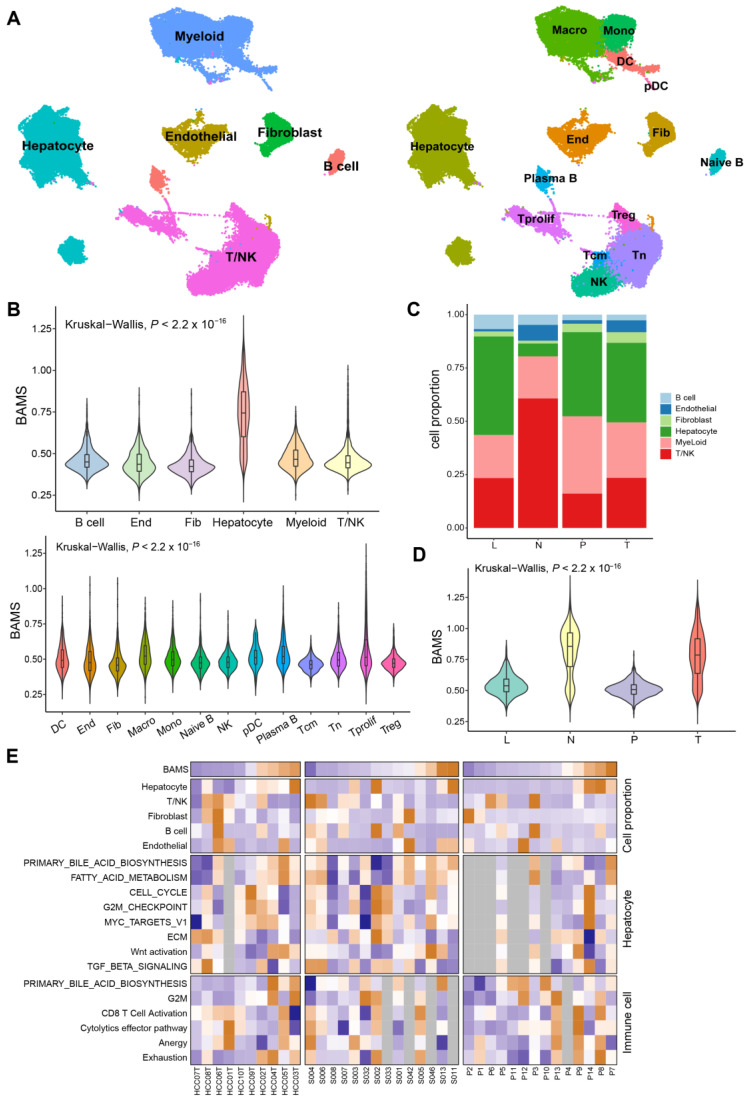
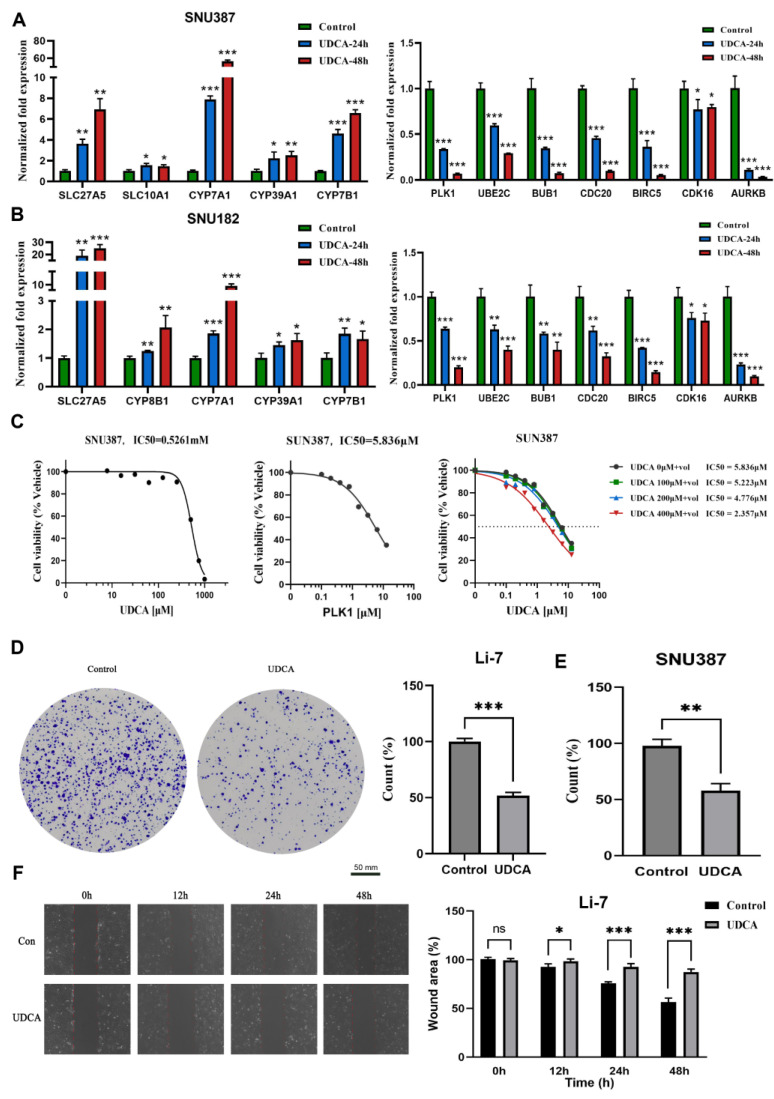
Hepatocellular carcinoma (HCC) is a highly detrimental cancer type and has limited therapeutic options, posing significant threats to human health. The development of HCC has been associated with a disorder in bile acid (BA) metabolism. In this study, we employed an integrative approach, combining various datasets and omics analyses, to comprehensively characterize the tumor microenvironment in HCC based on genes related to BA metabolism. Our analysis resulted in the classification of HCC samples into four subtypes (C1, C2a, C2b, and C3). Notably, subtype C2a, characterized by the highest bile acid metabolism score (BAMS), exhibited the highest survival probability. This subtype also demonstrated increased immune cell infiltration, lower cell cycle scores, reduced AFP levels, and a lower risk of metastasis compared to subtypes C1 and C3. Subtype C1 displayed poorer survival probability and elevated cell cycle scores. Importantly, the identified subtypes based on BAMS showed potential relevance to the gene expression of drug targets in currently approved drugs and those under clinical research. Genes encoding (FLT4 and KDR) and were elevated in C2, while genes such as , , , , , , , , , and were elevated in C1. Additionally, and , along with immune target genes including and , were higher in C3. This suggests that subtypes C1, C2, and C3 might represent distinct potential candidates for inhibitors, inhibitors, and immune checkpoint blockade treatments, respectively. Significantly, both bulk and single-cell transcriptome analyses unveiled a negative correlation between BA metabolism and cell cycle-related pathways. In vitro experiments further confirmed that the treatment of HCC cell lines with BA receptor agonist ursodeoxycholic acid led to the downregulation of the expression of cell cycle-related genes. Our findings suggest a plausible involvement of BA metabolism in liver carcinogenesis, potentially mediated through the regulation of tumor cell cycles and the immune microenvironment. This preliminary understanding lays the groundwork for future investigations to validate and elucidate the specific mechanisms underlying this potential association. Furthermore, this study provides a novel foundation for future precise molecular typing and the design of systemic clinical trials for HCC therapy.
肝细胞癌(HCC)是一种危害性极大的癌症类型,治疗选择有限,对人类健康构成重大威胁。HCC 的发展与胆汁酸(BA)代谢紊乱有关。在这项研究中,我们采用了一种综合的方法,结合了各种数据集和组学分析,根据与 BA 代谢相关的基因,全面描述 HCC 的肿瘤微环境。我们的分析将 HCC 样本分为四个亚型(C1、C2a、C2b 和 C3)。值得注意的是,以最高胆汁酸代谢评分(BAMS)为特征的 C2a 亚型表现出最高的生存概率。与 C1 和 C3 亚型相比,该亚型还表现出更高的免疫细胞浸润、更低的细胞周期评分、降低的 AFP 水平和更低的转移风险。C1 亚型表现出较差的生存概率和升高的细胞周期评分。重要的是,基于 BAMS 确定的亚型与目前批准的药物和临床研究中的药物靶点的基因表达具有潜在相关性。编码 (FLT4 和 KDR) 和 的基因在 C2 中上调,而在 C1 中上调的基因包括 、 、 、 、 、 、 、 和 等。此外,C3 中上调的还有 和 ,以及包括 和 在内的免疫靶基因。这表明 C1、C2 和 C3 亚型可能分别代表潜在的候选药物,用于治疗 抑制剂、 抑制剂和免疫检查点阻断治疗。值得注意的是,批量和单细胞转录组分析揭示了 BA 代谢与细胞周期相关途径之间存在负相关。体外实验进一步证实,用 BA 受体激动剂熊去氧胆酸处理 HCC 细胞系导致与细胞周期相关基因的表达下调。我们的研究结果表明,BA 代谢可能参与了肝癌的发生,可能是通过调节肿瘤细胞周期和免疫微环境来介导的。这一初步发现为进一步验证和阐明这种潜在关联的具体机制奠定了基础。此外,这项研究为未来 HCC 治疗的精确分子分型和系统临床试验设计提供了新的基础。