Spadaro Savino, Jimenez-Santana Jose Daniel, La Rosa Riccardo, Spinazzola Giorgia, Argente Navarro Pilar, Volta Carlo Alberto, Scaramuzzo Gaetano
Department of Translational Medicine, University of Ferrara, 44124 Ferrara, Italy.
Anesthesia and Intensive Care Unit, Emergency Department, Azienda Ospedaliera Universitaria di Ferrara, 44124 Ferrara, Italy.
J Clin Med. 2024 Jan 5;13(2):317. doi: 10.3390/jcm13020317.
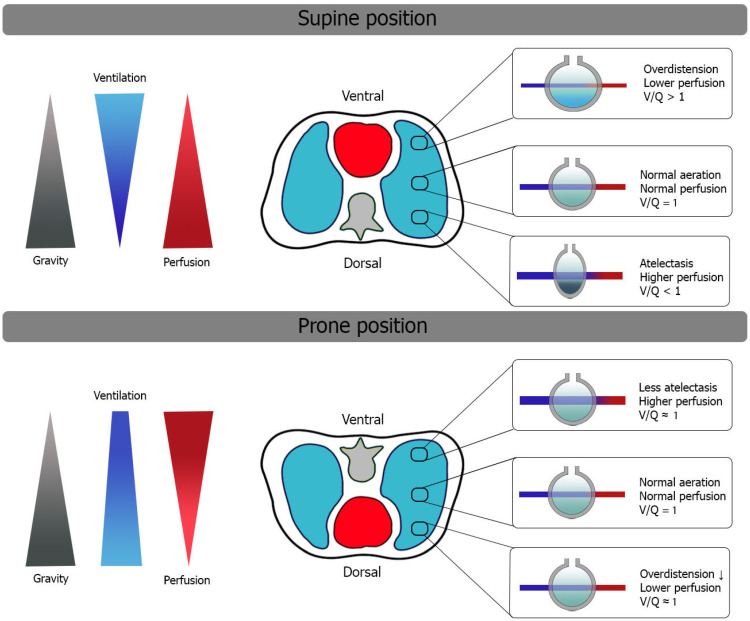
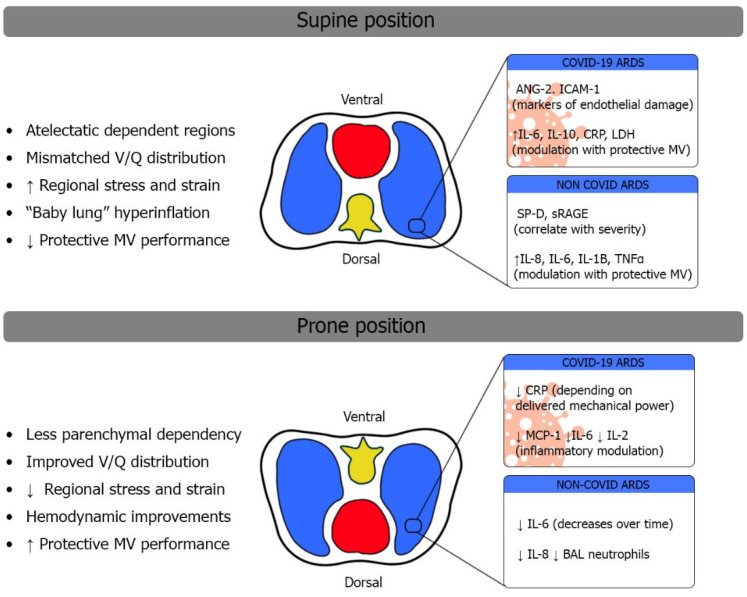
Prone positioning (PP) represents a therapeutic intervention with the proven capacity of ameliorating gas exchanges and ventilatory mechanics indicated in acute respiratory distress syndrome (ARDS). When PP is selectively applied to moderate-severe cases of ARDS, it sensitively affects clinical outcomes, including mortality. After the COVID-19 outbreak, clinical application of PP peaked worldwide and was applied in 60% of treated cases, according to large reports. Research on this topic has revealed many physiological underpinnings of PP, focusing on regional ventilation redistribution and the reduction of parenchymal stress and strain. However, there is a lack of evidence on biomarkers behavior in different phases and phenotypes of ARDS. Patients response to PP are, to date, decided on PaO/FiO ratio improvement, whereas scarce data exist on biomarker tracking during PP. The purpose of this review is to explore current evidence on the clinical relevance of biomarkers in the setting of moderate-severe ARDS of different etiologies (i.e., COVID and non-COVID-related ARDS). Moreover, this review focuses on how PP may modulate biomarkers and which biomarkers may have a role in outcome prediction in ARDS patients.
俯卧位通气(PP)是一种治疗干预措施,已被证明能够改善急性呼吸窘迫综合征(ARDS)患者的气体交换和通气力学。当PP选择性应用于中重度ARDS病例时,它会对包括死亡率在内的临床结局产生显著影响。据大量报告显示,自新冠疫情爆发后,PP在全球范围内的临床应用达到顶峰,在60%的治疗病例中得到应用。关于这一主题的研究揭示了PP的许多生理基础,重点在于区域通气再分布以及实质应力和应变的降低。然而,目前缺乏关于ARDS不同阶段和表型生物标志物行为的证据。迄今为止,患者对PP的反应取决于动脉血氧分压/吸入氧浓度(PaO/FiO)比值的改善情况,而在PP过程中生物标志物追踪的数据却很少。本综述的目的是探讨不同病因(即新冠相关和非新冠相关ARDS)的中重度ARDS患者中生物标志物临床相关性的现有证据。此外,本综述重点关注PP如何调节生物标志物,以及哪些生物标志物可能在ARDS患者的预后预测中发挥作用。