Department of Pharmaceutical Biosciences, Uppsala University, Biomedical Centre, Uppsala SE-751 24, Sweden.
Department of Immunology, Genetics and Pathology, Uppsala University, Rudbeck Laboratory, Uppsala SE-751 85, Sweden.
Nucleic Acids Res. 2024 Feb 28;52(4):e22. doi: 10.1093/nar/gkae009.
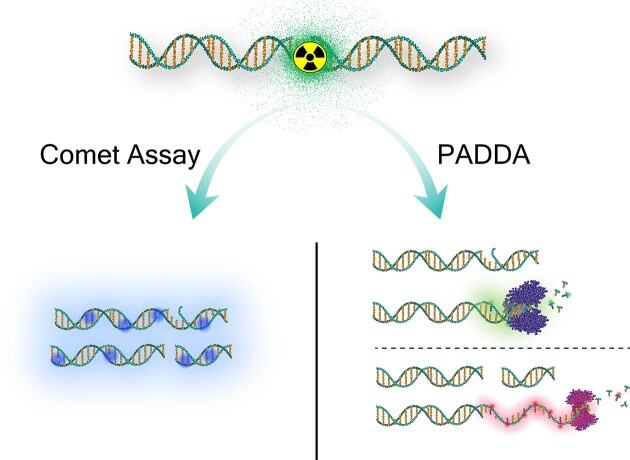
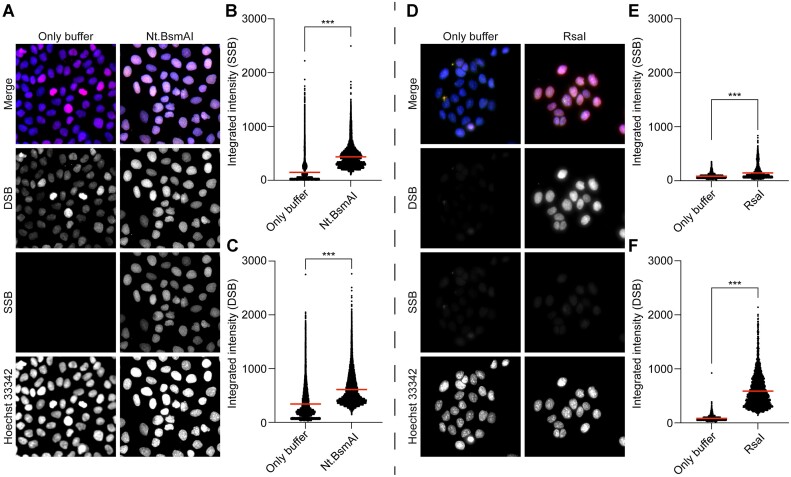
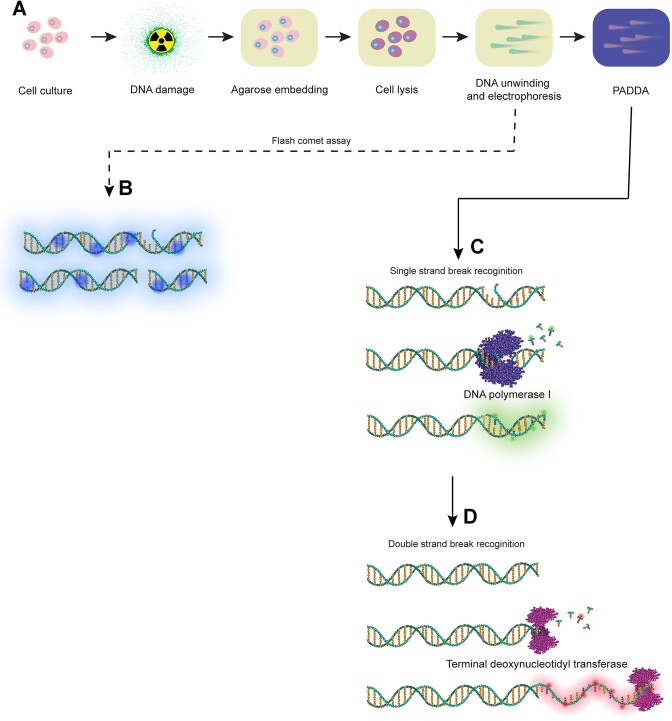
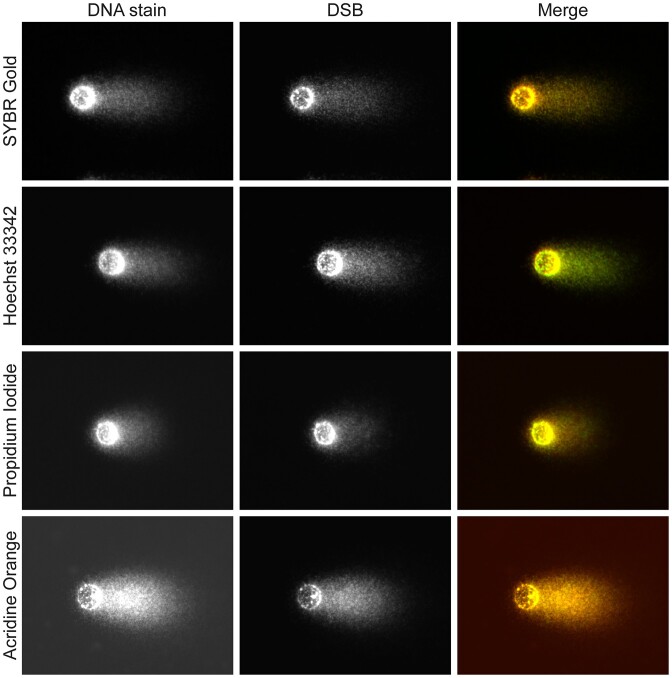
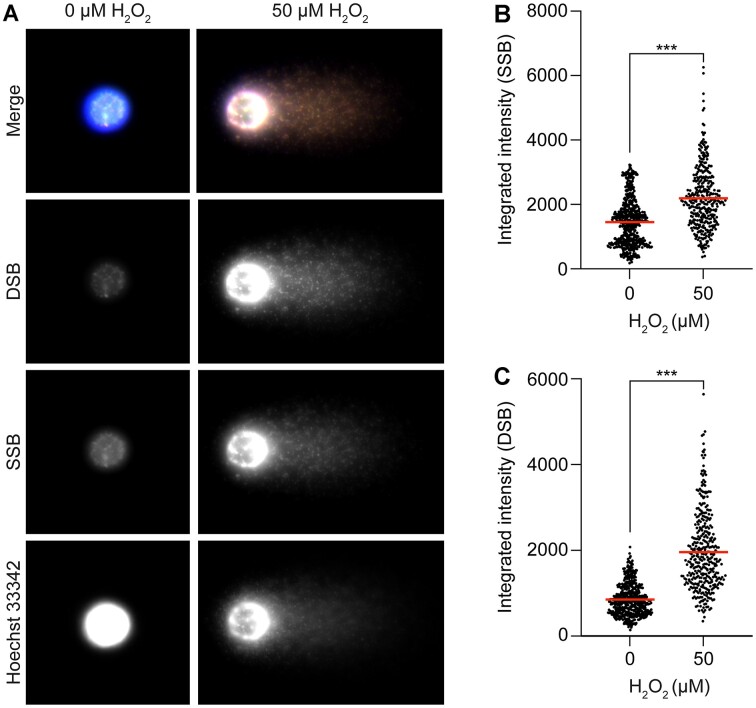
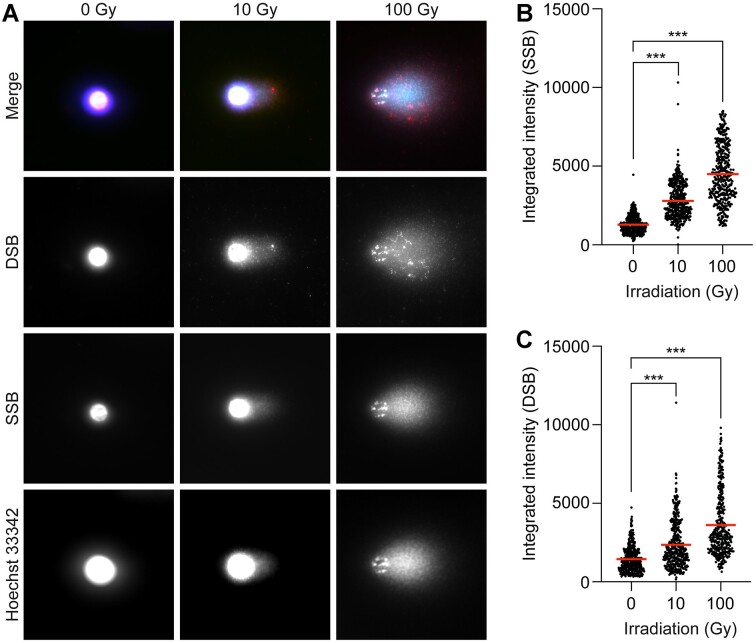
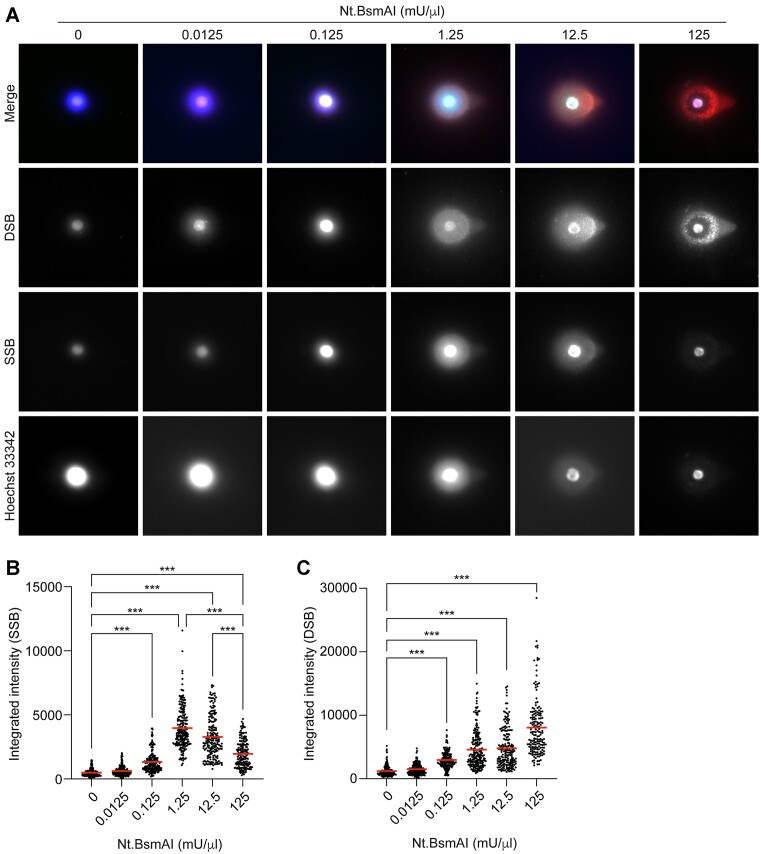
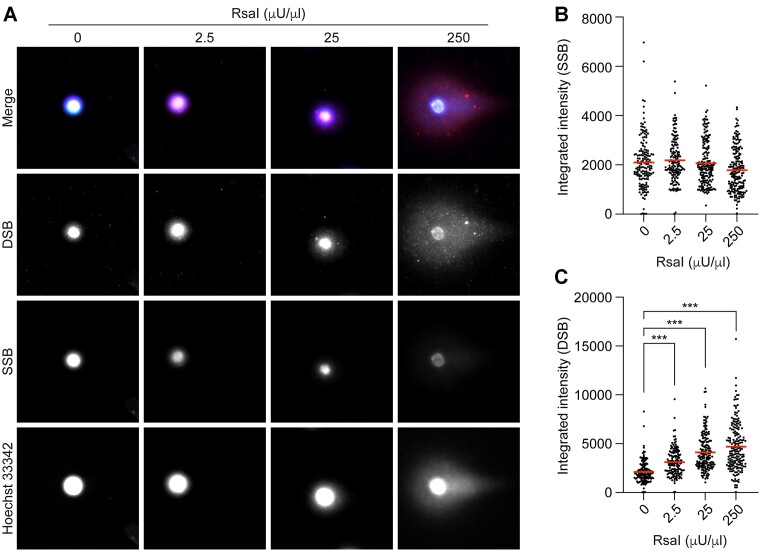
In the comet assay, tails are formed after single-cell gel electrophoresis if the cells have been exposed to genotoxic agents. These tails include a mixture of both DNA single-strand breaks (SSBs) and double-strand breaks (DSBs). However, these two types of strand breaks cannot be distinguished using comet assay protocols with conventional DNA stains. Since DSBs are more problematic for the cells, it would be useful if the SSBs and DSBs could be differentially identified in the same comet. In order to be able to distinguish between SSBs and DSBs, we designed a protocol for polymerase-assisted DNA damage analysis (PADDA) to be used in combination with the Flash comet protocol, or on fixed cells. By using DNA polymerase I to label SSBs and terminal deoxynucleotidyl transferase to label DSBs with fluorophore-labelled nucleotides. Herein, TK6-cells or HaCat cells were exposed to either hydrogen peroxide (H2O2), ionising radiation (X-rays) or DNA cutting enzymes, and then subjected to a comet protocol followed by PADDA. PADDA offers a wider detection range, unveiling previously undetected DNA strand breaks.
在彗星试验中,如果细胞暴露于遗传毒性试剂中,那么在单细胞凝胶电泳后会形成尾部。这些尾部包括 DNA 单链断裂(SSBs)和双链断裂(DSBs)的混合物。然而,使用常规 DNA 染色的彗星试验方案无法区分这两种类型的链断裂。由于 DSBs 对细胞更为严重,因此如果能够在同一条彗星中区分 SSBs 和 DSBs,将非常有用。为了能够区分 SSBs 和 DSBs,我们设计了一种用于聚合酶辅助的 DNA 损伤分析(PADDA)的方案,该方案可与 Flash 彗星试验方案结合使用,或用于固定细胞。通过使用 DNA 聚合酶 I 标记 SSBs,末端脱氧核苷酸转移酶用荧光标记的核苷酸标记 DSBs。在此,将 TK6 细胞或 HaCat 细胞暴露于过氧化氢(H2O2)、电离辐射(X 射线)或 DNA 切割酶,然后进行彗星试验方案,随后进行 PADDA。PADDA 提供了更广泛的检测范围,揭示了以前未检测到的 DNA 链断裂。