
半透明氧化锆陶瓷的机械和光学行为模式的比较分析。
A comparative analysis of mechanical and optical behavioral patterns of translucent zirconia ceramics.
机构信息
Department of Prosthodontics, Christian Dental College, Ludhiana, Punjab, India.
出版信息
J Indian Prosthodont Soc. 2024 Jan 1;24(1):88-94. doi: 10.4103/jips.jips_341_23. Epub 2024 Jan 24.
AIM
This research aimed to assess and compare the translucency and mechanical properties of partially stabilized zirconia in contrast to lithium disilicate, particularly within the context of translucent zirconia.
SETTINGS AND DESIGN
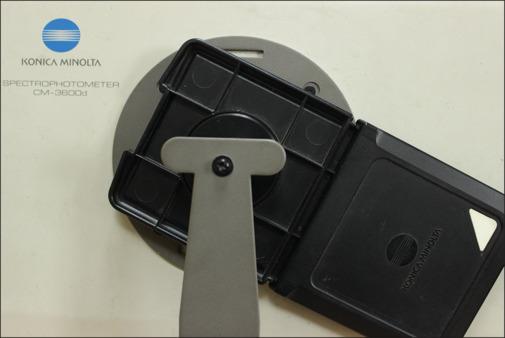
The experimental design entails examining fifty samples, with ten drawn from each of the five distinct categories of ceramic materials, as part of this in vitro study. Translucency is measured using the Konica Minolta CM-3600D spectrophotometer, assessing Delta E through Lab values against white and black backgrounds. Flexural strength is analyzed via a 3-point bend test on a universal testing machine, with a controlled crosshead speed set at 1 mm/min.
MATERIALS AND METHODS
The study included the five categories of ceramic materials, each consisting of ten samples: High-strength zirconia (Katana HT), translucent zirconia (e.max Zircad MT and Cercon ht ML), and lithium disilicate (Press MT and LT). The Konica Minolta CM-3600D spectrophotometer is utilized to measure the translucency parameter. This involves determining the color difference (Delta E) by comparing the Lab values against both white and black backgrounds. The flexural strength (FS) of zirconia and lithium disilicate materials was analyzed through a 3-point bend test, aiming to compare their respective strengths. The testing procedure was carried out on a universal testing machine with a controlled crosshead speed set at 1 mm/min. The FS was calculated using the formula σ = FL/πR3 for circular disks, where σ represents the FS, F is the fracture load, L is the span length in millimeters, and R is the radius of the disk.
STATISTICAL ANALYSIS USED
The Student's t-test was employed for statistical analysis.
RESULTS
The mean translucency parameter for e.max Press MT (6.33 ± 1.05) was significantly greater than all the specimens investigated. The Cercon ht ML exhibited a slightly higher translucency (2.18 ± 0.52) compared to e.max Zircad MT (1.49 ± 0.69), with a statistically significant difference (P = 0.022). Conversely, the FS of e.max Zircad MT (26.97 ± 2.06) was significantly greater (P < 0.001) than that of Cercon ht ML (23.25 ± 2.36). Notably, the Katana HT material demonstrated the highest load strength (32.92 ± 3.10), a statistically significant difference compared to its counterparts (P < 0.001).
CONCLUSIONS
Among the materials tested, lithium disilicate ceramics exhibited the highest translucency, with its MT variant demonstrating the lowest strength. Katana HT displayed significantly greater biaxial FS compared to translucent zirconia, surpassing even lithium disilicate. Translucent zirconia proved to be notably more translucent than high-strength zirconia. Within the category of translucent zirconia, e.max Zircad MT exhibited substantially higher FS than Cercon.
目的
本研究旨在评估和比较部分稳定氧化锆与锂硅灰石的透明度和机械性能,特别是在透明氧化锆的背景下。
设置和设计
本体外研究共检查了 50 个样本,每个样本来自 5 种不同陶瓷材料类别中的 10 个样本。使用 Konica Minolta CM-3600D 分光光度计通过对白色和黑色背景下的 Lab 值进行 Delta E 测量来评估透光率。通过在万能试验机上进行三点弯曲试验来分析抗弯强度,控制十字头速度设置为 1mm/min。
材料和方法
研究包括 5 种陶瓷材料类别,每个类别包含 10 个样本:高强度氧化锆(Katana HT)、透明氧化锆(e.max Zircad MT 和 Cercon ht ML)和锂硅灰石(Press MT 和 LT)。使用 Konica Minolta CM-3600D 分光光度计测量透光率参数。这涉及通过比较白色和黑色背景下的 Lab 值来确定色差(Delta E)。通过三点弯曲试验分析氧化锆和锂硅灰石材料的抗弯强度(FS),旨在比较它们各自的强度。测试程序在万能试验机上进行,控制十字头速度设置为 1mm/min。对于圆形磁盘,使用公式 σ = FL/πR3 计算 FS,其中 σ 代表 FS,F 是断裂载荷,L 是毫米跨度长度,R 是磁盘半径。
使用的统计分析
使用学生 t 检验进行统计分析。
结果
e.max Press MT 的平均透光率参数(6.33 ± 1.05)明显大于所有研究的样本。Cercon ht ML 的透光率略高(2.18 ± 0.52),略高于 e.max Zircad MT(1.49 ± 0.69),差异具有统计学意义(P = 0.022)。相反,e.max Zircad MT 的 FS(26.97 ± 2.06)明显更高(P < 0.001),高于 Cercon ht ML(23.25 ± 2.36)。值得注意的是,Katana HT 材料的负载强度(32.92 ± 3.10)最高,与其他材料相比差异具有统计学意义(P < 0.001)。
结论
在测试的材料中,锂硅灰石陶瓷表现出最高的透明度,其 MT 变体表现出最低的强度。Katana HT 的双轴 FS 明显高于透明氧化锆,甚至超过了锂硅灰石。透明氧化锆明显比高强度氧化锆更透明。在透明氧化锆类别中,e.max Zircad MT 的 FS 明显高于 Cercon。




 Zotero 插件