Dungan Ashley M, Tandon Kshitij, Jameson Vanta, Gotze Cecilie Ravn, Blackall Linda L, van Oppen Madeleine J H
School of BioSciences, University of Melbourne, Melbourne, VIC 3010, Australia.
Melbourne Cytometry Platform, Department of Microbiology and Immunology, University of Melbourne, Melbourne, VIC 3010, Australia.
FEMS Microbes. 2023 Nov 28;5:xtad021. doi: 10.1093/femsmc/xtad021. eCollection 2024.
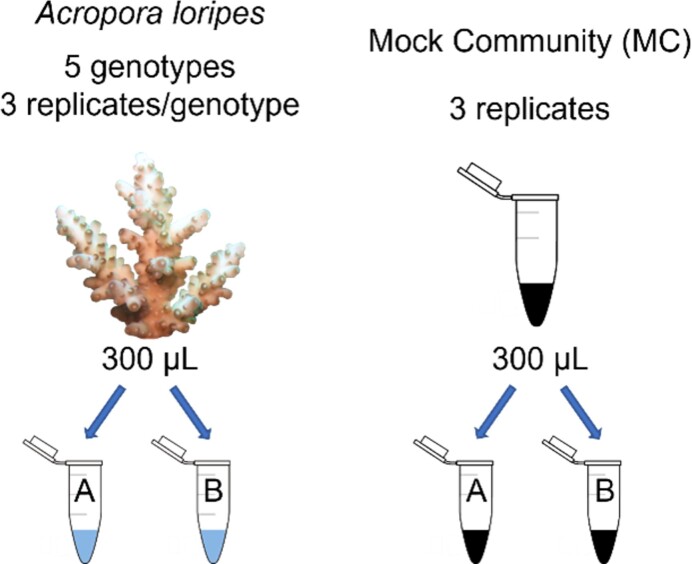
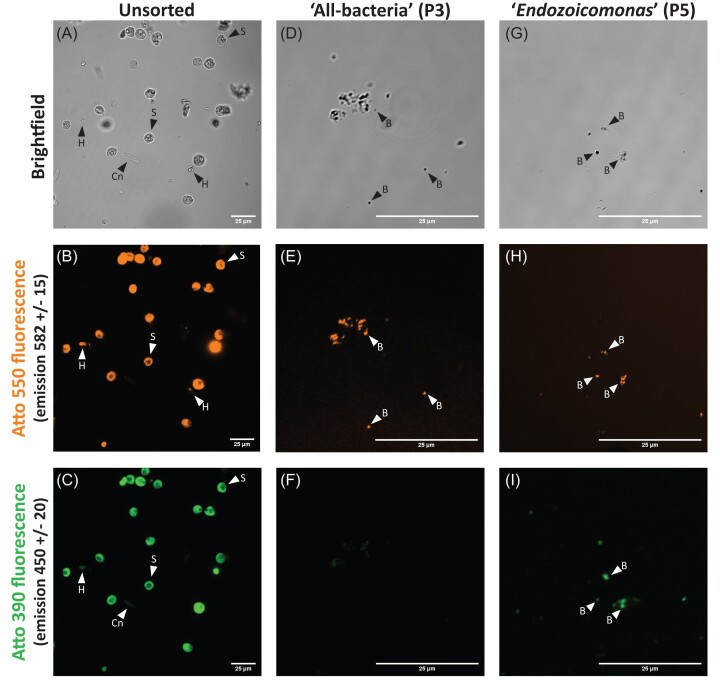
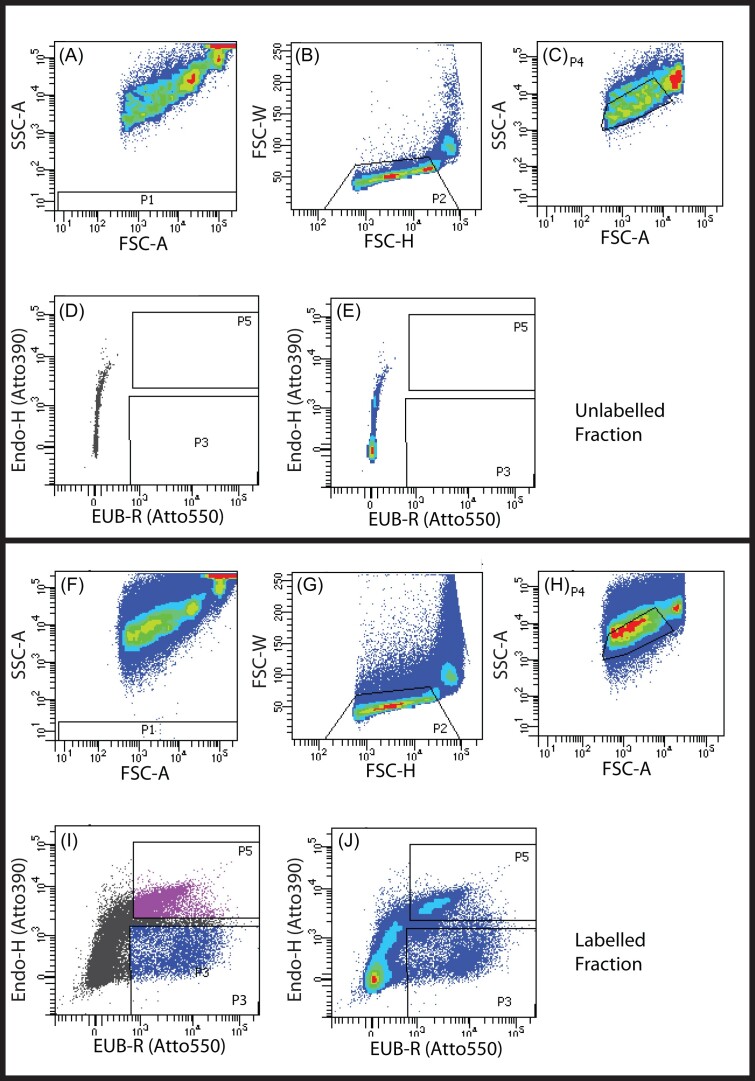
Multicellular eukaryotic organisms are hosts to communities of bacteria that reside on or inside their tissues. Often the eukaryotic members of the system contribute to high proportions of metagenomic sequencing reads, making it challenging to achieve sufficient sequencing depth to evaluate bacterial ecology. Stony corals are one such complex community; however, separation of bacterial from eukaryotic (primarily coral and algal symbiont) cells has so far not been successful. Using a combination of hybridization chain reaction fluorescence hybridization and fluorescence activated cell sorting (HCR-FISH + FACS), we sorted two populations of bacteria from five genotypes of the coral , targeting (i) spp, and (ii) all other bacteria. NovaSeq sequencing resulted in 67-91 M reads per sample, 55%-90% of which were identified as bacterial. Most reads were taxonomically assigned to the key coral-associated family, Endozoicomonadaceae, with Vibrionaceae also abundant. Endozoicomonadaceae were 5x more abundant in the '' population, highlighting the success of the dual-labelling approach. This method effectively enriched coral samples for bacteria with <1% contamination from host and algal symbionts. The application of this method will allow researchers to decipher the functional potential of coral-associated bacteria. This method can also be adapted to accommodate other host-associated communities.
多细胞真核生物体内或体表存在着细菌群落。通常,该系统中的真核生物成员在宏基因组测序读数中占比很高,这使得获得足够的测序深度以评估细菌生态学具有挑战性。石珊瑚就是这样一个复杂的群落;然而,到目前为止,尚未成功地将细菌细胞与真核生物(主要是珊瑚和藻类共生体)细胞分离。我们结合杂交链式反应荧光杂交和荧光激活细胞分选技术(HCR-FISH + FACS),从五种基因型的珊瑚中分离出了两类细菌群体,一类针对(i) spp,另一类针对(ii)所有其他细菌。NovaSeq测序每个样本产生67 - 91M条读数,其中55% - 90%被鉴定为细菌。大多数读数在分类学上被归类到关键的珊瑚相关科——内共生单胞菌科,弧菌科也很丰富。内共生单胞菌科在“ ”群体中的丰度高出5倍,突出了双标记方法的成功。该方法有效地富集了珊瑚样本中的细菌,宿主和藻类共生体的污染率低于1%。这种方法的应用将使研究人员能够解读珊瑚相关细菌的功能潜力。该方法也可进行调整以适用于其他宿主相关群落。