
末次冰期时南美洲安第斯山脉东部和南部大西洋海岸之间的湿润寒冷森林连接。
Humid and cold forest connections in South America between the eastern Andes and the southern Atlantic coast during the LGM.
机构信息
Institute of Geosciences, University of São Paulo, São Paulo, Brazil.
Polytechnic School, University of São Paulo, São Paulo, Brazil.
出版信息
Sci Rep. 2024 Jan 24;14(1):2080. doi: 10.1038/s41598-024-51763-8.
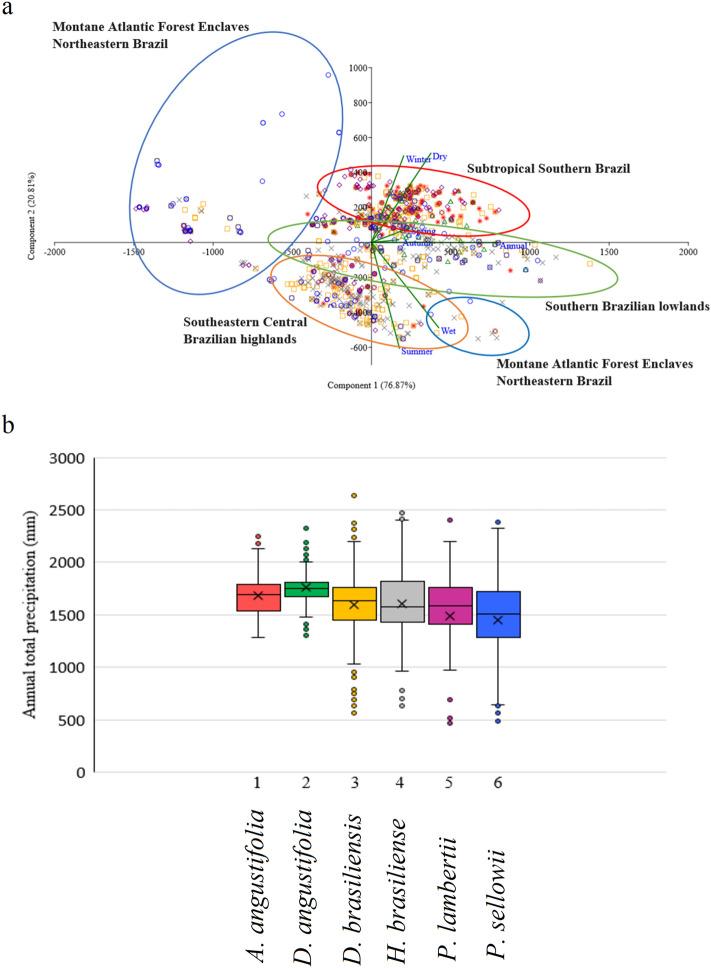
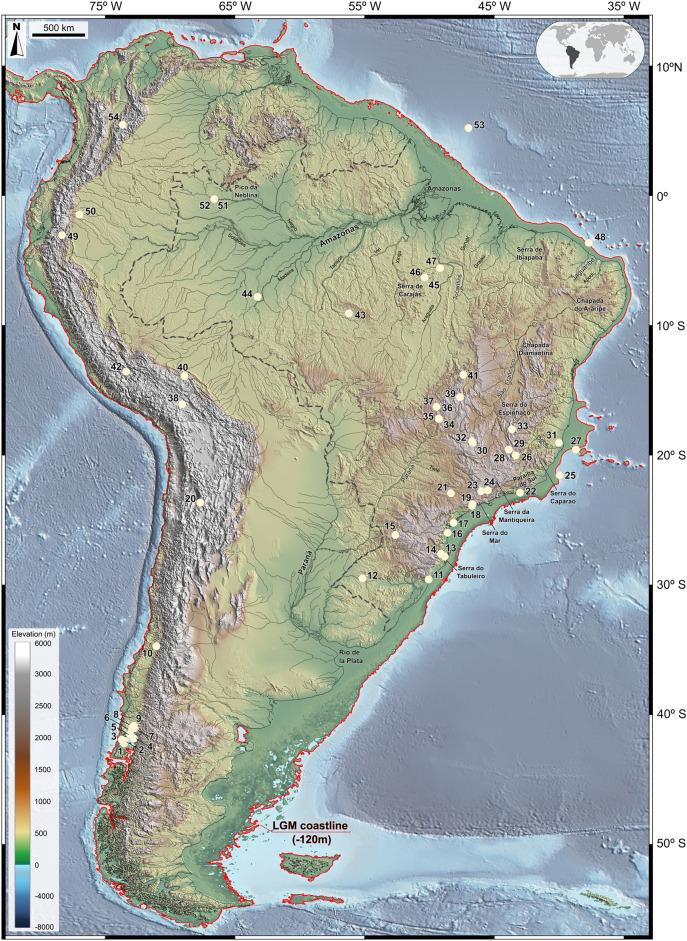
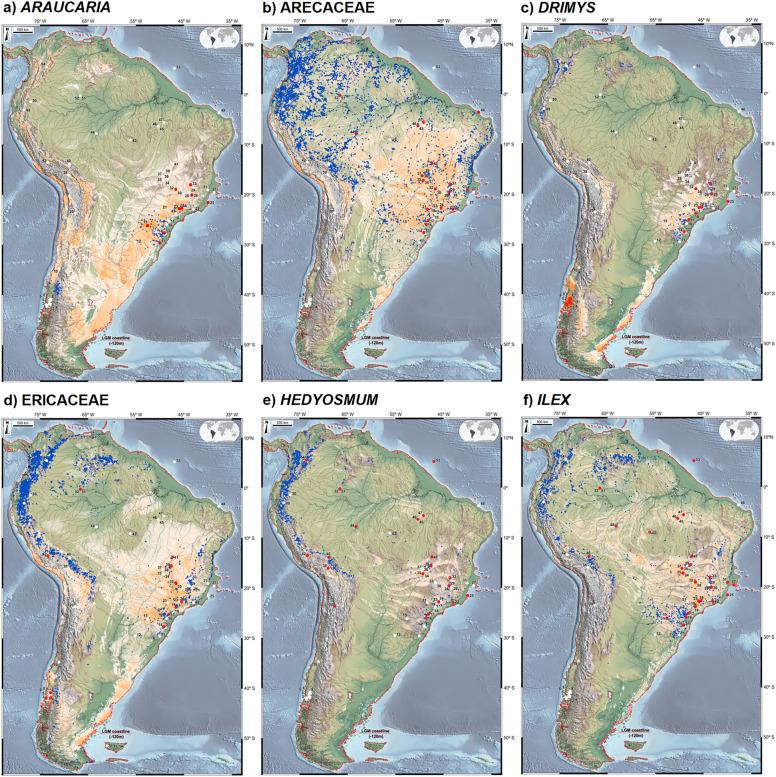
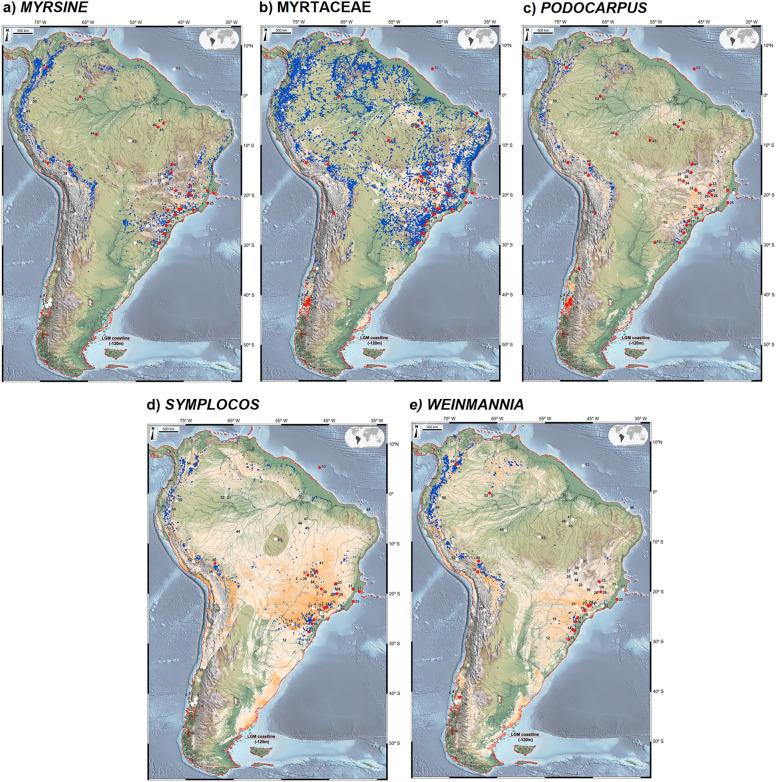
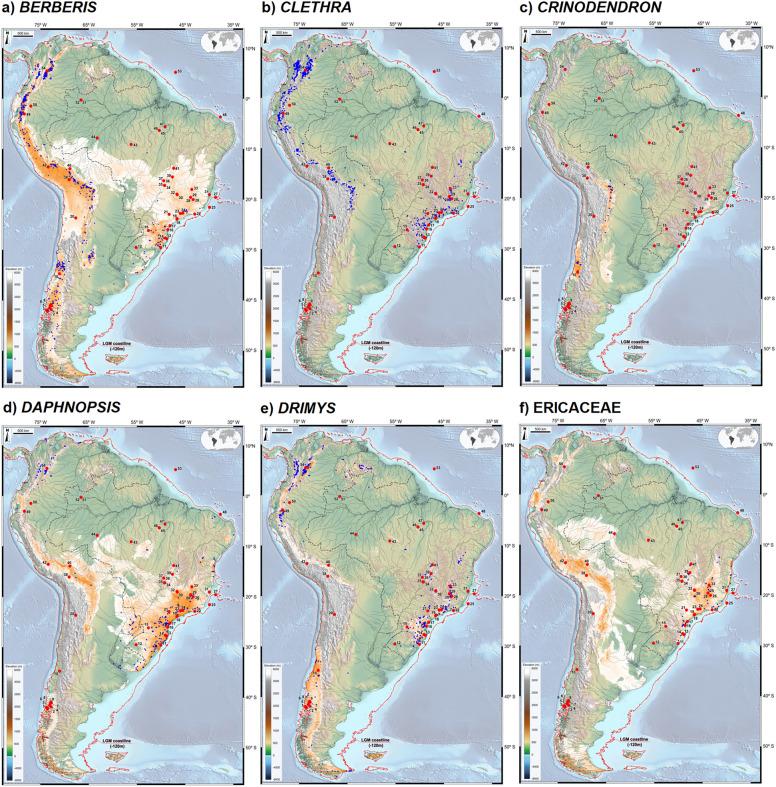
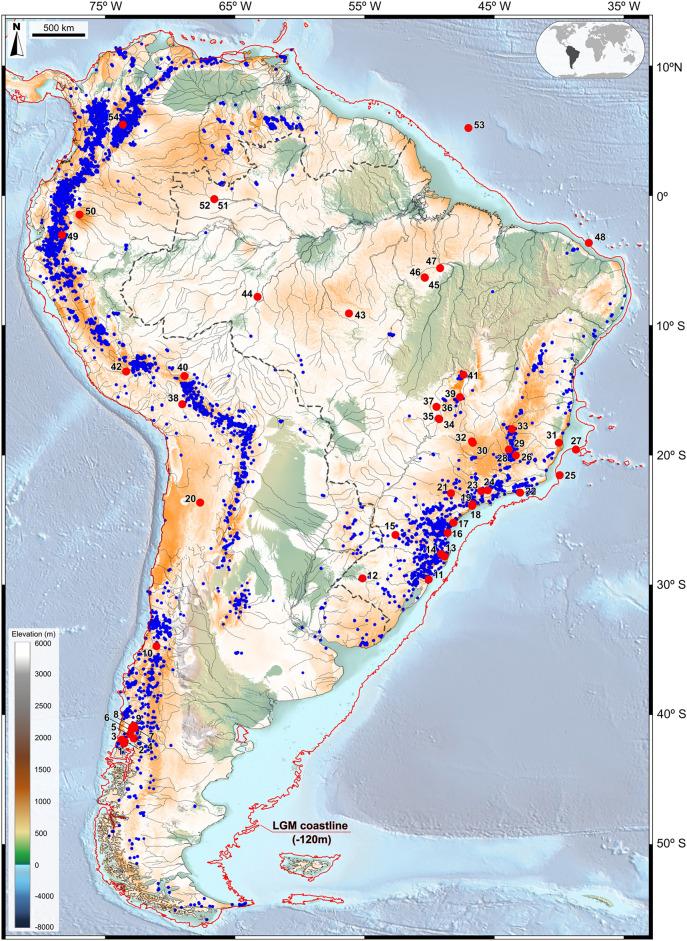
The presence of Andean plant genera in moist forests of the Brazilian Atlantic Coast has been historically hypothesized as the result of cross-continental migrations starting at the eastern Andean flanks. Here we test hypotheses of former connections between the Atlantic and Andean forests by examining distribution patterns of selected cool and moist-adapted plant arboreal taxa present in 54 South American pollen records of the Last Glacial Maximum (LGM), ca. 19-23 cal ka, known to occur in both plant domains. Pollen taxa studied include Araucaria, Drimys, Hedyosmum, Ilex, Myrsine, Podocarpus, Symplocos, Weinmannia, Myrtaceae, Ericaceae and Arecaceae. Past connectivity patterns between these two neotropical regions as well as individual ecological niches during the LGM were explored by cluster analysis of fossil assemblages and modern plant distributions. Additionally, we examined the ecological niche of 137 plant species with shared distributions between the Andes and coastal Brazil. Our results revealed five complex connectivity patterns for South American vegetation linking Andean, Amazonian and Atlantic Forests and one disjunction distribution in southern Chile. This study also provides a better understanding of vegetation cover on the large and shallow South American continental shelf that was exposed due to a global sea level drop.
安第斯植物属在巴西大西洋海岸潮湿森林中的存在,历史上被假设为始于安第斯山脉东侧的跨大陆迁徙的结果。在这里,我们通过检查在已知存在于两个植物区系中的 54 个南美末次冰盛期(LGM),约 19-23 cal ka 的花粉记录中选定的凉爽和潮湿适应植物树栖分类群的分布模式,来检验大西洋和安第斯森林之间以前存在联系的假说。研究的花粉分类群包括南洋杉、杜松、赫德沃姆、冬青、杨梅、罗汉松、Symplocos、薇甘菊、桃金娘科、石南科和棕榈科。通过对化石组合和现代植物分布进行聚类分析,探讨了这两个新热带地区之间以及 LGM 期间个别生态位之间的过去连通模式。此外,我们还检查了在安第斯山脉和巴西沿海地区有共同分布的 137 种植物的生态位。我们的结果揭示了连接安第斯山脉、亚马逊和大西洋森林的五个南美植被复杂连通模式,以及智利南部的一个不连续分布模式。这项研究还更好地了解了由于全球海平面下降而暴露的南美大陆架上的植被覆盖情况。



 Zotero 插件