Fiacre Lise, Nougairède Antoine, Migné Camille, Bayet Maëlle, Cochin Maxime, Dumarest Marine, Helle Teheipuaura, Exbrayat Antoni, Pagès Nonito, Vitour Damien, Richardson Jennifer P, Failloux Anna-Bella, Vazeille Marie, Albina Emmanuel, Lecollinet Sylvie, Gonzalez Gaëlle
UMR VIRO, ANSES, ENVA, INRAE Virologie, Laboratoire de Santé Animale, Maisons-Alfort, France.
UMR ASTRE, CIRAD, Petit-Bourg, Guadeloupe.
Front Microbiol. 2024 Jan 17;14:1324069. doi: 10.3389/fmicb.2023.1324069. eCollection 2023.
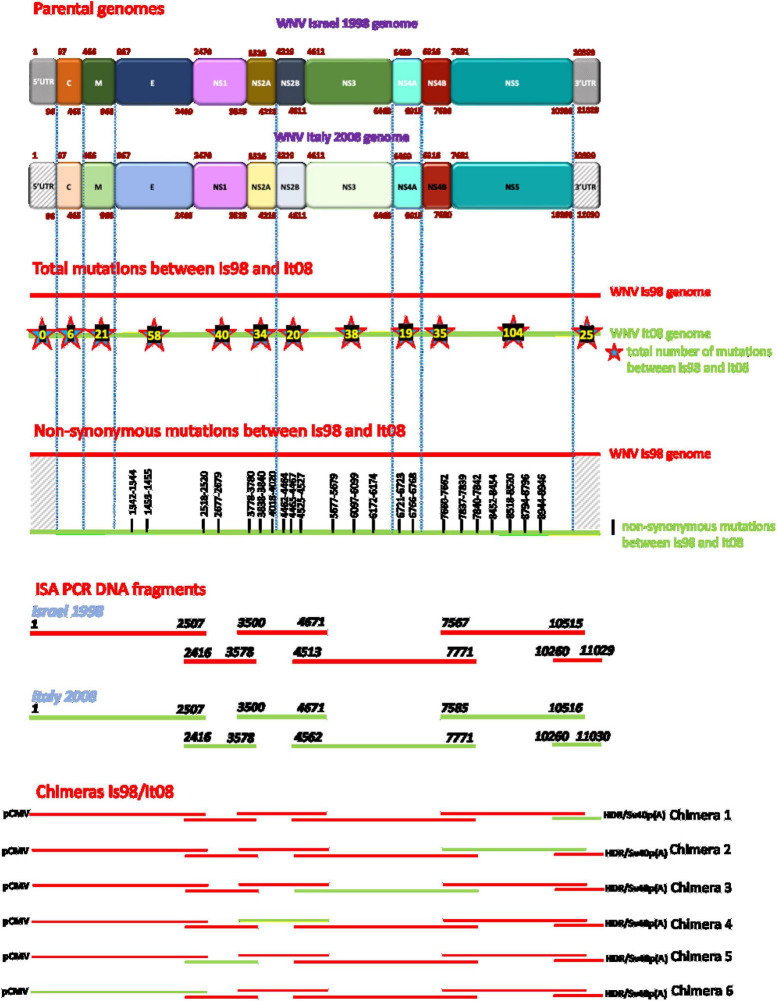
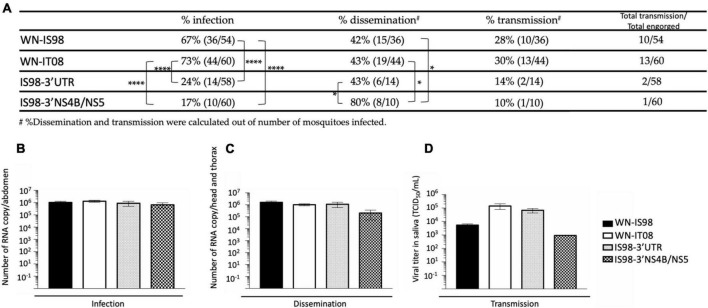
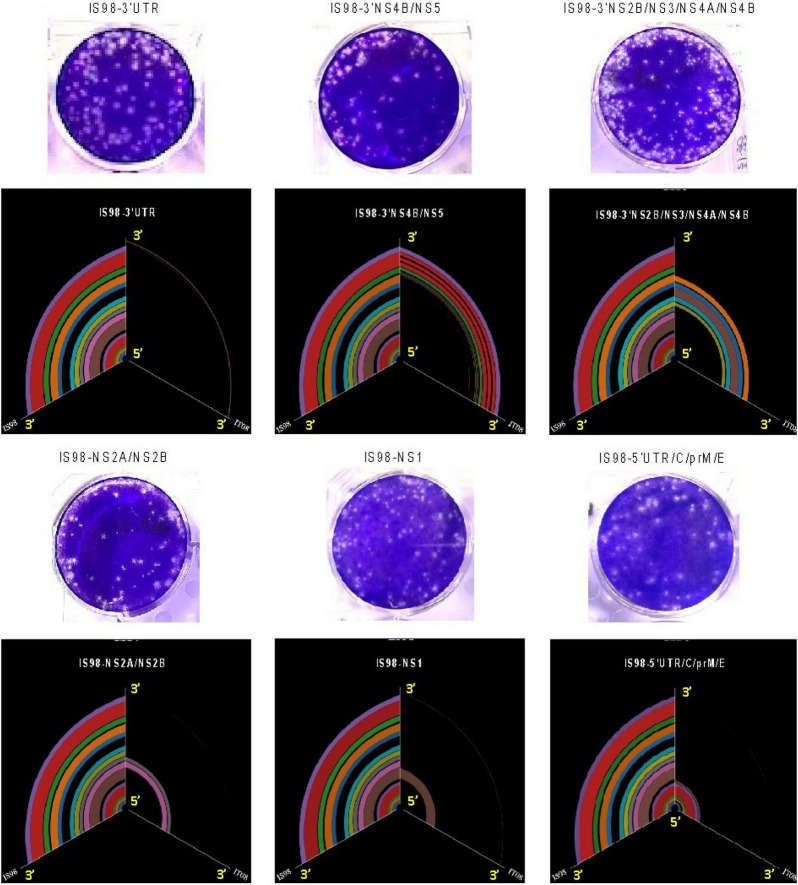
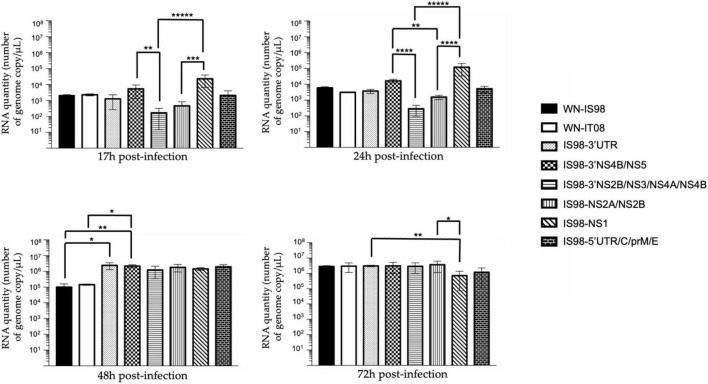
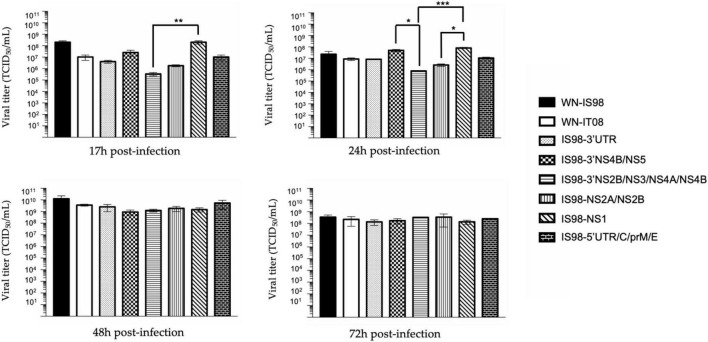
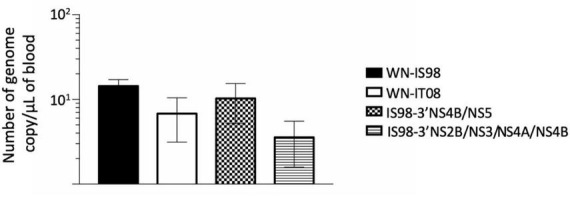
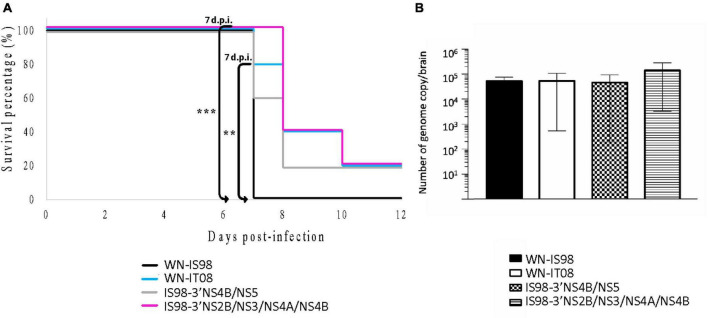
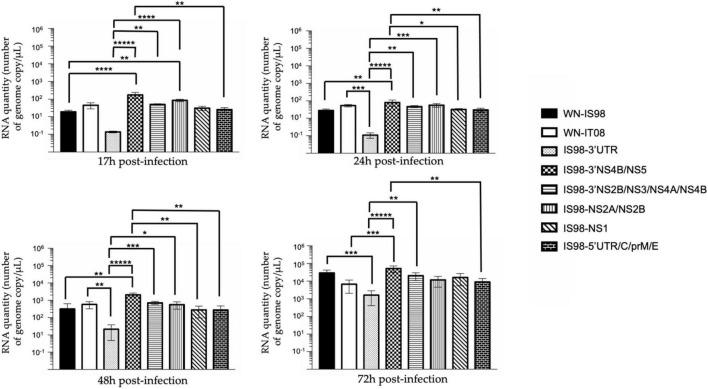
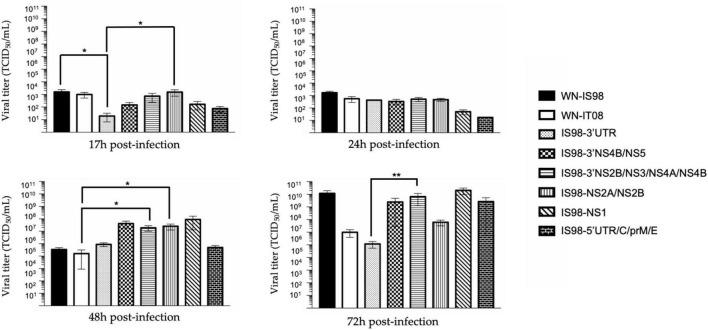
West Nile virus (WNV) is a single-stranded positive-sense RNA virus (+ssRNA) belonging to the genus . Its enzootic cycle involves mosquito vectors, mainly , and wild birds as reservoir hosts, while mammals, such as humans and equids, are incidental dead-end hosts. It was first discovered in 1934 in Uganda, and since 1999 has been responsible for frequent outbreaks in humans, horses and wild birds, mostly in America and in Europe. Virus spread, as well as outbreak severity, can be influenced by many ecological factors, such as reservoir host availability, biodiversity, movements and competence, mosquito abundance, distribution and vector competence, by environmental factors such as temperature, land use and precipitation, as well as by virus genetic factors influencing virulence or transmission. Former studies have investigated WNV factors of virulence, but few have compared viral genetic determinants of pathogenicity in different host species, and even fewer have considered the genetic drivers of virus invasiveness and excretion in vector. In this study, we characterized WNV genetic factors implicated in the difference in virulence observed in two lineage 1 WNV strains from the Mediterranean Basin, the first isolated during a significant outbreak reported in Israel in 1998, and the second from a milder outbreak in Italy in 2008. We used an innovative and powerful reverse genetic tool, e.g., ISA () to generate chimeras between Israel 1998 and Italy 2008 strains, focusing on non-structural (NS) proteins and the 3'UTR non-coding region. We analyzed the replication of these chimeras and their progenitors in mammals, in BALB/cByJ mice, and vector competence in mosquitoes. Results obtained in BALB/cByJ mice suggest a role of the NS2B/NS3/NS4B/NS5 genomic region in viral attenuation in mammals, while NS4B/NS5/3'UTR regions are important in infection and possibly in vector competence.
西尼罗河病毒(WNV)是一种单链正链RNA病毒(+ssRNA),属于该属。其动物疫源循环涉及蚊子媒介,主要是,以及作为储存宿主的野生鸟类,而哺乳动物,如人类和马,则是偶然的终末宿主。它于1934年在乌干达首次被发现,自1999年以来,主要在美国和欧洲导致人类、马匹和野生鸟类频繁爆发疫情。病毒传播以及疫情严重程度可能受到许多生态因素的影响,如储存宿主的可获得性、生物多样性、活动和能力、蚊子数量、分布和媒介能力,也受到温度、土地利用和降水等环境因素的影响,以及影响毒力或传播的病毒遗传因素的影响。以前的研究调查了西尼罗河病毒的毒力因素,但很少有研究比较不同宿主物种中致病性的病毒遗传决定因素,甚至更少有人考虑病毒在媒介中的侵袭性和排泄的遗传驱动因素。在本研究中,我们对涉及在地中海盆地分离的两株1型西尼罗河病毒毒株毒力差异的遗传因素进行了表征,第一株于1998年在以色列报告的一次重大疫情期间分离得到,第二株于2008年在意大利一次较轻的疫情中分离得到。我们使用了一种创新且强大的反向遗传工具,即ISA(),在1998年以色列毒株和2008年意大利毒株之间产生嵌合体,重点关注非结构(NS)蛋白和3'UTR非编码区。我们分析了这些嵌合体及其亲本在哺乳动物(BALB/cByJ小鼠)中的复制情况以及在蚊子中的媒介能力。在BALB/cByJ小鼠中获得的结果表明,NS2B/NS3/NS4B/NS5基因组区域在病毒在哺乳动物中的减毒中起作用,而NS4B/NS5/3'UTR区域在感染以及可能在媒介能力方面很重要。