Department of Mechanical, Aerospace, and Biomedical Engineering, University of Tennessee - Knoxville, 306D Dougherty Engineering Bldg., 1512 Middle Drive, Knoxville, TN, 37996, USA.
Biomedical Engineering, Duke University, Durham, NC, USA.
J Orthop Surg Res. 2024 Feb 2;19(1):108. doi: 10.1186/s13018-024-04581-7.
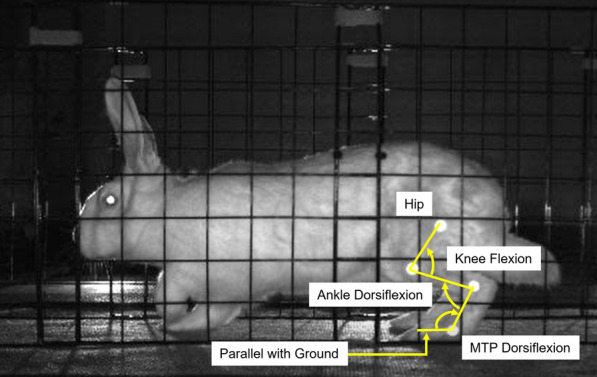
Artificial tendons may be an effective alternative to autologous and allogenic tendon grafts for repairing critically sized tendon defects. The goal of this study was to quantify the in vivo hindlimb biomechanics (ground contact pressure and sagittal-plane motion) during hopping gait of rabbits having a critically sized tendon defect of the tibialis cranialis and either with or without repair using an artificial tendon.
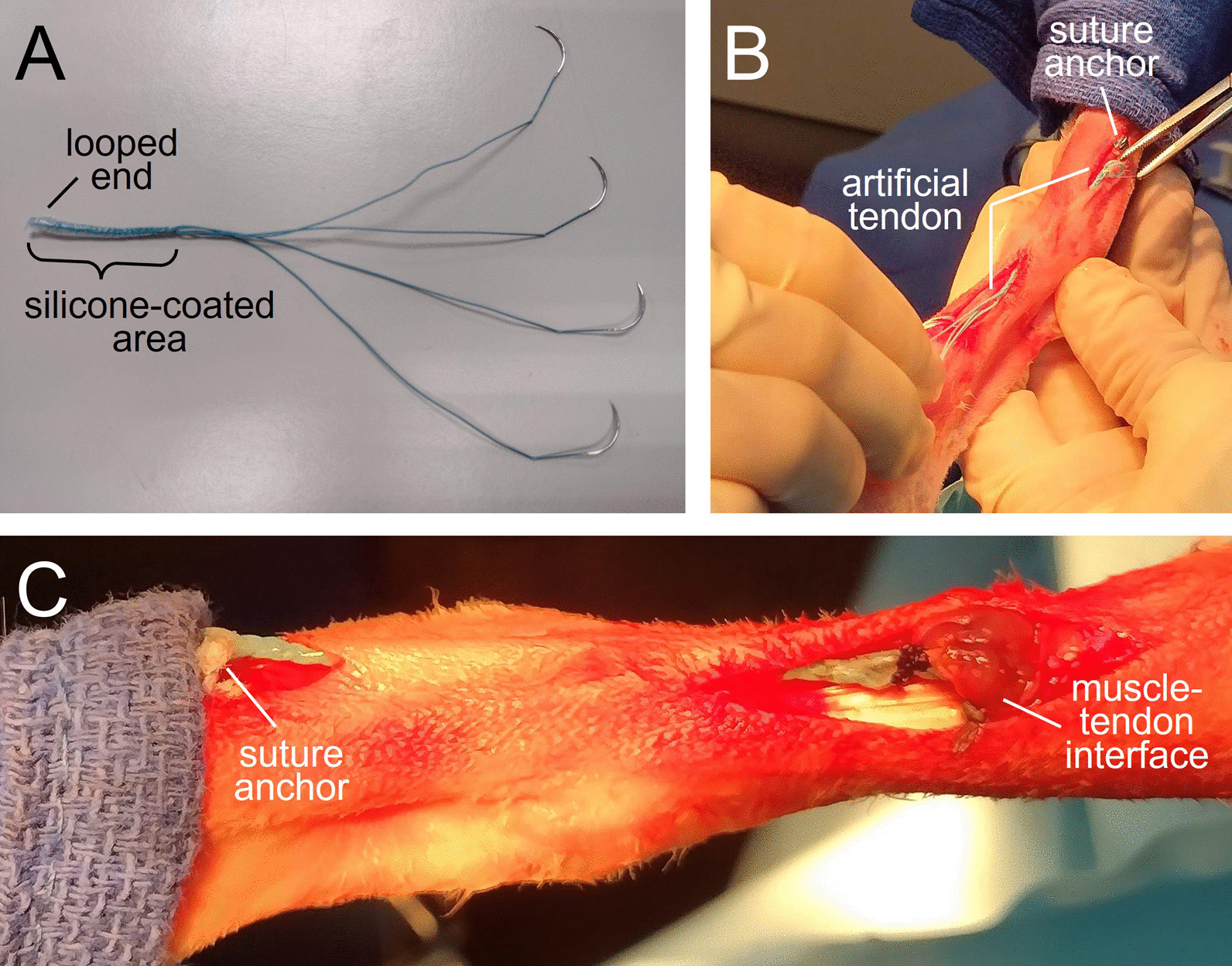
In five rabbits, the tibialis cranialis tendon of the left hindlimb was surgically replaced with a polyester, silicone-coated artificial tendon (PET-SI); five operated control rabbits underwent complete surgical excision of the biological tibialis cranialis tendon in the left hindlimb with no replacement (TE).
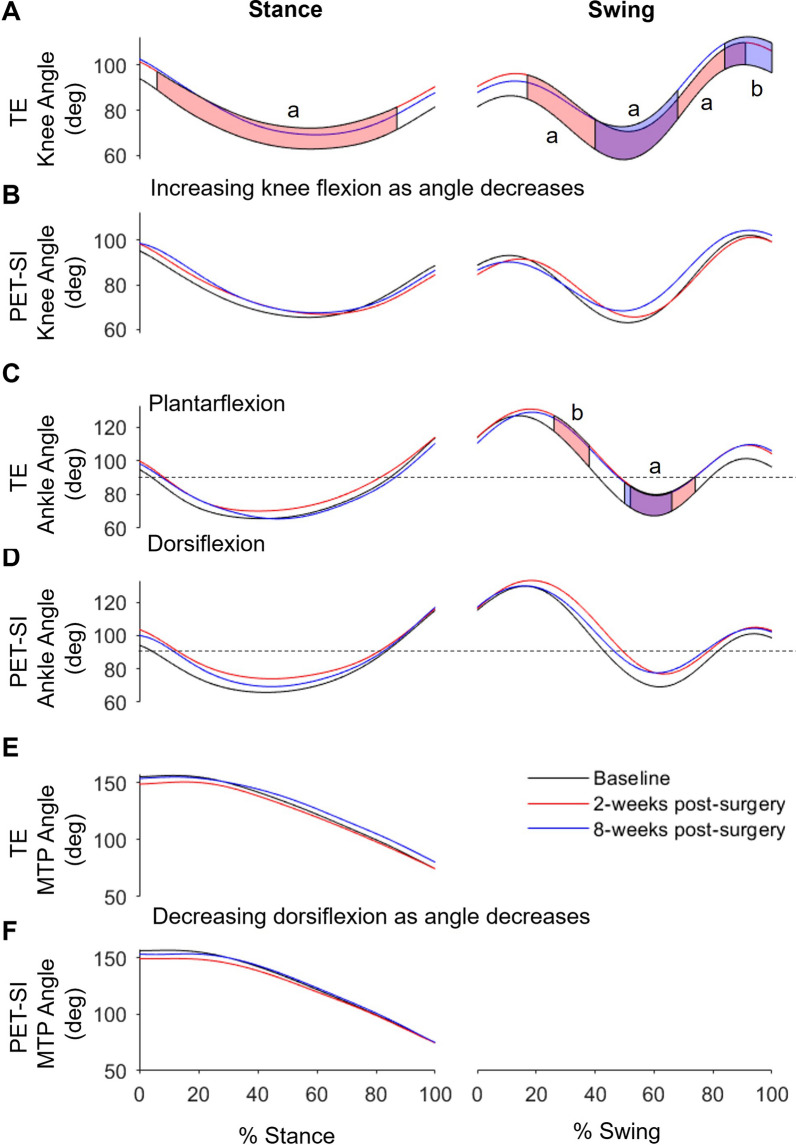
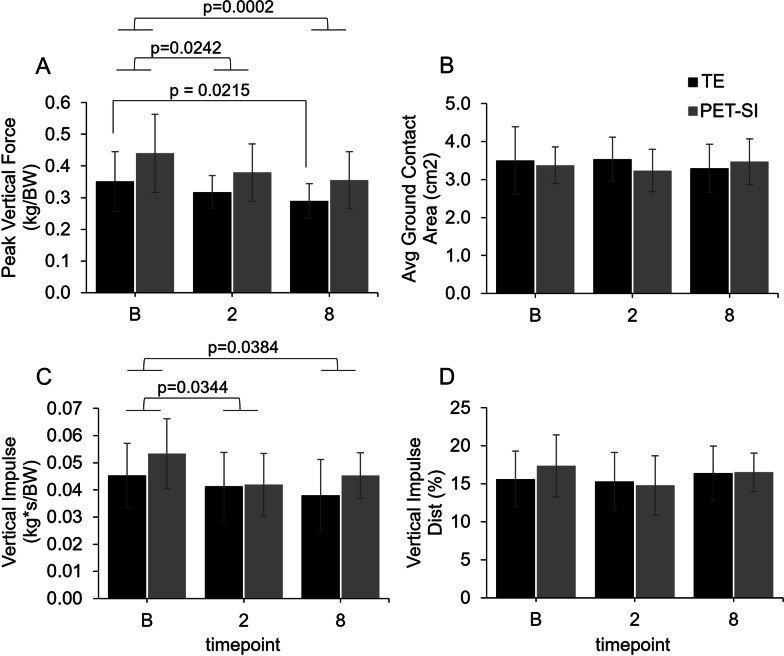
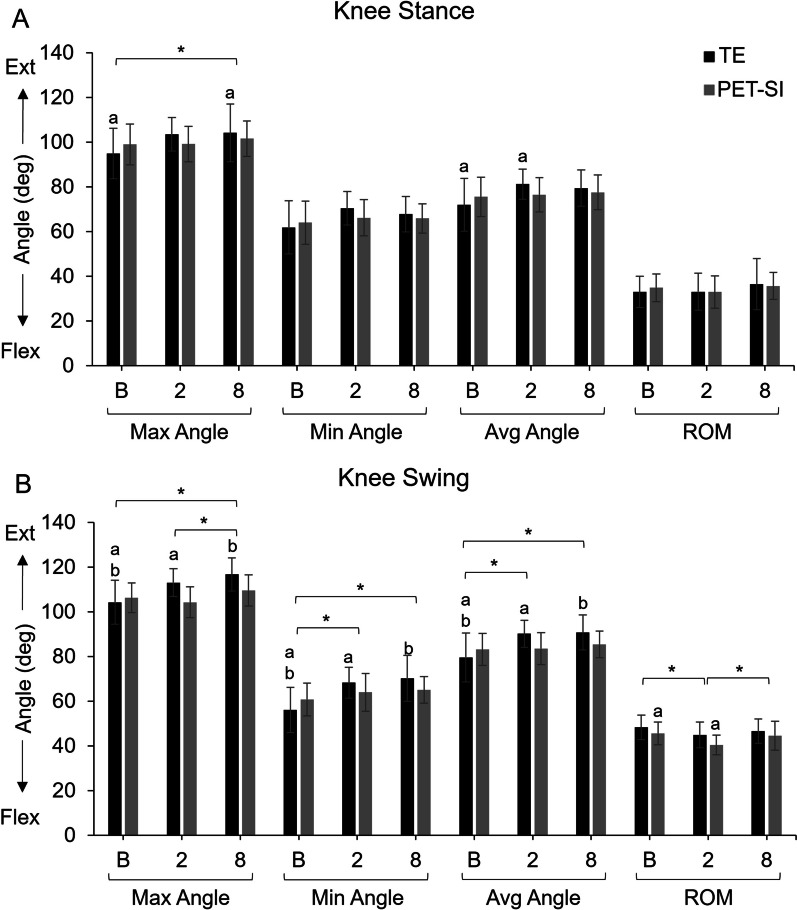
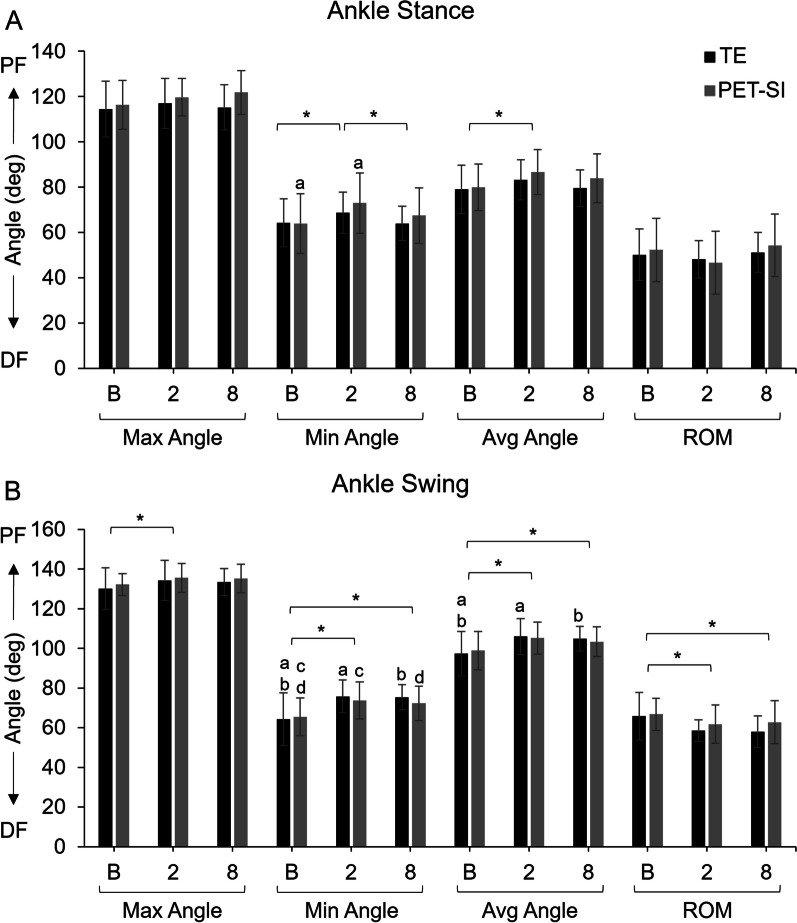
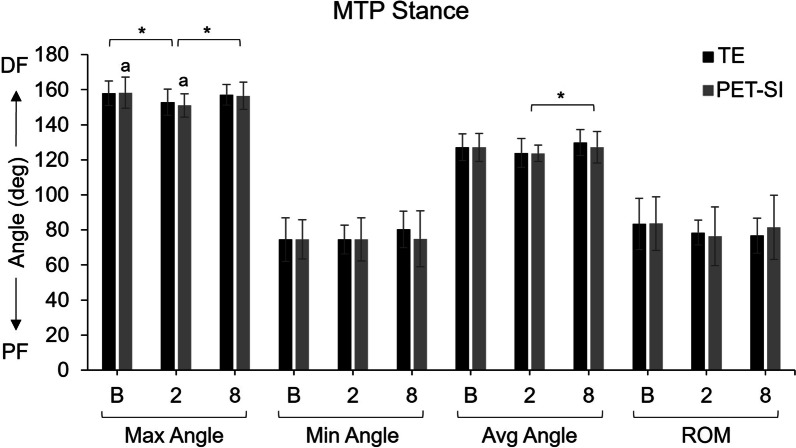
At 8 weeks post-surgery, peak vertical ground contact force in the left hindlimb was statistically significantly less compared to baseline for the TE group (p = 0.0215). Statistical parametric mapping (SPM) analysis showed that, compared to baseline, the knee was significantly more extended during stance at 2 weeks post-surgery and during the swing phase of stride at 2 and 8 weeks post-surgery for the TE group (p < 0.05). Also, the ankle was significantly more plantarflexed during swing at 2 and 8 weeks postoperative for the TE group (p < 0.05). In contrast, there were no significant differences in the SPM analysis among timepoints in the PET-SI group for the knee or ankle.
Our findings suggest that the artificial tibialis cranialis tendon effectively replaced the biomechanical function of the native tendon. Future studies should investigate (1) effects of artificial tendons on other (e.g., neuromuscular) tissues and systems and (2) biomechanical outcomes when there is a delay between tendon injury and artificial tendon implantation.
人工肌腱可能是修复临界尺寸肌腱缺损的自体和同种异体肌腱移植物的有效替代物。本研究的目的是定量测量兔子胫骨前肌临界尺寸肌腱缺损后,使用人工肌腱修复或不修复时,跳跃步态中的后肢生物力学(地面接触压力和矢状面运动)。
在 5 只兔子中,通过手术将左侧后肢的胫骨前肌腱用聚酯、硅涂层人工肌腱(PET-SI)替代;5 只手术对照兔的左侧后肢完全切除生物性胫骨前肌腱,不进行任何替代(TE)。
术后 8 周,与基线相比,TE 组左侧后肢的峰值垂直地面接触力显著降低(p=0.0215)。统计参数映射(SPM)分析显示,与基线相比,TE 组在术后 2 周的站立期和术后 2 周和 8 周的摆动期,膝关节明显伸展(p<0.05)。此外,在术后 2 周和 8 周,TE 组的踝关节在摆动期明显跖屈(p<0.05)。相比之下,在 PET-SI 组中,在各时间点的 SPM 分析中,膝关节或踝关节均无显著差异。
我们的发现表明,人工胫骨前肌肌腱有效地替代了天然肌腱的生物力学功能。未来的研究应调查(1)人工肌腱对其他(如神经肌肉)组织和系统的影响,以及(2)在肌腱损伤和人工肌腱植入之间存在时间延迟的情况下,生物力学结果。