Departments of Pathology and Laboratory Medicine, Neurology, and Neurosurgery, Rhode Island Hospital, Lifespan Academic Institutions, and the Warren Alpert Medical School of Brown University, Providence, RI, USA.
Department of Medicine, Rhode Island Hospital, Lifespan Academic Institutions, and the Warren Alpert Medical School of Brown University, Providence, RI, USA.
J Alzheimers Dis. 2024;97(4):1703-1726. doi: 10.3233/JAD-230881.
Agent Orange (AO) is a Vietnam War-era herbicide that contains a 1 : 1 ratio of 2,4-dichlorophenoxyacetic acid (2,4-D) and 2,4,5-trichlorophenoxyacetic acid (2,4,5-T). Emerging evidence suggests that AO exposures cause toxic and degenerative pathologies that may increase the risk for Alzheimer's disease (AD).
This study investigates the effects of the two main AO constituents on key molecular and biochemical indices of AD-type neurodegeneration.
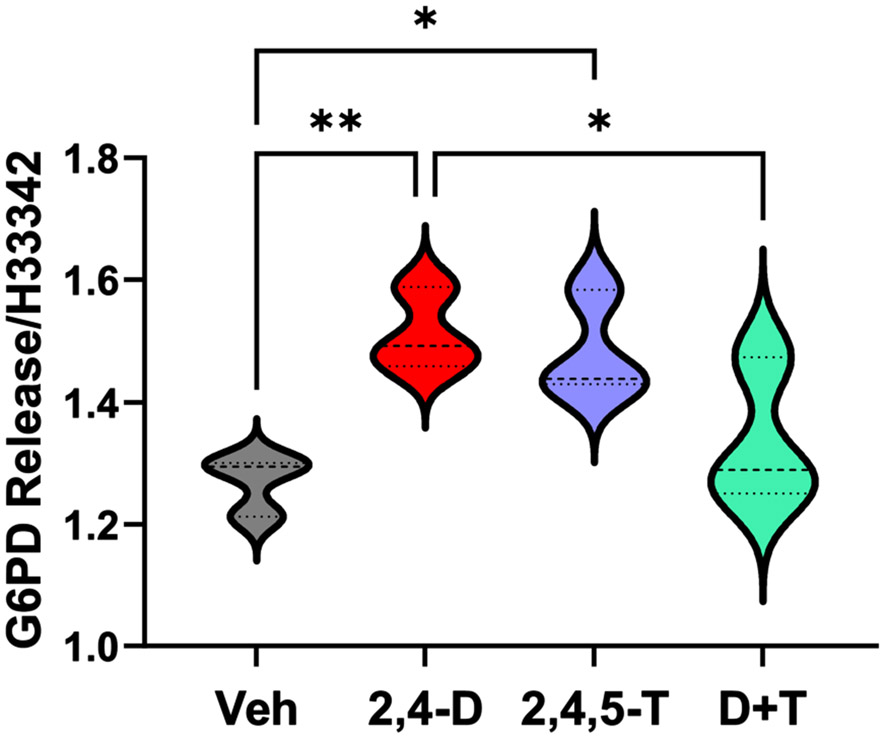
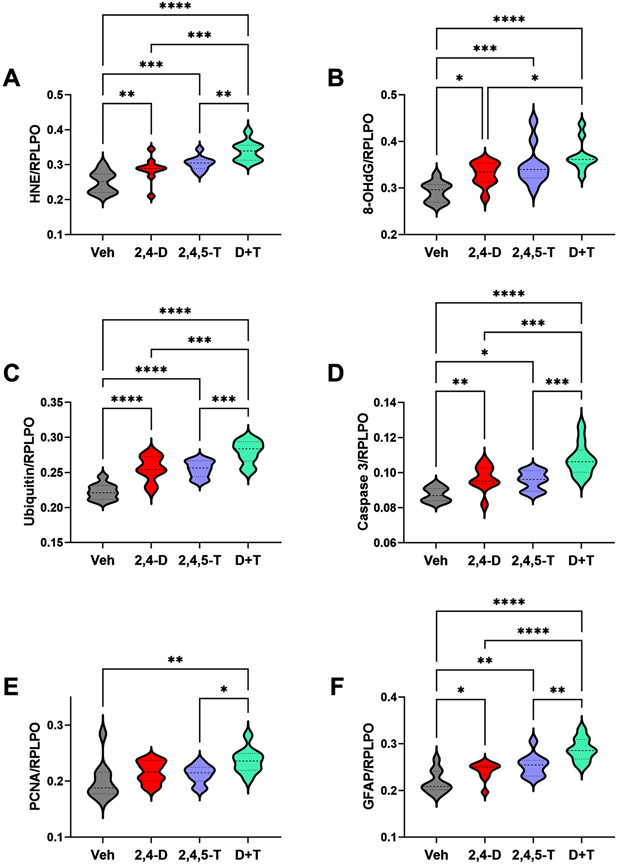
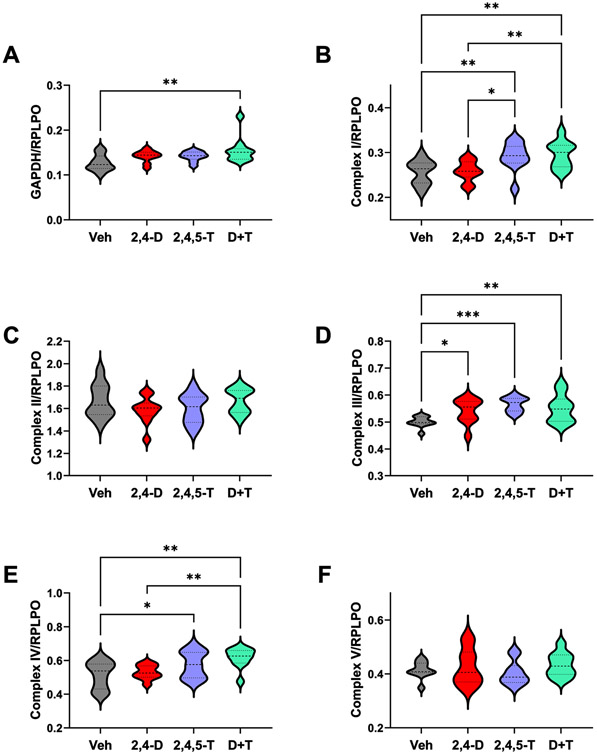
Long Evans rat frontal lobe slice cultures treated with 250μg/ml of 2,4-D, 2,4,5-T, or both (D + T) were evaluated for cytotoxicity, oxidative injury, mitochondrial function, and AD biomarker expression.
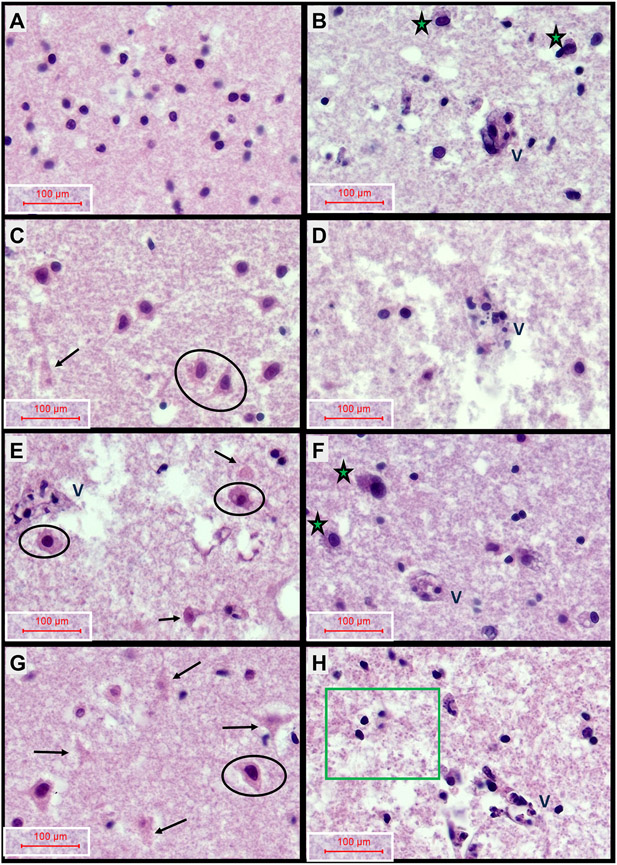
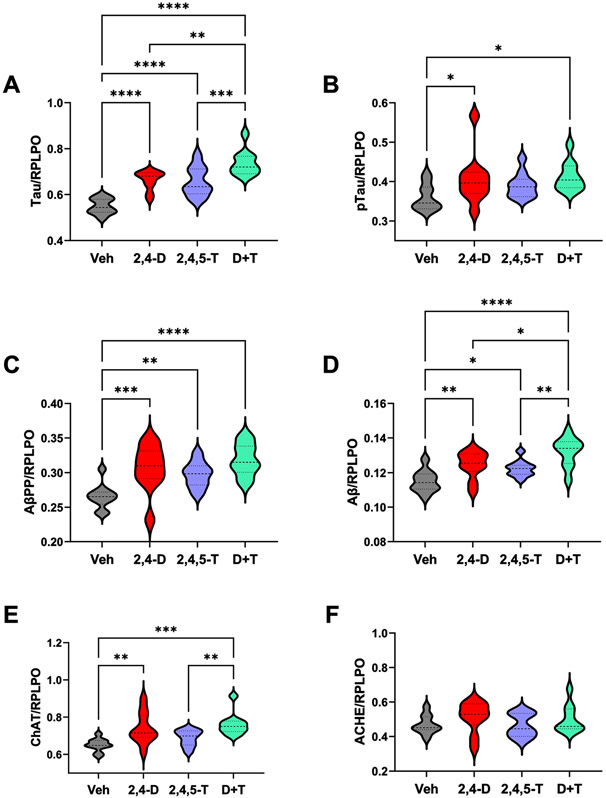
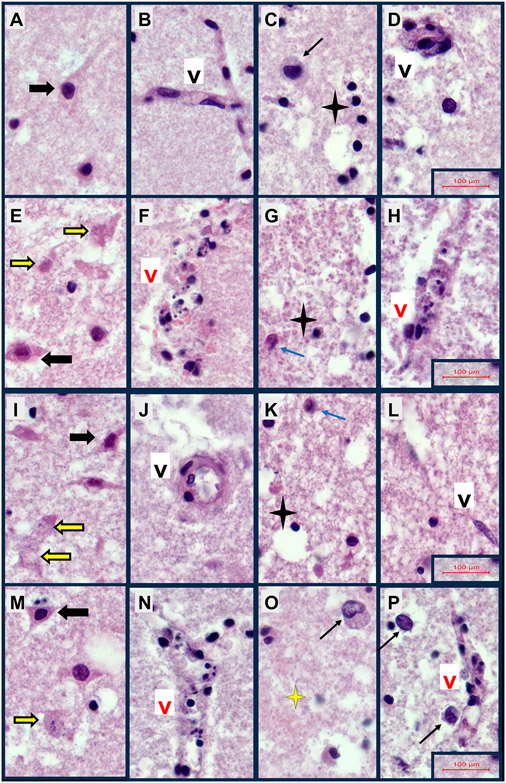
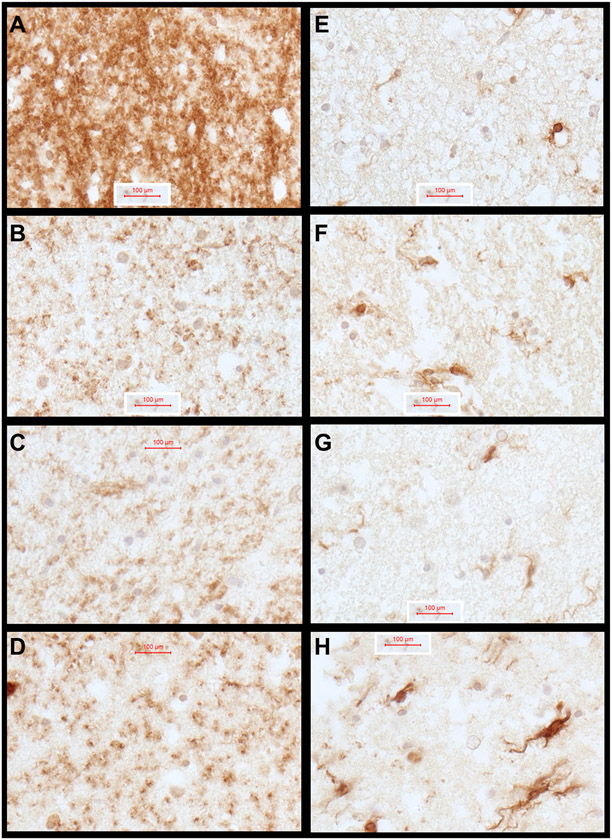
Treatment with the AO constituents caused histopathological changes corresponding to neuronal, white matter, and endothelial cell degeneration, and molecular/biochemical abnormalities indicative of cytotoxic injury, lipid peroxidation, DNA damage, and increased immunoreactivity to activated Caspase 3, glial fibrillary acidic protein, ubiquitin, tau, paired-helical filament phosphorylated tau, AβPP, Aβ, and choline acetyltransferase. Nearly all indices of cellular injury and degeneration were more pronounced in the D + T compared with 2,4-D or 2,4,5-T treated cultures.
Exposures to AO herbicidal chemicals damage frontal lobe brain tissue with molecular and biochemical abnormalities that mimic pathologies associated with early-stage AD-type neurodegeneration. Additional research is needed to evaluate the long-term effects of AO exposures in relation to aging and progressive neurodegeneration in Vietnam War Veterans.
橙剂(AO)是一种越战时期的除草剂,其成分中 2,4-二氯苯氧乙酸(2,4-D)和 2,4,5-三氯苯氧乙酸(2,4,5-T)的比例为 1:1。新出现的证据表明,AO 暴露会导致有毒和退行性病变,从而增加阿尔茨海默病(AD)的风险。
本研究调查了 AO 的两种主要成分对 AD 型神经退行性变关键分子和生化指标的影响。
用 250μg/ml 的 2,4-D、2,4,5-T 或两者混合物(D+T)处理长爪沙鼠额前叶脑片培养物,评估其细胞毒性、氧化损伤、线粒体功能和 AD 生物标志物表达。
AO 成分的处理导致与神经元、白质和内皮细胞退行性变相对应的组织病理学变化,以及细胞毒性损伤、脂质过氧化、DNA 损伤和激活 Caspase 3、神经胶质纤维酸性蛋白、泛素、tau、双螺旋丝磷酸化 tau、AβPP、Aβ 和胆碱乙酰转移酶免疫反应性增加等分子/生化异常。与 2,4-D 或 2,4,5-T 处理的培养物相比,D+T 处理的培养物中几乎所有的细胞损伤和退行性变指标都更为明显。
AO 除草剂化学物质暴露会损害额叶脑组织,导致分子和生化异常,这些异常类似于与早期 AD 型神经退行性变相关的病变。需要进一步研究 AO 暴露与越南战争退伍军人衰老和进行性神经退行性变之间的长期影响。