Division of Clinical Pharmacology, Klinikum der Universität München, Munich, Germany.
Division of Medical Oncology, University Hospital Basel, Basel, Switzerland.
Nat Commun. 2024 Feb 2;15(1):993. doi: 10.1038/s41467-024-45378-w.
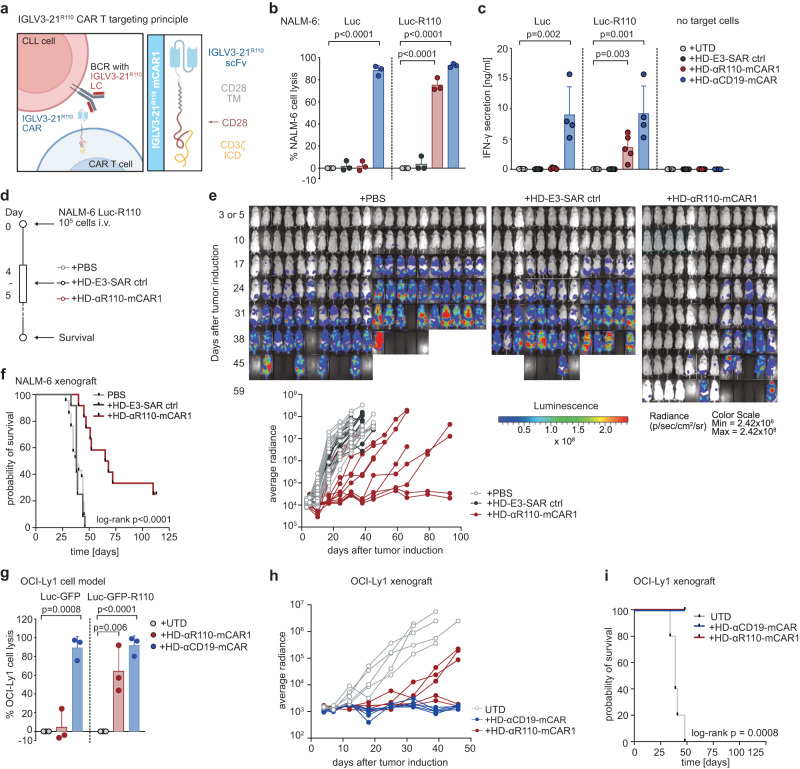
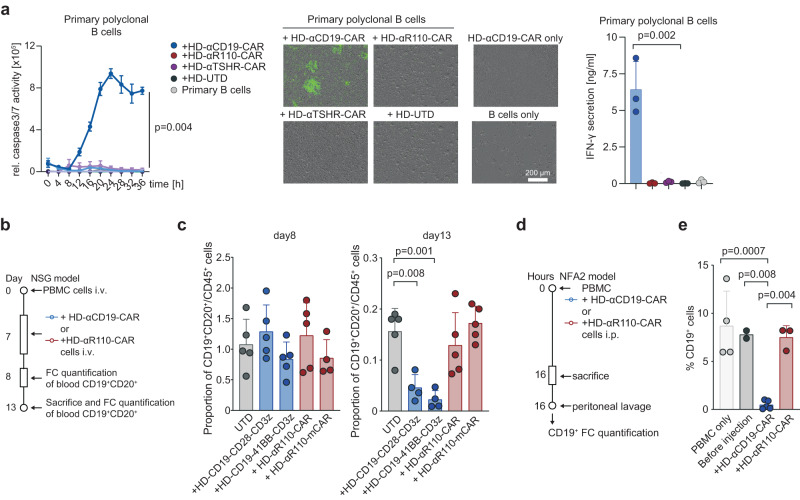
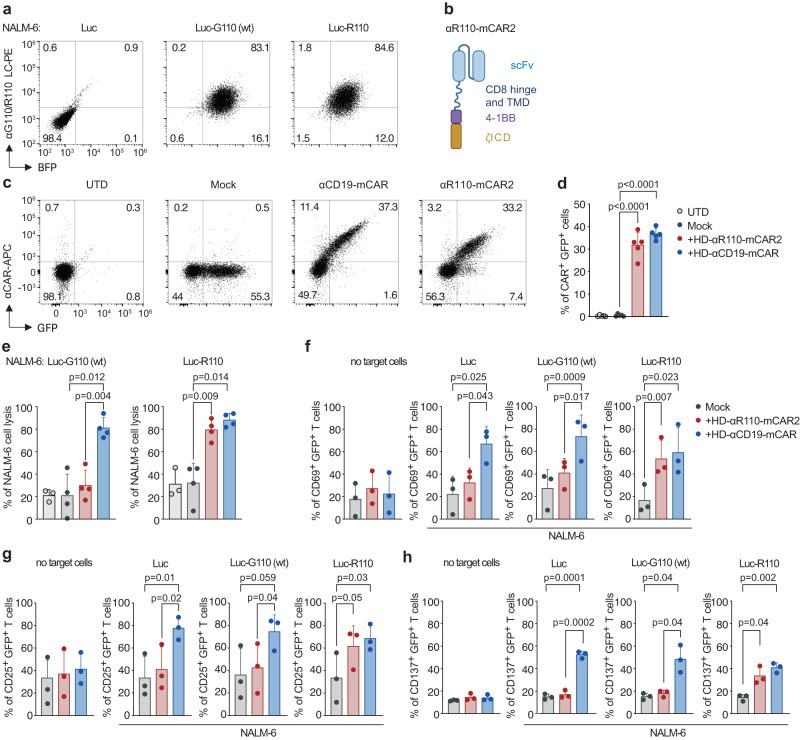
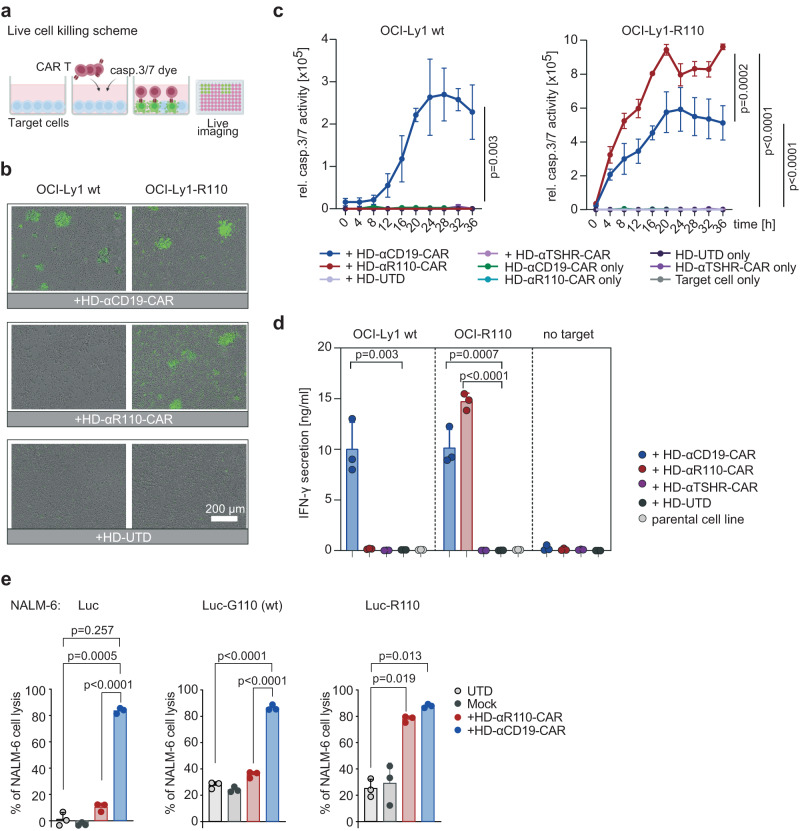
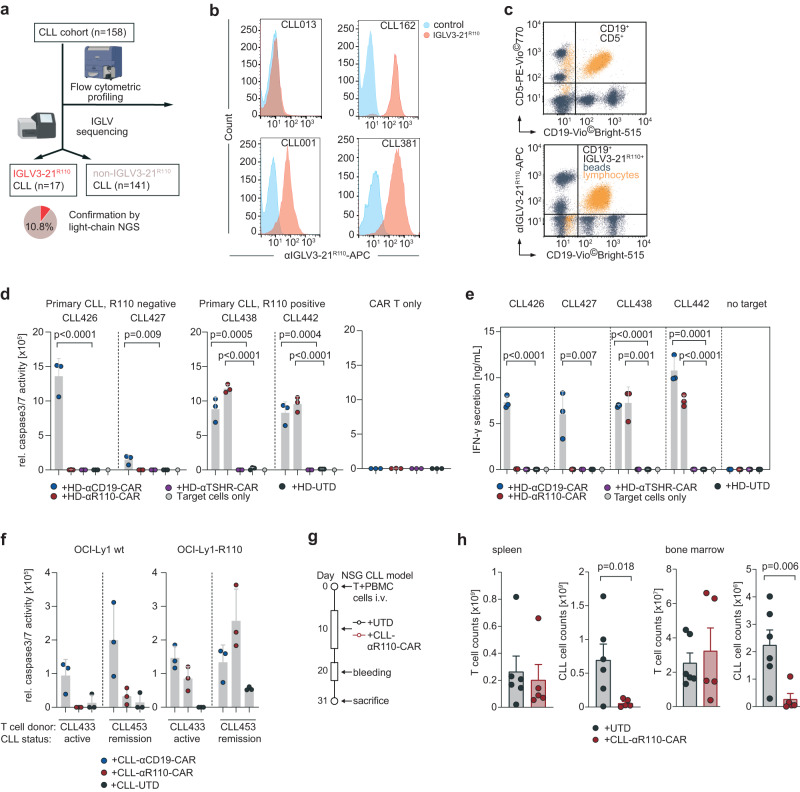
The concept of precision cell therapy targeting tumor-specific mutations is appealing but requires surface-exposed neoepitopes, which is a rarity in cancer. B cell receptors (BCR) of mature lymphoid malignancies are exceptional in that they harbor tumor-specific-stereotyped sequences in the form of point mutations that drive self-engagement of the BCR and autologous signaling. Here, we use a BCR light chain neoepitope defined by a characteristic point mutation (IGLV3-21) for selective targeting of a poor-risk subset of chronic lymphocytic leukemia (CLL) with chimeric antigen receptor (CAR) T cells. We develop murine and humanized CAR constructs expressed in T cells from healthy donors and CLL patients that eradicate IGLV3-21 expressing cell lines and primary CLL cells, but neither cells expressing the non-pathogenic IGLV3-21 light chain nor polyclonal healthy B cells. In vivo experiments confirm epitope-selective cytolysis in xenograft models in female mice using engrafted IGLV3-21 expressing cell lines or primary CLL cells. We further demonstrate in two humanized mouse models lack of cytotoxicity towards human B cells. These data provide the basis for advanced approaches of resistance-preventive and biomarker-guided cellular targeting of functionally relevant lymphoma driver mutations sparing normal B cells.
针对肿瘤特异性突变的精准细胞疗法的概念很有吸引力,但需要表面暴露的新表位,而这在癌症中很少见。成熟淋巴恶性肿瘤的 B 细胞受体 (BCR) 是例外,因为它们以点突变的形式携带肿瘤特异性的定型序列,从而驱动 BCR 的自身结合和自体信号转导。在这里,我们使用 BCR 轻链新表位定义了一个特征性点突变 (IGLV3-21),用于通过嵌合抗原受体 (CAR) T 细胞选择性靶向慢性淋巴细胞白血病 (CLL) 的不良风险亚组。我们开发了在来自健康供体和 CLL 患者的 T 细胞中表达的鼠和人源化 CAR 构建体,这些构建体能消除表达 IGLV3-21 的细胞系和原发性 CLL 细胞,但不能消除表达非致病性 IGLV3-21 轻链的细胞或多克隆健康 B 细胞。体内实验证实,在雌性小鼠的异种移植模型中,使用植入的表达 IGLV3-21 的细胞系或原发性 CLL 细胞,可进行表位选择性细胞溶解。我们进一步在两种人源化小鼠模型中证明,对人 B 细胞没有细胞毒性。这些数据为预防耐药性和基于生物标志物的细胞靶向功能相关淋巴瘤驱动突变提供了基础,同时保留了正常 B 细胞。