Pasques Ot, Munné-Bosch Sergi
Department of Evolutionary Biology, Ecology and Environmental Science, University of Barcelona, Barcelona 08028, Spain.
Research Institute in Biodiversity, University of Barcelona, Barcelona 08028, Spain.
Proc Natl Acad Sci U S A. 2024 Feb 13;121(7):e2317866121. doi: 10.1073/pnas.2317866121. Epub 2024 Feb 5.
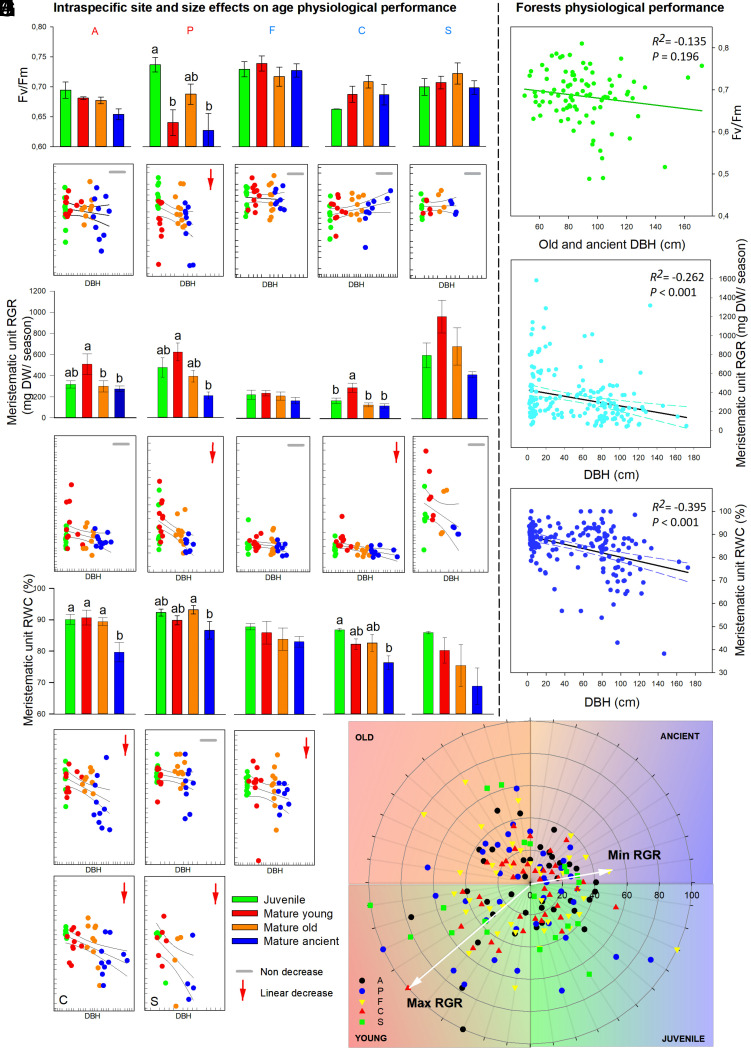
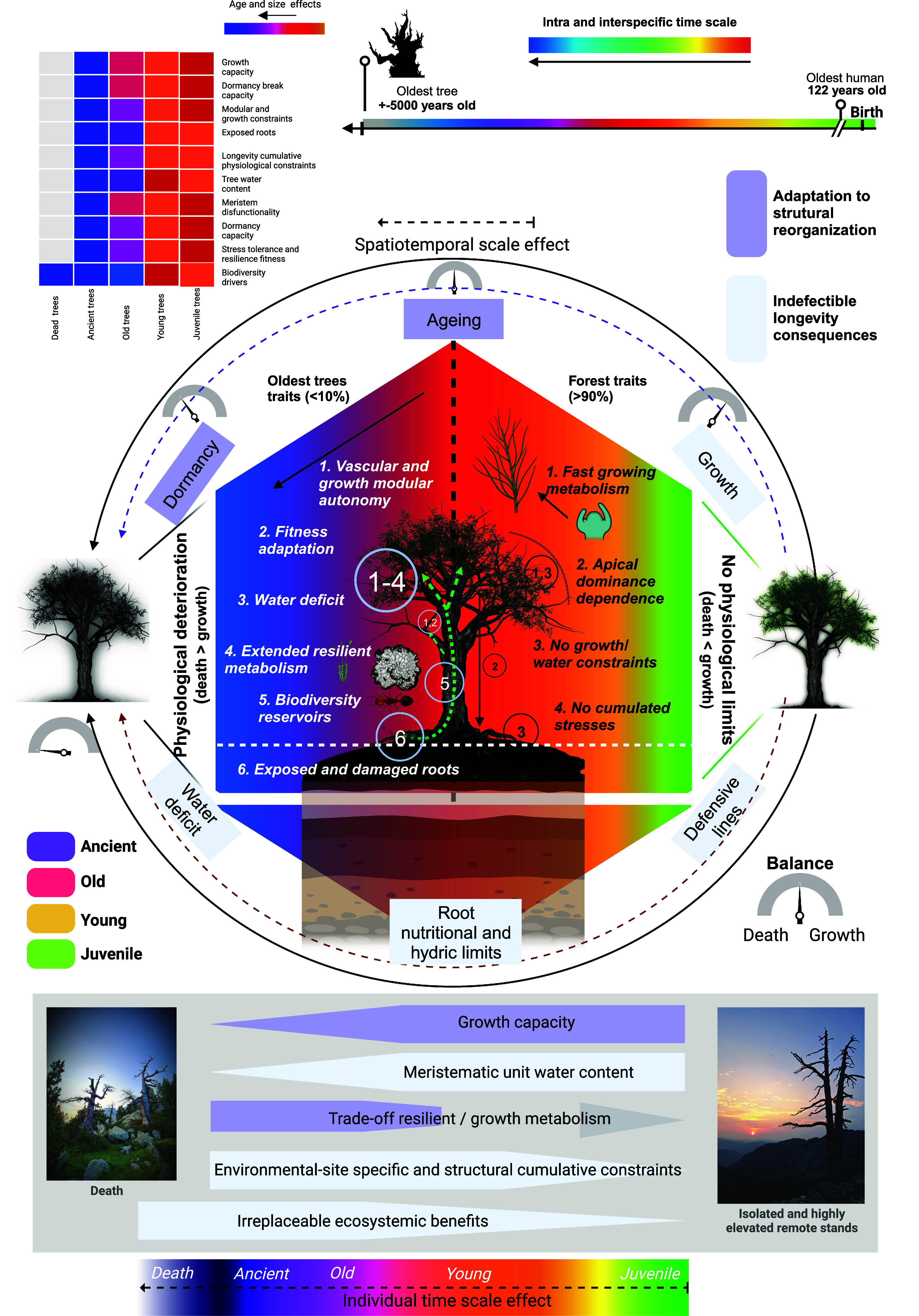
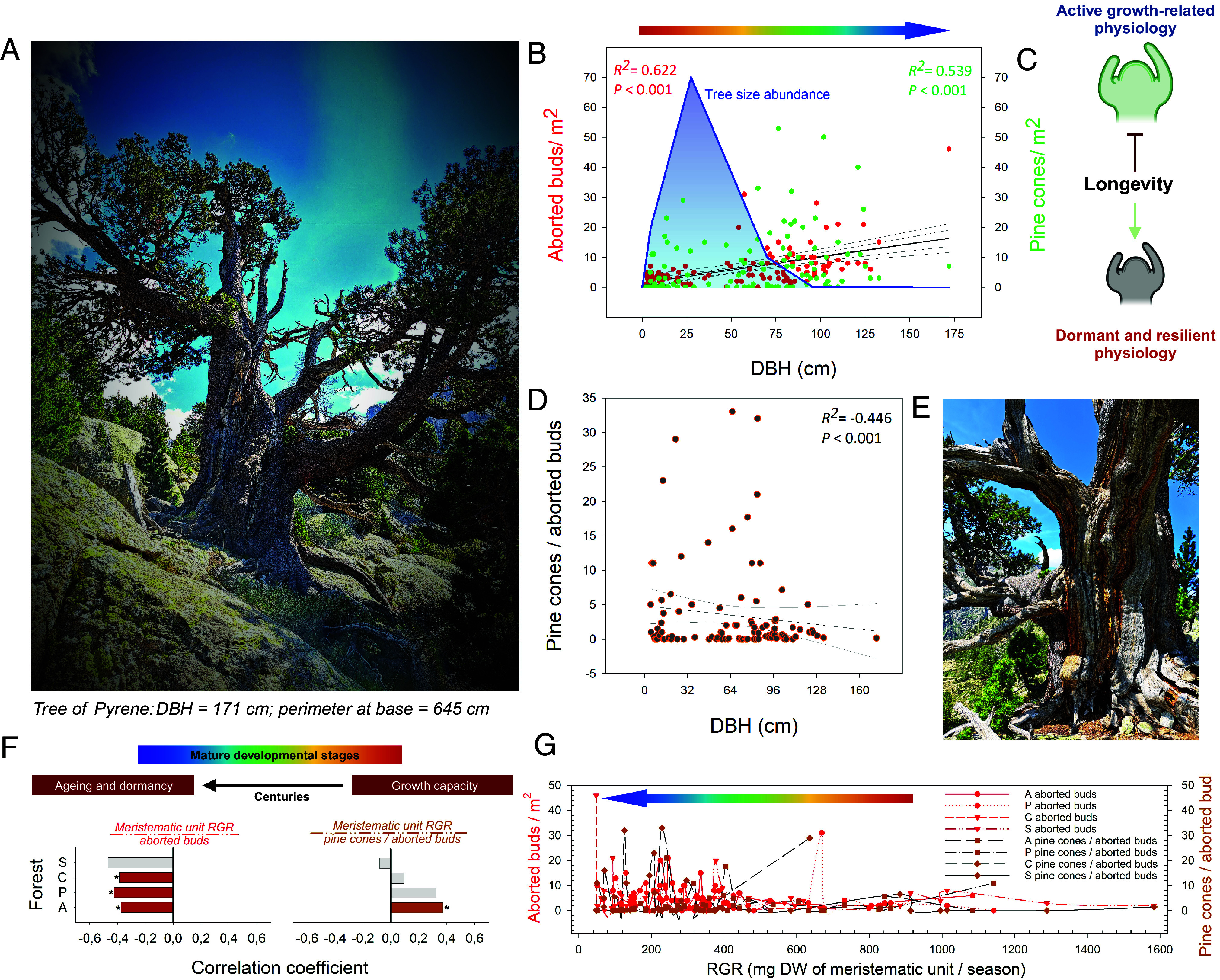
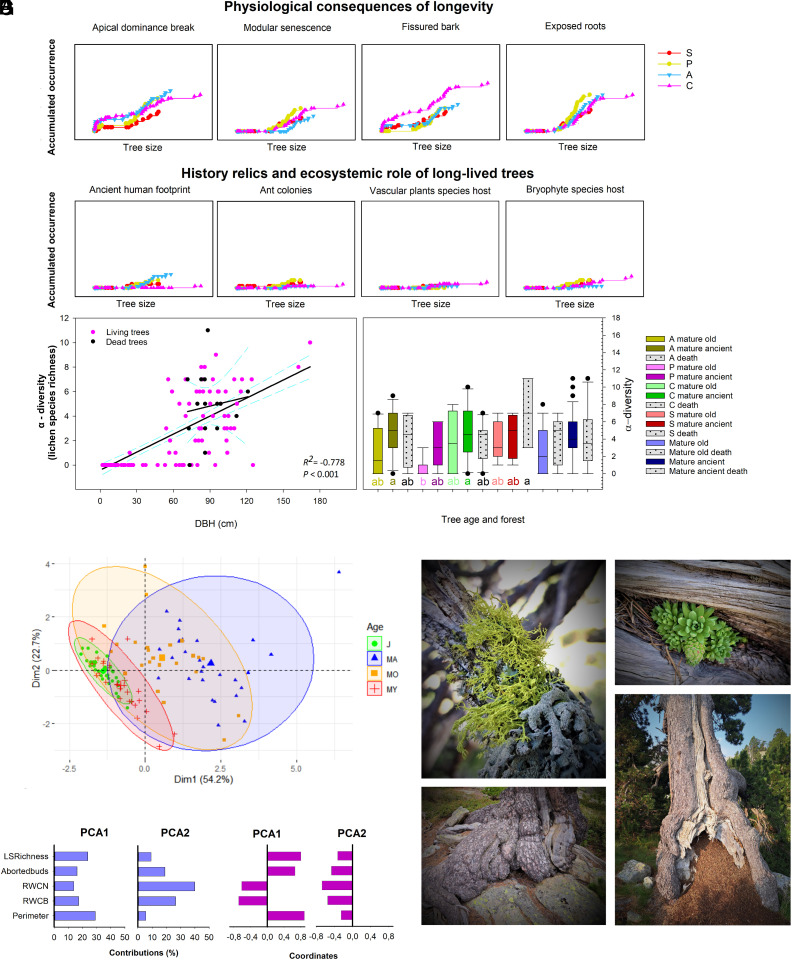
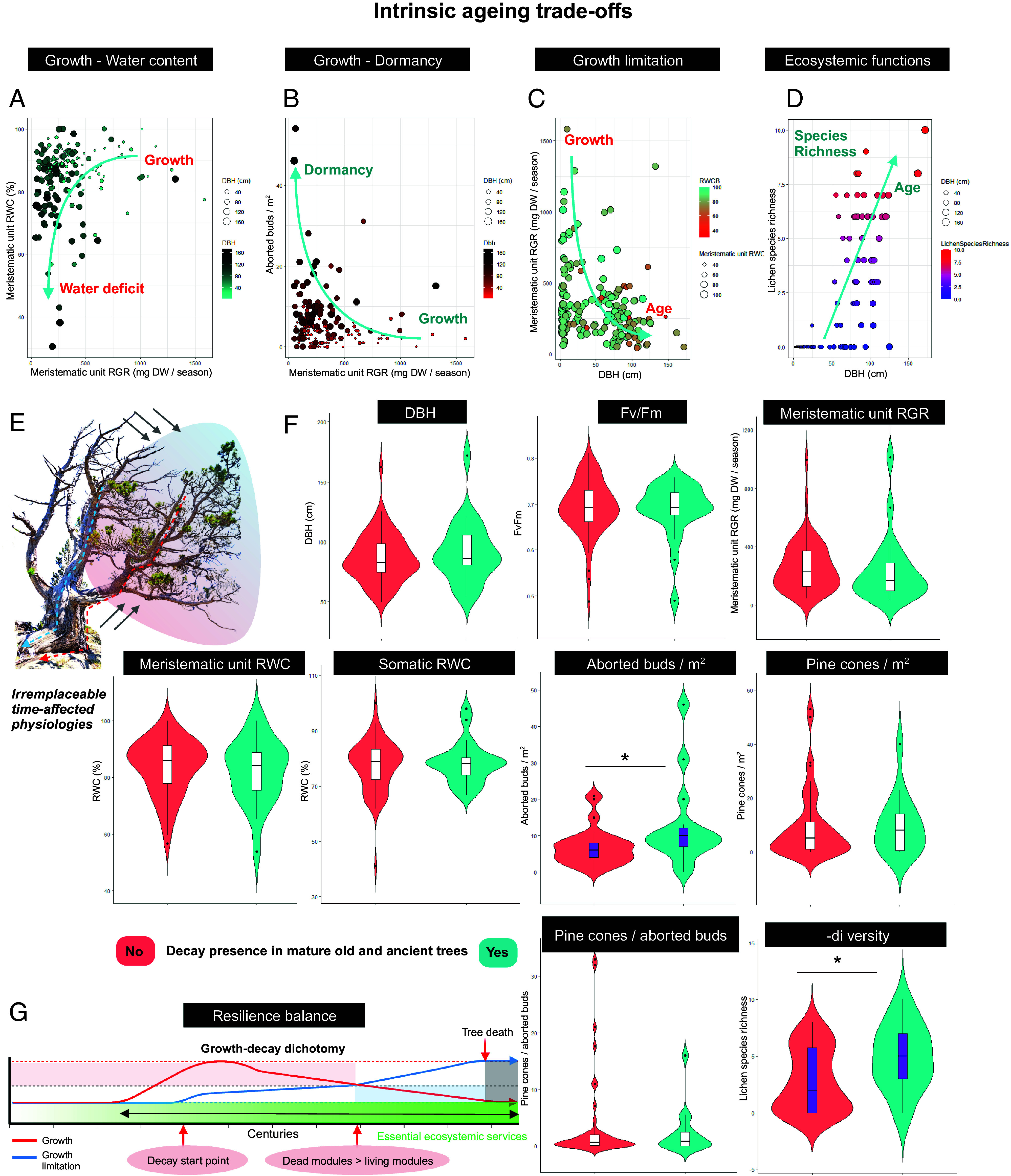
Mature forests and their extremely old trees are rare and threatened ancient vestiges in remote European high-mountain regions. Here, we analyze the role that extremely long-living trees have in mature forests biodiversity in relation to their singular traits underlying longevity. Tree size and age determine relative growth rates, bud abortion, and the water status of long-living trees. The oldest trees suffer indefectible age-related constraints but possess singular evolutionary traits defined by fitness adaptation, modular autonomy, and a resilient metabolism that allow them to have irreplaceable roles in the ecosystem as biodiversity anchors of vulnerable lichen species like . We suggest that the role of ancient trees as unique biodiversity reservoirs is linked to their singular physiological traits associated with longevity. The set of evolutionarily plastic tools that can only be provided by centuries or millennia of longevity helps the oldest trees of mature forests drive singular ecological relationships that are irreplaceable and necessary for ecosystem dynamics.
成熟森林及其极为古老的树木是欧洲偏远高山地区珍稀且受威胁的古老遗迹。在此,我们分析了极长寿树木在成熟森林生物多样性中所起的作用,及其与长寿相关的独特特征。树木的大小和年龄决定了长寿树木的相对生长速率、芽败育和水分状况。最古老的树木受到与年龄相关的不可避免的限制,但拥有由适应性适应、模块化自主性和有弹性的新陈代谢所定义的独特进化特征,这使它们能够在生态系统中作为脆弱地衣物种等生物多样性的支柱发挥不可替代的作用。我们认为,古树作为独特生物多样性储存库的作用与其与长寿相关的独特生理特征有关。只有经过数百年或数千年的长寿才能提供的一系列具有进化可塑性的工具,有助于成熟森林中最古老的树木推动独特的生态关系,这些关系对于生态系统动态来说是不可替代且必不可少的。