Institute of Hygiene & Medical Microbiology, Medical University of Innsbruck, Innsbruck, Austria.
R&D Department, Hycult Biotechnology, Uden, Netherlands.
Front Immunol. 2024 Jan 25;15:1330095. doi: 10.3389/fimmu.2024.1330095. eCollection 2024.
The complement system is part of innate immunity and is comprised of an intricate network of proteins that are vital for host defense and host homeostasis. A distinct mechanism by which complement defends against invading pathogens is through the membrane attack complex (MAC), a lytic structure that forms on target surfaces. The MAC is made up of several complement components, and one indispensable component of the MAC is C7. The role of C7 in MAC assembly is well documented, however, inherent characteristics of C7 are yet to be investigated.
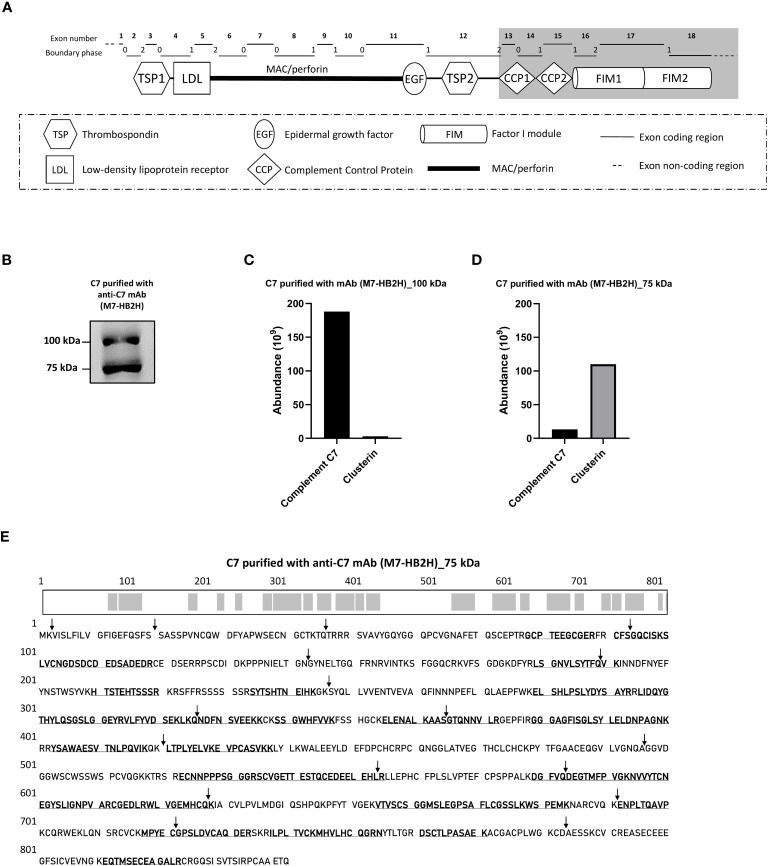
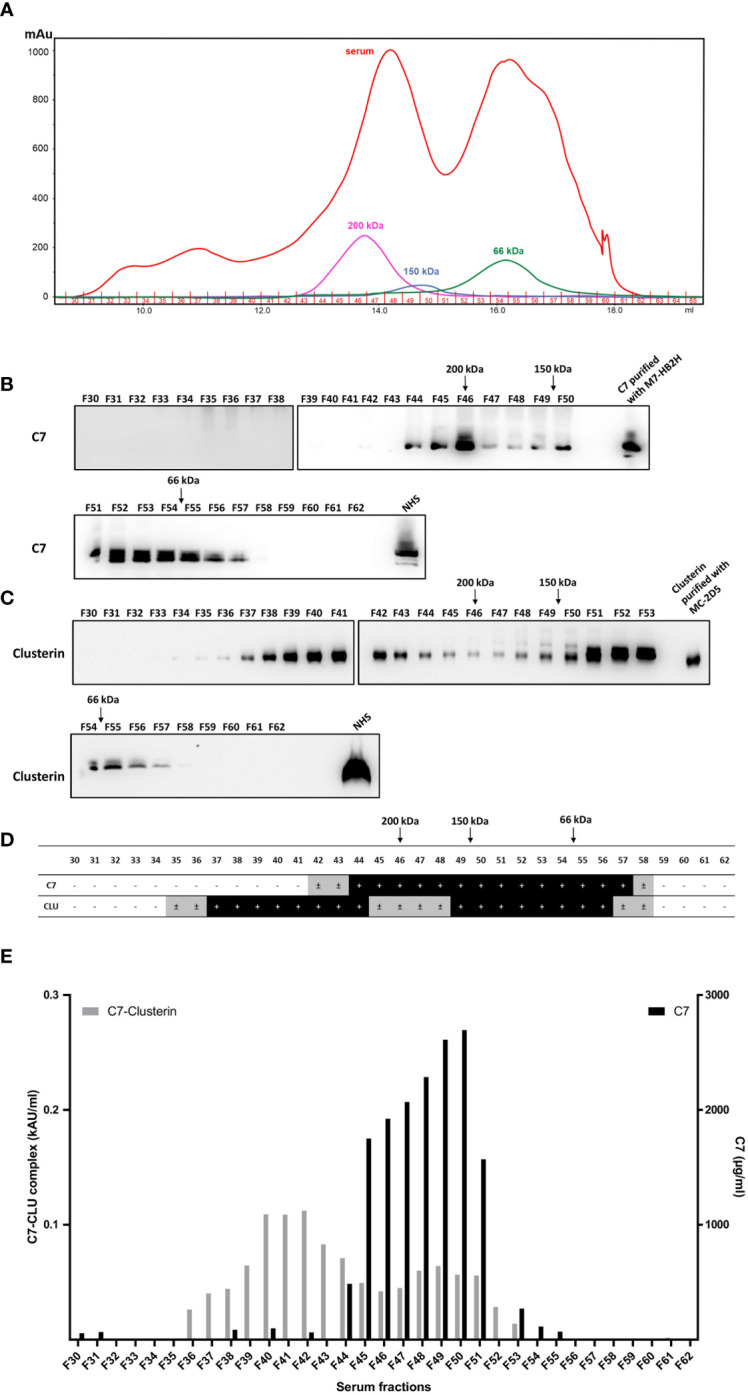
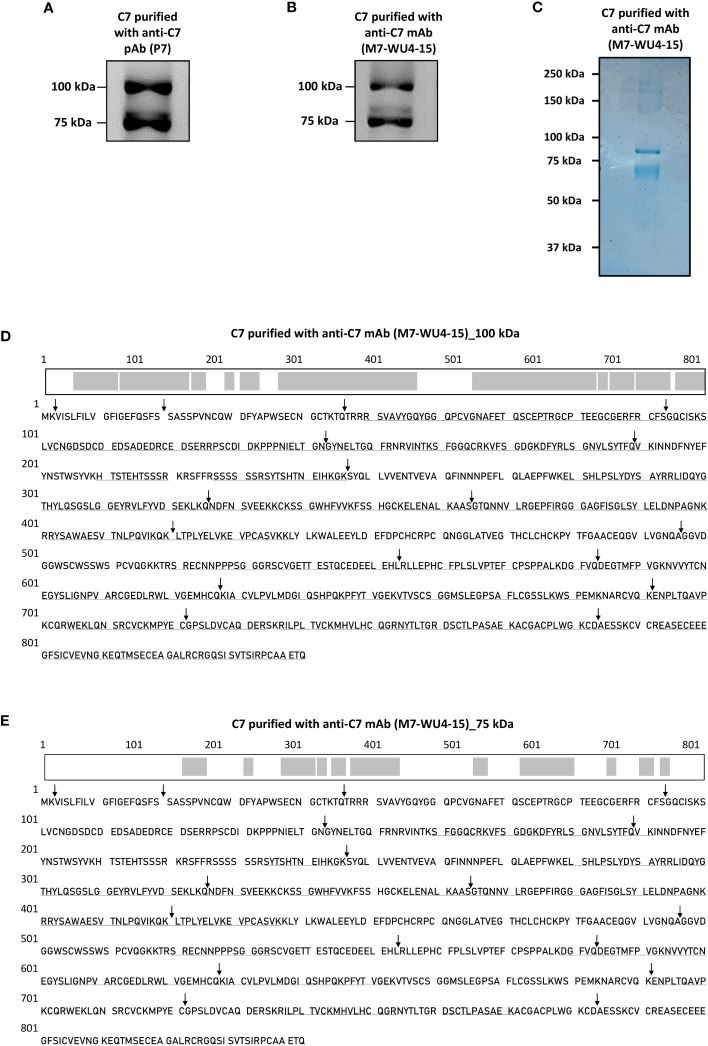
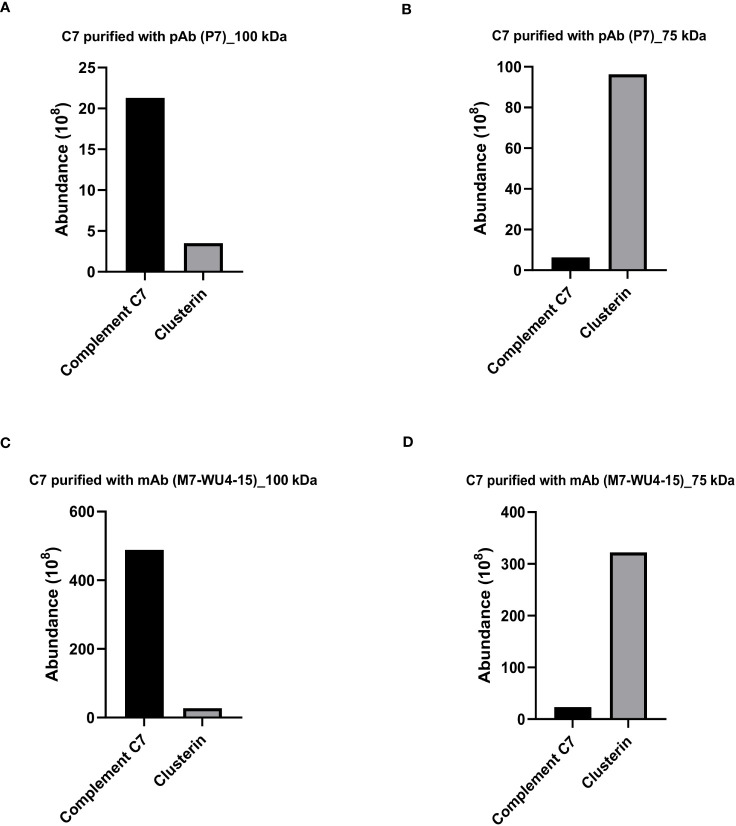
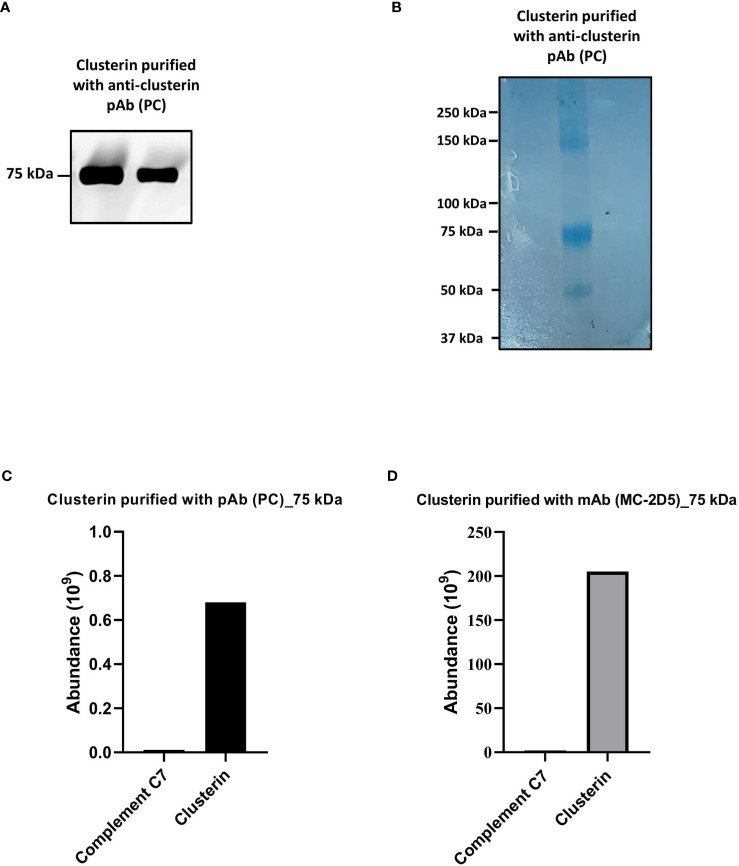
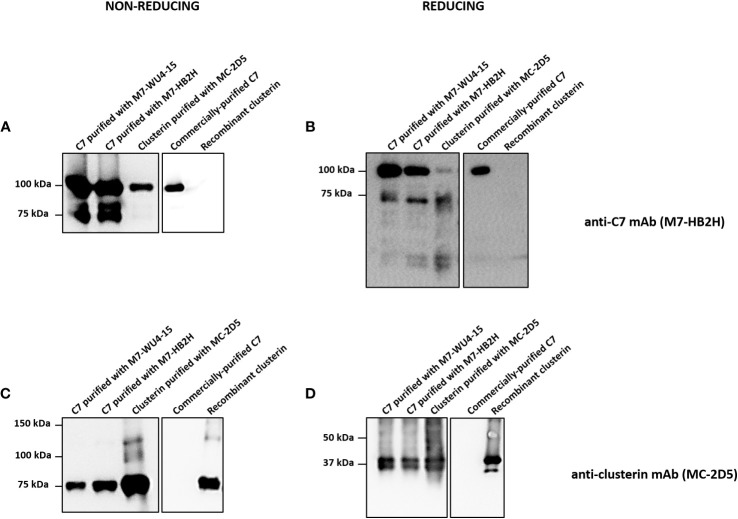
To shed light on the molecular characteristics of C7, we examined the properties of serum-purified C7 acquired using polyclonal and novel monoclonal antibodies. The properties of serum‑purified C7 were investigated through a series of proteolytic analyses, encompassing Western blot and mass spectrometry. The nature of C7 protein-protein interactions were further examined by a novel enzyme-linked immunosorbent assay (ELISA), as well as size‑exclusion chromatography.
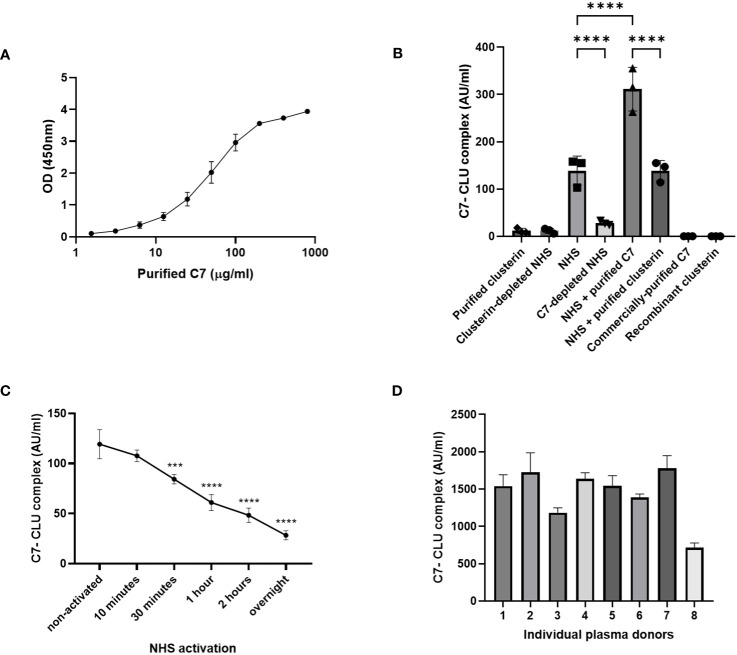
Protein analyses showcased an association between C7 and clusterin, an inhibitory complement regulator. The distinct association between C7 and clusterin was also demonstrated in serum-purified clusterin. Further assessment revealed that a complex between C7 and clusterin (C7-CLU) was detected. The C7-CLU complex was also identified in healthy serum and plasma donors, highlighting the presence of the complex in circulation.
Clusterin is known to dissociate the MAC structure by binding to polymerized C9, nevertheless, here we show clusterin binding to the native form of a terminal complement protein in vivo. The presented data reveal that C7 exhibits characteristics beyond that of MAC assembly, instigating further investigation of the effector role that the C7-CLU complex plays in the complement cascade.
补体系统是先天免疫系统的一部分,由一系列复杂的蛋白质组成,对宿主防御和宿主内稳性至关重要。补体通过膜攻击复合物(MAC)来抵御入侵病原体,这是一种在靶表面形成的溶细胞结构,是一种独特的机制。MAC 由几种补体成分组成,MAC 的一个不可或缺的成分是 C7。C7 在 MAC 组装中的作用已有详细记录,但 C7 的固有特性尚未得到研究。
为了阐明 C7 的分子特征,我们使用多克隆和新型单克隆抗体检查了从血清中纯化的 C7 的特性。通过一系列蛋白水解分析,包括 Western blot 和质谱,研究了血清纯化的 C7 的特性。通过一种新型酶联免疫吸附测定(ELISA)以及分子筛层析进一步研究了 C7 蛋白-蛋白相互作用的性质。
蛋白分析表明 C7 与补体抑制调节剂簇蛋白之间存在关联。在血清纯化的簇蛋白中也证明了 C7 与簇蛋白之间的独特关联。进一步评估显示,C7 与簇蛋白(C7-CLU)之间存在复合物。在健康的血清和血浆供体中也检测到了 C7-CLU 复合物,突出了该复合物在循环中的存在。
已知簇蛋白通过与聚合的 C9 结合来解离 MAC 结构,但在这里,我们显示簇蛋白与体内终末补体蛋白的天然形式结合。所呈现的数据表明 C7 表现出超出 MAC 组装特征的特性,这促使进一步研究 C7-CLU 复合物在补体级联反应中发挥的效应作用。