de Oliveira Dias Karoline Pádua, Stefani Vanessa
Postgraduation Program in Ecology, Conservation and Biodiversity, Federal University of Uberlândia, Uberlândia 38405-302, Brazil.
Laboratory of Venomous Arthropods of the Cerrado, Institute of Biology, Federal University of Uberlândia, Uberlândia 38405-302, Brazil.
Plants (Basel). 2024 Jan 26;13(3):368. doi: 10.3390/plants13030368.
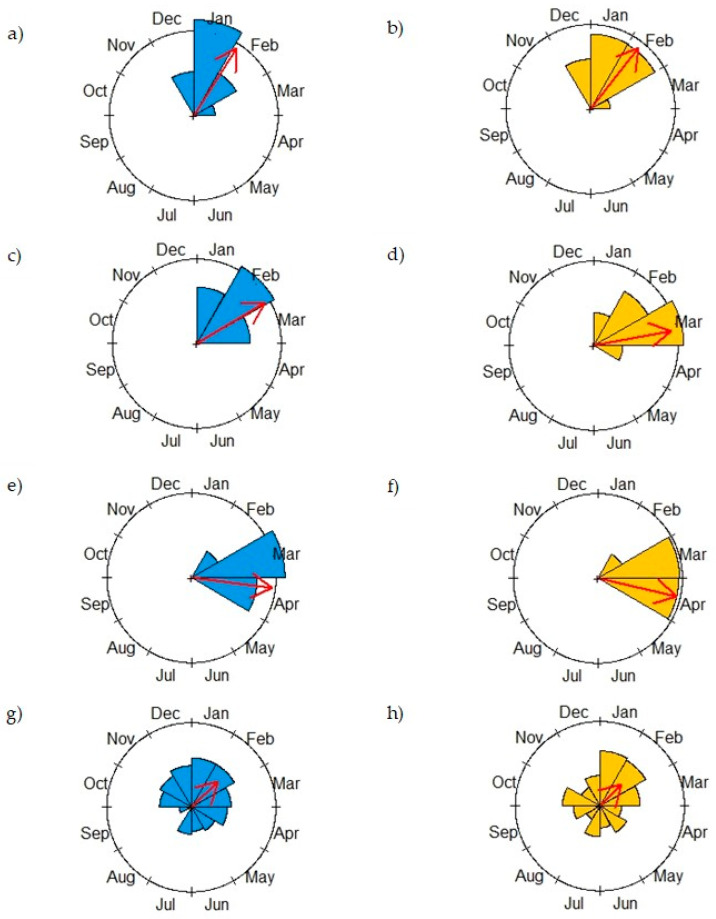
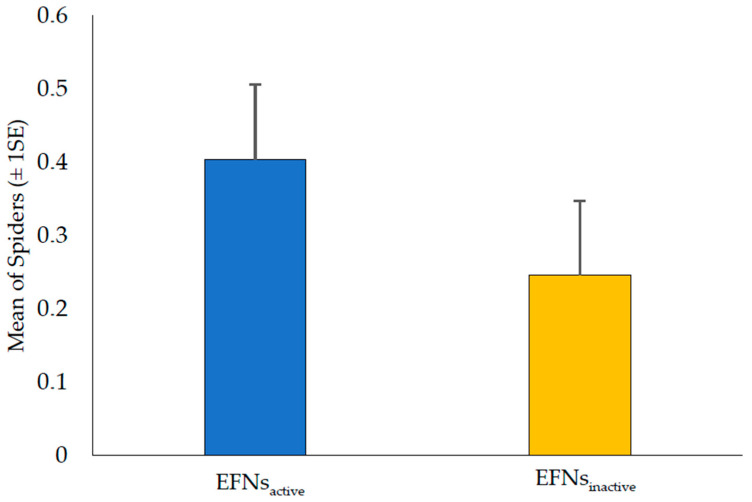
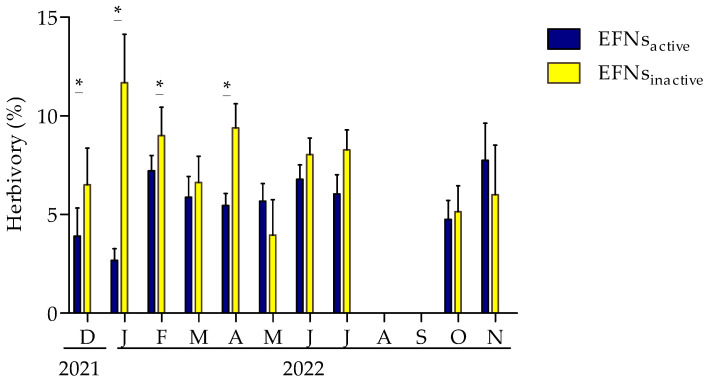
Spiders, abundant and diverse arthropods which occur in vegetation, have received little attention in studies investigating spider-plant interactions, especially in plants which have extrafloral nectaries (EFNs). This study examines whether spiders attracted to EFNs on the plant (Malpighiaceae) function as biological protectors, mitigating leaf herbivory and positively impacting plant fitness, through manipulative experiments. Spiders are attracted to EFNs because, in addition to consuming the resource offered by these structures, they also consume the herbivores that are attracted by the nectar. At the same time, we documented the reproductive phenology of the plant studied and the abundance of spiders over time. Our results revealed that the plant's reproductive period begins in December with the emergence of flower buds and ends in April with the production of samarids, fruits which are morphologically adapted for wind dispersal, aligning with the peak abundance of spiders. Furthermore, our results demonstrated that spiders are attracted to plants that exude EFNs, resulting in a positive impact on reducing leaf area loss but with a neutral effect on protecting reproductive structures. By revealing the protective function of spiders' vegetative structures on plants, this research highlights the ecological importance of elucidating the dynamics between spiders and plants, contributing to a deeper understanding of ecosystems.
蜘蛛是在植被中大量存在且种类多样的节肢动物,但在研究蜘蛛与植物相互作用的研究中,它们很少受到关注,尤其是在具有花外蜜腺(EFN)的植物中。本研究通过操纵实验,研究了被植物(金虎尾科)上的花外蜜腺吸引的蜘蛛是否起到生物保护者的作用,减轻叶片食草作用并对植物适合度产生积极影响。蜘蛛被花外蜜腺吸引,因为除了消耗这些结构提供的资源外,它们还捕食被花蜜吸引的食草动物。同时,我们记录了所研究植物的生殖物候以及蜘蛛随时间的丰度。我们的结果表明,该植物的生殖期始于12月花芽出现,止于4月翅果(形态上适应风力传播的果实)产生,这与蜘蛛的丰度峰值一致。此外,我们的结果表明,蜘蛛被分泌花外蜜腺的植物吸引,这对减少叶片面积损失有积极影响,但对保护生殖结构有中性影响。通过揭示蜘蛛的营养结构对植物的保护功能,本研究突出了阐明蜘蛛与植物之间动态关系的生态重要性,有助于更深入地理解生态系统。