Department of Infectious diseases, Shenzhen Children's Hospital, Shenzhen, China.
Department of Respiratory, The Second Affiliated Hospital & Yuying Children's Hospital of Wenzhou Medical University, Wenzhou, China.
BMC Infect Dis. 2024 Feb 12;24(1):186. doi: 10.1186/s12879-024-09077-7.
In this study, we describe the patterns of antibiotic prescription for neonates based on World Health Organization's (WHO) Essential Medicines List Access, Watch, and Reserve (AWaRe), and the Management of Antibiotic Classification (MAC) Guidelines in China.
One-day point-prevalence surveys (PPS) on antimicrobial prescriptions were conducted on behalf of hospitalized neonates in China from September 1 and November 30, annually from 2017 to 2019.
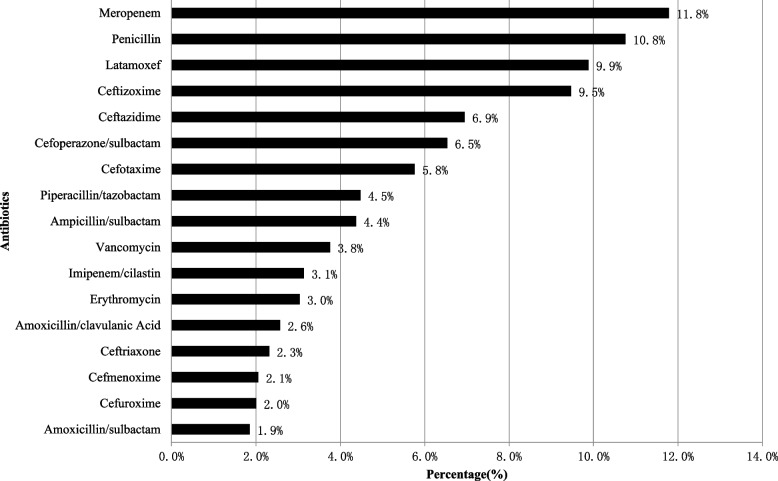
Data was collected for a total of 2674 neonatal patients from 15 hospitals in 9 provinces across China of which 1520 were newborns who received at least one antibiotic agent. A total of 1943 antibiotic prescriptions were included in the analysis. The most commonly prescribed antibiotic was meropenem (11.8%). The most common reason for prescribing antibiotic to neonates was pneumonia (44.2%). There were 419 (21.6%), 1343 (69.1%) and 6 (0.3%) antibiotic prescriptions in the Access, Watch and Reserve groups, respectively. According to MAC Guidelines in China, there were 1090 (56.1%) antibiotic agents in the Restricted and 414 (21.3%) in the Special group.
Broad-spectrum antibiotics included in the Watch and Special groups were likely to be overused in Chinese neonates.
本研究依据世界卫生组织(WHO)基本药物目录准入、监控和储备(AWaRe)标准和中国抗生素分类管理(MAC)指南,描述中国新生儿抗生素处方模式。
2017 年至 2019 年,每年 9 月 1 日至 11 月 30 日,在中国代表住院新生儿进行为期一天的抗菌药物处方点 prevalence 调查(PPS)。
共收集了来自中国 9 个省 15 家医院的 2674 名新生儿患者的数据,其中 1520 名为接受至少一种抗生素的新生儿。共纳入 1943 份抗生素处方。最常开的抗生素是美罗培南(11.8%)。新生儿开抗生素最常见的原因是肺炎(44.2%)。准入、监控和储备组分别有 419(21.6%)、1343(69.1%)和 6(0.3%)份抗生素处方。根据中国 MAC 指南,限制使用级有 1090(56.1%)种抗生素,特殊使用级有 414(21.3%)种抗生素。
中国新生儿中可能过度使用了监控和特殊级别的广谱抗生素。