Alonso-Burgos Alberto, Díaz-Lorenzo Ignacio, Muñoz-Saá Laura, Gallardo Guillermo, Castellanos Teresa, Cardenas Regina, Chiva de Agustín Luis
Radiology Department, Vascular Surgery and Interventional Radiology Unit, University Clinic of Navarra, Clínica Universidad de Navarra, Marquesado de Santa Marta 1, 28027, Madrid, Spain.
Radiology Department, Interventional Radiology Unit, University Hospital La Princesa, Madrid, Spain.
CVIR Endovasc. 2024 Feb 13;7(1):17. doi: 10.1186/s42155-024-00429-7.
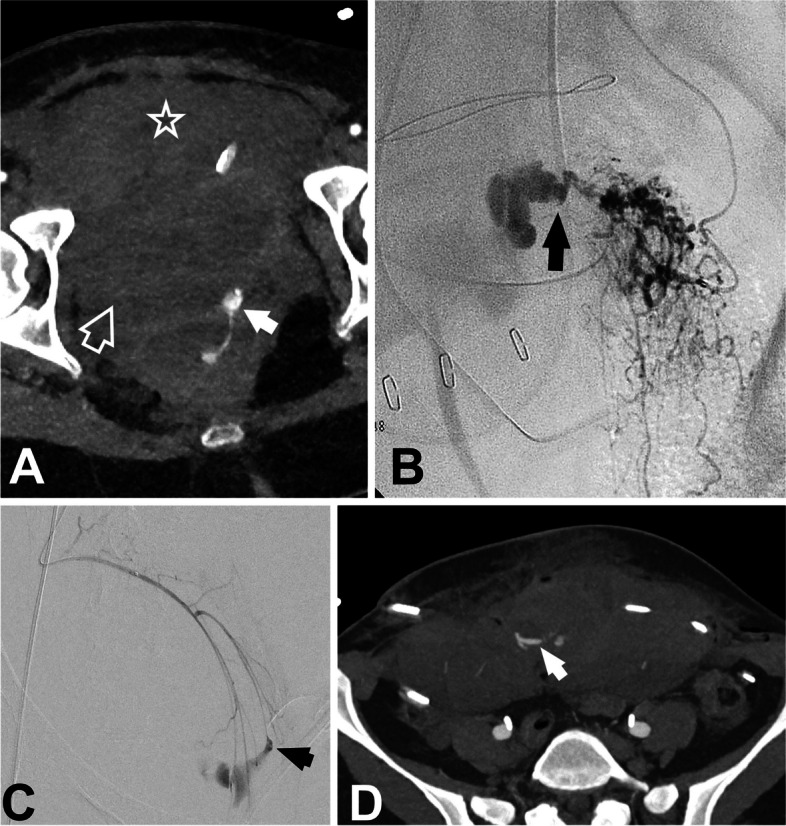
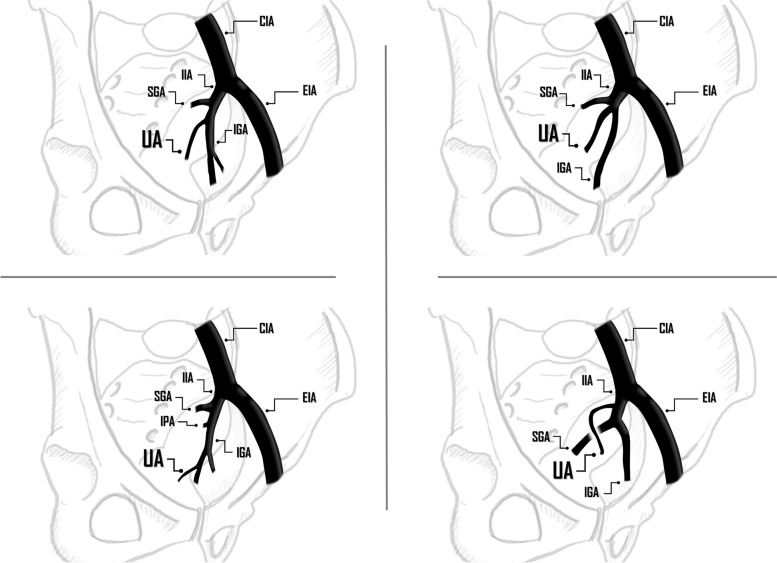
Postpartum haemorrhage (PPH) is a significant cause of maternal mortality globally, necessitating prompt and efficient management. This review provides a comprehensive exploration of endovascular treatment dimensions for both primary and secondary PPH, with a focus on uterine atony, trauma, placenta accreta spectrum (PAS), and retained products of conception (RPOC). Primary PPH, occurring within 24 h, often results from uterine atony in 70% of causes, but also from trauma, or PAS. Uterine atony involves inadequate myometrial contraction, addressed through uterine massage, oxytocin, and, if needed, mechanical modalities like balloon tamponade. Trauma-related PPH may stem from perineal injuries or pseudoaneurysm rupture, while PAS involves abnormal placental adherence. PAS demands early detection due to associated life-threatening bleeding during delivery. Secondary PPH, occurring within 24 h to 6 weeks postpartum, frequently arises from RPOC. Medical management may include uterine contraction drugs and hemostatic agents, but invasive procedures like dilation and curettage (D&C) or hysteroscopic resection may be required.Imaging assessments, particularly through ultrasound (US), play a crucial role in the diagnosis and treatment planning of postpartum haemorrhage (PPH), except for uterine atony, where imaging techniques prove to be of limited utility in its management. Computed tomography play an important role in evaluation of trauma related PPH cases and MRI is essential in diagnosing and treatment planning of PAS and RPOC.Uterine artery embolization (UAE) has become a standard intervention for refractory PPH, offering a rapid, effective, and safe alternative to surgery with a success rate exceeding 85% (Rand T. et al. CVIR Endovasc 3:1-12, 2020). The technical approach involves non-selective uterine artery embolization with resorbable gelatine sponge (GS) in semi-liquid or torpedo presentation as the most extended embolic or calibrated microspheres. Selective embolization is warranted in cases with identifiable bleeding points or RPOC with AVM-like angiographic patterns and liquid embolics could be a good option in this scenario. UAE in PAS requires a tailored approach, considering the degree of placental invasion. A thorough understanding of female pelvis vascular anatomy and collateral pathways is essential for accurate and safe UAE.In conclusion, integrating interventional radiology techniques into clinical guidelines for primary and secondary PPH management and co-working during labour is crucial.
产后出血(PPH)是全球孕产妇死亡的一个重要原因,需要迅速而有效的管理。本综述全面探讨了原发性和继发性PPH的血管内治疗方面,重点关注子宫收缩乏力、创伤、胎盘植入谱系障碍(PAS)和妊娠物残留(RPOC)。原发性PPH发生在产后24小时内,70%的病例通常由子宫收缩乏力引起,但也可由创伤或PAS导致。子宫收缩乏力是指子宫肌层收缩不足,可通过子宫按摩、催产素治疗,必要时还可采用球囊压迫等机械方法。创伤相关的PPH可能源于会阴损伤或假性动脉瘤破裂,而PAS则涉及胎盘异常附着。由于分娩期间会出现危及生命的出血,PAS需要早期检测。继发性PPH发生在产后24小时至6周内,通常由RPOC引起。药物治疗可能包括子宫收缩药物和止血剂,但可能需要进行刮宫术(D&C)或宫腔镜切除术等侵入性手术。影像学评估,特别是超声(US),在产后出血(PPH)的诊断和治疗计划中起着关键作用,但子宫收缩乏力除外,在其管理中成像技术的作用有限。计算机断层扫描在评估创伤相关的PPH病例中起重要作用,而MRI对于PAS和RPOC的诊断和治疗计划至关重要。子宫动脉栓塞术(UAE)已成为难治性PPH的标准干预措施,为手术提供了一种快速、有效且安全的替代方法,成功率超过85%(Rand T.等人,《CVIR Endovasc》3:1 - 12,2020)。技术方法包括使用半液体或鱼雷状可吸收明胶海绵(GS)进行非选择性子宫动脉栓塞,作为最常用的栓塞剂或校准微球。对于有明确出血点或具有类似动静脉畸形(AVM)血管造影模式的RPOC病例,有必要进行选择性栓塞,在这种情况下液体栓塞剂可能是一个不错的选择。PAS中的UAE需要根据胎盘侵入程度采取定制方法。全面了解女性骨盆血管解剖结构和侧支途径对于准确、安全地进行UAE至关重要。总之,将介入放射学技术纳入原发性和继发性PPH管理的临床指南并在分娩期间协同工作至关重要。