Doiron Jake E, Li Zhen, Yu Xiaoman, LaPenna Kyle B, Quiriarte Heather, Allerton Timothy D, Koul Kashyap, Malek Andrew, Shah Sanjiv J, Sharp Thomas E, Goodchild Traci T, Kapusta Daniel R, Lefer David J
Department of Pharmacology and Experimental Therapeutics Louisiana State University Health Sciences Center New Orleans LA USA.
Department of Cardiac Surgery Smidt Heart Institute, Cedars-Sinai Medical Center Los Angeles CA USA.
J Am Heart Assoc. 2024 Feb 20;13(4):e032646. doi: 10.1161/JAHA.123.032646. Epub 2024 Feb 14.
The renal sympathetic nervous system modulates systemic blood pressure, cardiac performance, and renal function. Pathological increases in renal sympathetic nerve activity contribute to the pathogenesis of heart failure with preserved ejection fraction (HFpEF). We investigated the effects of renal sympathetic denervation performed at early or late stages of HFpEF progression.
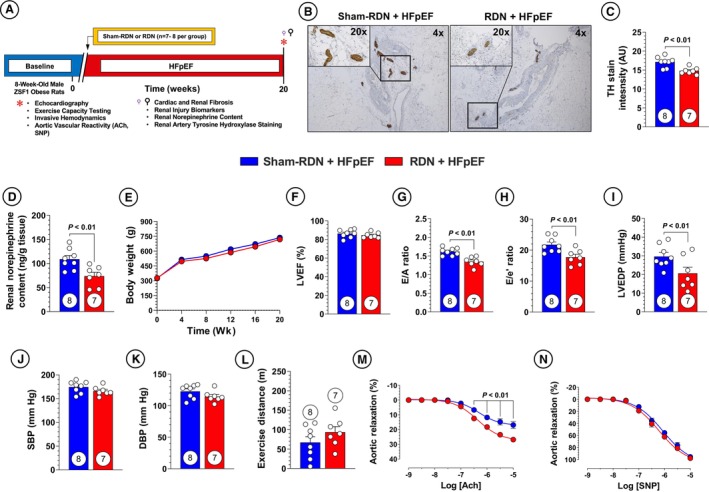
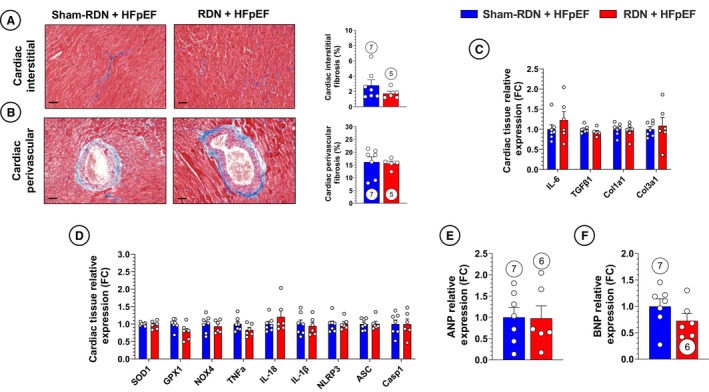
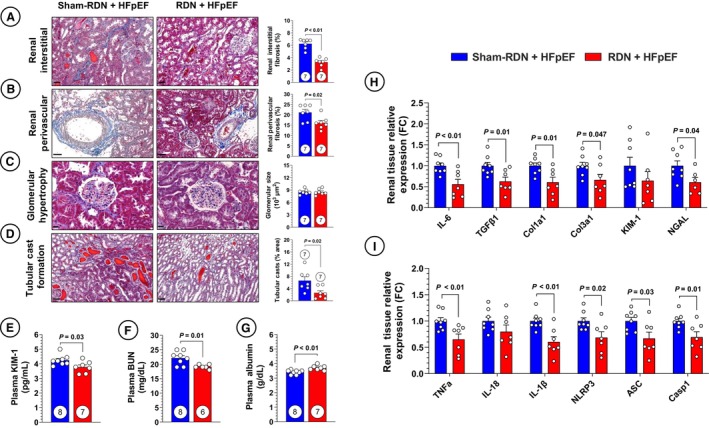
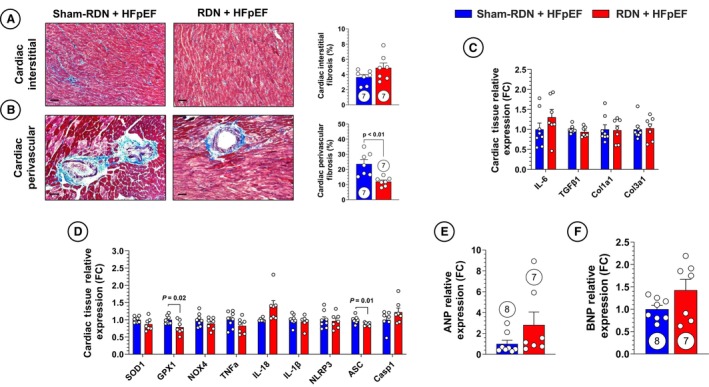
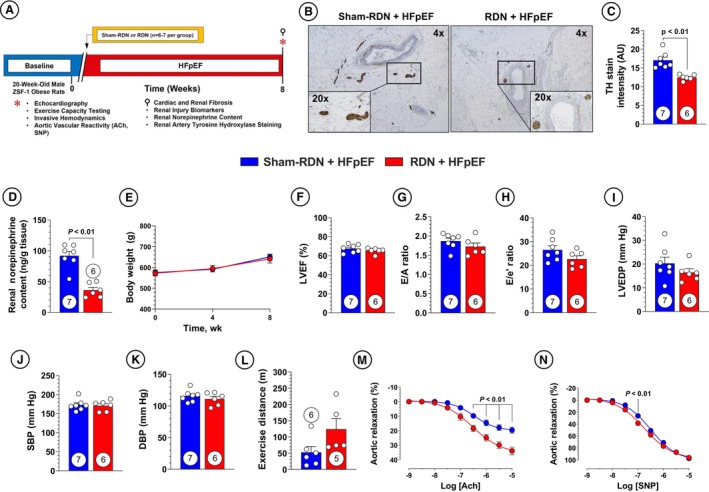
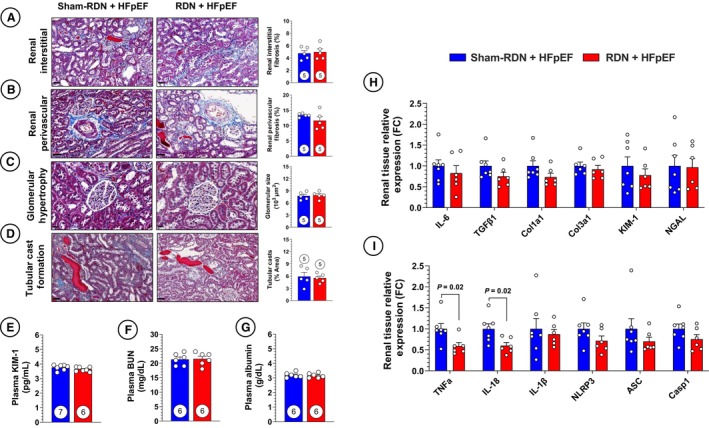
Male ZSF1 obese rats were subjected to radiofrequency renal denervation (RF-RDN) or sham procedure at either 8 weeks or 20 weeks of age and assessed for cardiovascular function, exercise capacity, and cardiorenal fibrosis. Renal norepinephrine and renal nerve tyrosine hydroxylase staining were performed to quantify denervation following RF-RDN. In addition, renal injury, oxidative stress, inflammation, and profibrotic biomarkers were evaluated to determine pathways associated with RDN. RF-RDN significantly reduced renal norepinephrine and tyrosine hydroxylase content in both study cohorts. RF-RDN therapy performed at 8 weeks of age attenuated cardiac dysfunction, reduced cardiorenal fibrosis, and improved endothelial-dependent vascular reactivity. These improvements were associated with reductions in renal injury markers, expression of renal NLR family pyrin domain containing 3/interleukin 1β, and expression of profibrotic mediators. RF-RDN failed to exert beneficial effects when administered in the 20-week-old HFpEF cohort.
Our data demonstrate that early RF-RDN therapy protects against HFpEF disease progression in part due to the attenuation of renal fibrosis and inflammation. In contrast, the renoprotective and left ventricular functional improvements were lost when RF-RDN was performed in later HFpEF progression. These results suggest that RDN may be a viable treatment option for HFpEF during the early stages of this systemic inflammatory disease.
肾交感神经系统调节全身血压、心脏功能和肾功能。肾交感神经活动的病理性增加促成了射血分数保留的心力衰竭(HFpEF)的发病机制。我们研究了在HFpEF进展的早期或晚期进行肾交感神经去神经支配的效果。
雄性ZSF1肥胖大鼠在8周龄或20周龄时接受射频肾去神经支配(RF-RDN)或假手术,并评估心血管功能、运动能力和心肾纤维化。进行肾去甲肾上腺素和肾神经酪氨酸羟化酶染色以量化RF-RDN后的去神经支配情况。此外,评估肾损伤、氧化应激、炎症和促纤维化生物标志物以确定与RDN相关的途径。RF-RDN在两个研究队列中均显著降低了肾去甲肾上腺素和酪氨酸羟化酶含量。8周龄时进行的RF-RDN治疗减轻了心脏功能障碍,减少了心肾纤维化,并改善了内皮依赖性血管反应性。这些改善与肾损伤标志物、肾含NLR家族吡咯结构域蛋白3/白细胞介素1β的表达以及促纤维化介质的表达降低有关。在20周龄的HFpEF队列中给予RF-RDN未能发挥有益作用。
我们的数据表明,早期RF-RDN治疗可预防HFpEF疾病进展,部分原因是肾纤维化和炎症的减轻。相比之下,在HFpEF进展后期进行RF-RDN时,肾脏保护和左心室功能改善作用丧失。这些结果表明,RDN可能是这种全身性炎症疾病早期HFpEF的一种可行治疗选择。