Pausta Carla Mae, Kalbar Pradip, Saroj Devendra
Centre for Environmental Health and Engineering (CEHE), School of Sustainability, Civil and Environmental Engineering, University of Surrey, Guildford, GU2 7XH, UK.
Centre for Urban Science and Engineering (CUSE), Indian Institute of Technology Bombay, Powai, Mumbai, 400076, India.
Sci Rep. 2024 Feb 14;14(1):3678. doi: 10.1038/s41598-024-54060-6.
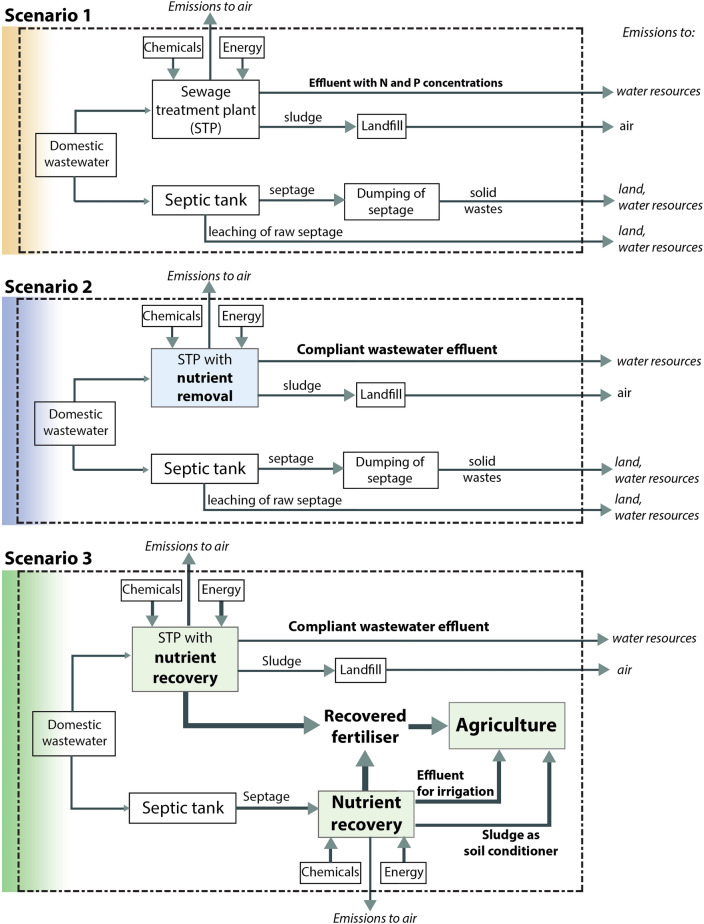
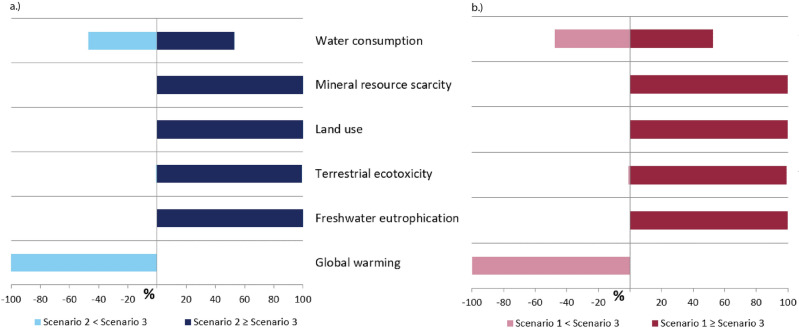
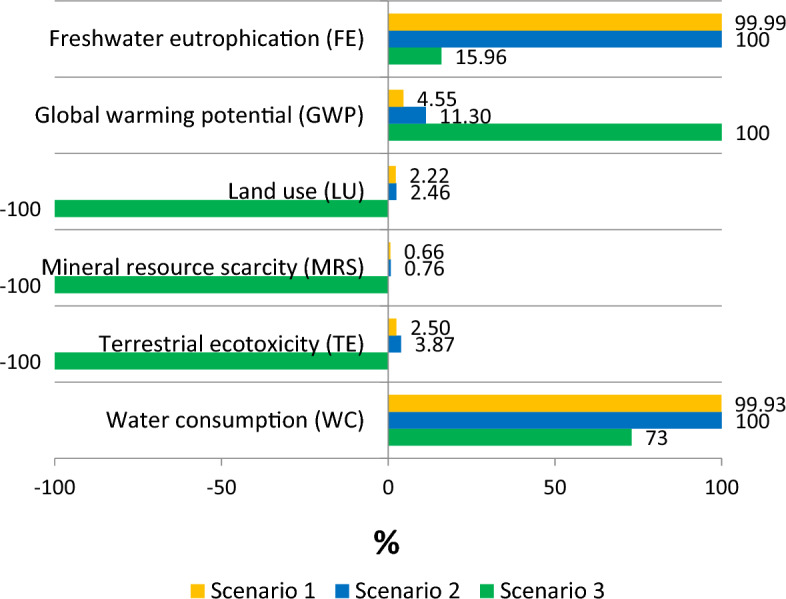
Increase in anthropogenic activities proliferated the consumption of resources such as phosphorus; and increase the adverse environmental impacts especially eutrophication on water resources such as lakes. Nutrient recovery from domestic wastewaters to produce a fertiliser has been explored to address these challenges in the context of a sustainable circular nutrient economy. Life cycle assessment (LCA) was performed to holistically assess the impacts of integrating a nutrient recovery system on wastewater and water resource management using Laguna de Bay, Philippines as the geographical boundary. The inventory was developed based on the results of the emerging nutrient recovery reactor operations and the application of the recovered fertiliser on the agricultural crops. The LCA results for the proposed scenario showed environmental benefits of about 83.6% freshwater eutrophication, 102.5% terrestrial ecotoxicity, 26.9% water consumption, 100.7% mineral resource scarcity, while the global warming potential is 95.4% higher than the baseline scenario. Results imply policy review for septage management, system optimisation, and evaluation of alternative methods of wastewater management, in terms of life cycle thinking and sustainability across the globe.
人为活动的增加使得磷等资源的消耗激增,并加剧了对湖泊等水资源的不利环境影响,尤其是富营养化。为了在可持续循环养分经济的背景下应对这些挑战,人们探索了从生活污水中回收养分以生产肥料的方法。以菲律宾的拉古纳德贝为地理边界,进行了生命周期评估(LCA),以全面评估整合养分回收系统对废水和水资源管理的影响。清单是根据新兴养分回收反应堆运行的结果以及回收肥料在农作物上的应用情况编制的。所提议情景的LCA结果显示,淡水富营养化减少约83.6%、陆地生态毒性降低102.5%、用水量减少26.9%、矿产资源稀缺性降低100.7%,而全球变暖潜能值比基准情景高95.4%。结果表明,需要从全球生命周期思维和可持续性的角度对污水管理进行政策审查、系统优化以及评估废水管理的替代方法。