Instituto de Neurobiología, Universidad Nacional Autónoma de México campus Juriquilla, Querétaro, Mexico.
Escuela de Medicina y Ciencias de la Salud TecSalud, Tecnológico de Monterrey, Monterrey, Mexico.
Addict Biol. 2024 Feb;29(2):e13381. doi: 10.1111/adb.13381.
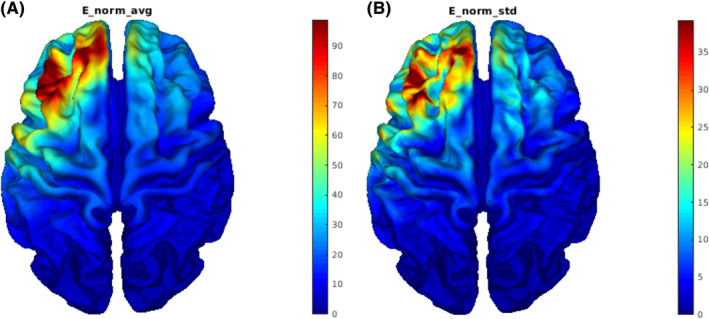
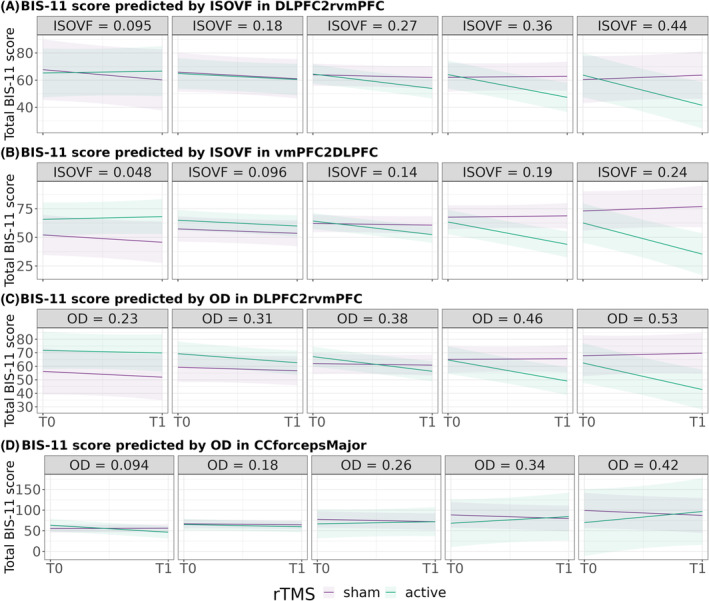
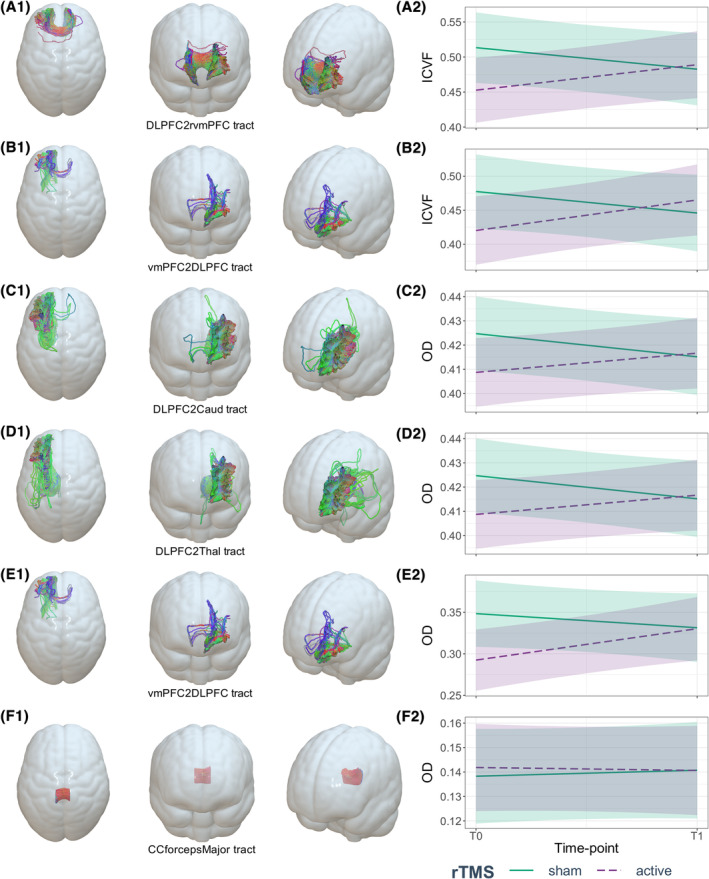
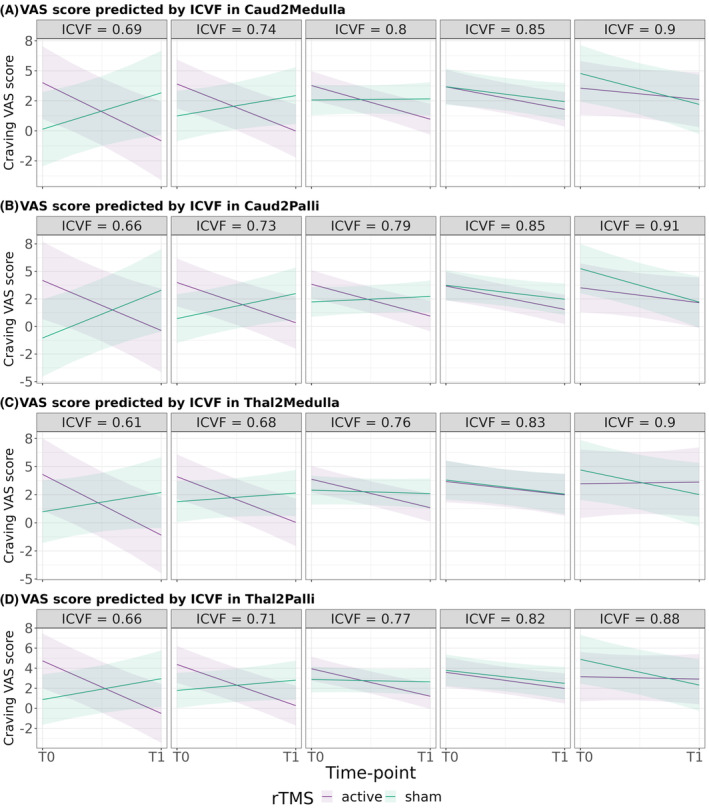
Cocaine use disorder (CUD) is a worldwide public health condition that is suggested to induce pathological changes in macrostructure and microstructure. Repetitive transcranial magnetic stimulation (rTMS) has gained attention as a potential treatment for CUD symptoms. Here, we sought to elucidate whether rTMS induces changes in white matter (WM) microstructure in frontostriatal circuits after 2 weeks of therapy in patients with CUD and to test whether baseline WM microstructure of the same circuits affects clinical improvement. This study consisted of a 2-week, parallel-group, double-blind, randomized controlled clinical trial (acute phase) (sham [n = 23] and active [n = 27]), in which patients received two daily sessions of rTMS on the left dorsolateral prefrontal cortex (lDLPFC) as an add-on treatment. T1-weighted and high angular resolution diffusion-weighted imaging (DWI-HARDI) at baseline and 2 weeks after served to evaluate WM microstructure. After active rTMS, results showed a significant increase in neurite density compared with sham rTMS in WM tracts connecting lDLPFC with left and right ventromedial prefrontal cortex (vmPFC). Similarly, rTMS showed a reduction in orientation dispersion in WM tracts connecting lDLPFC with the left caudate nucleus, left thalamus, and left vmPFC. Results also showed a greater reduction in craving Visual Analogue Scale (VAS) after rTMS when baseline intra-cellular volume fraction (ICVF) was low in WM tracts connecting left caudate nucleus with substantia nigra and left pallidum, as well as left thalamus with substantia nigra and left pallidum. Our results evidence rTMS-induced WM microstructural changes in fronto-striato-thalamic circuits and support its efficacy as a therapeutic tool in treating CUD. Further, individual clinical improvement may rely on the patient's individual structural connectivity integrity.
可卡因使用障碍(CUD)是一种全球公共卫生状况,据认为它会导致宏观和微观结构的病理性变化。重复经颅磁刺激(rTMS)作为治疗 CUD 症状的一种潜在方法引起了关注。在这里,我们试图阐明 rTMS 是否会在 CUD 患者接受 2 周治疗后诱导额-纹状体回路中的白质(WM)微观结构发生变化,以及相同回路的 WM 微观结构的基线是否会影响临床改善。这项研究包括一个为期 2 周的、平行组、双盲、随机对照临床试验(急性期)(假刺激[ n = 23]和真刺激[ n = 27]),其中患者在左背外侧前额叶皮层(lDLPFC)上接受两次每日 rTMS 治疗作为附加治疗。在基线和 2 周后进行 T1 加权和高角度分辨率扩散加权成像(DWI-HARDI),以评估 WM 微观结构。与假刺激 rTMS 相比,真刺激 rTMS 后,连接 lDLPFC 与左、右腹内侧前额叶皮层(vmPFC)的 WM 束中的神经丝密度显著增加。同样,rTMS 显示连接 lDLPFC 与左尾状核、左丘脑和左 vmPFC 的 WM 束中的取向分散减少。结果还表明,在与左尾状核与黑质和苍白球、左丘脑与黑质和苍白球连接的 WM 束中的细胞内体积分数(ICVF)基线较低的情况下,rTMS 后,对渴求视觉模拟量表(VAS)的降低更大。我们的结果证明了 rTMS 诱导的额-纹状体-丘脑回路中的 WM 微观结构变化,并支持其作为治疗 CUD 的治疗工具的有效性。此外,个体临床改善可能依赖于患者个体的结构连接完整性。