• 文献检索
  • 文档翻译
  • 深度研究
  • 学术资讯
  • Suppr Zotero 插件Zotero 插件
  • 邀请有礼
  • 套餐&价格
  • 历史记录
应用&插件
Suppr Zotero 插件Zotero 插件浏览器插件Mac 客户端Windows 客户端微信小程序
定价
高级版会员购买积分包购买API积分包
服务
文献检索文档翻译深度研究API 文档MCP 服务
关于我们
关于 Suppr公司介绍联系我们用户协议隐私条款
关注我们

Suppr 超能文献

核心技术专利:CN118964589B侵权必究
粤ICP备2023148730 号-1Suppr @ 2026

文献检索

告别复杂PubMed语法,用中文像聊天一样搜索,搜遍4000万医学文献。AI智能推荐,让科研检索更轻松。

立即免费搜索

文件翻译

保留排版,准确专业,支持PDF/Word/PPT等文件格式,支持 12+语言互译。

免费翻译文档

深度研究

AI帮你快速写综述,25分钟生成高质量综述,智能提取关键信息,辅助科研写作。

立即免费体验

软骨鱼类中 noggin1 (一种经典的胚胎诱导基因)的缺失。

Loss of noggin1, a classic embryonic inducer gene, in elasmobranchs.

机构信息

Shemyakin-Ovchinnikov Institute of Bioorganic Chemistry, Russian Academy of Sciences, Moscow, 117997, Russia.

Moskvarium Center for Oceanography and Marine Biology, Moscow, 129223, Russia.

出版信息

Sci Rep. 2024 Feb 15;14(1):3805. doi: 10.1038/s41598-024-54435-9.

DOI:10.1038/s41598-024-54435-9
PMID:38360907
原文链接:https://pmc.ncbi.nlm.nih.gov/articles/PMC10869764/
Abstract

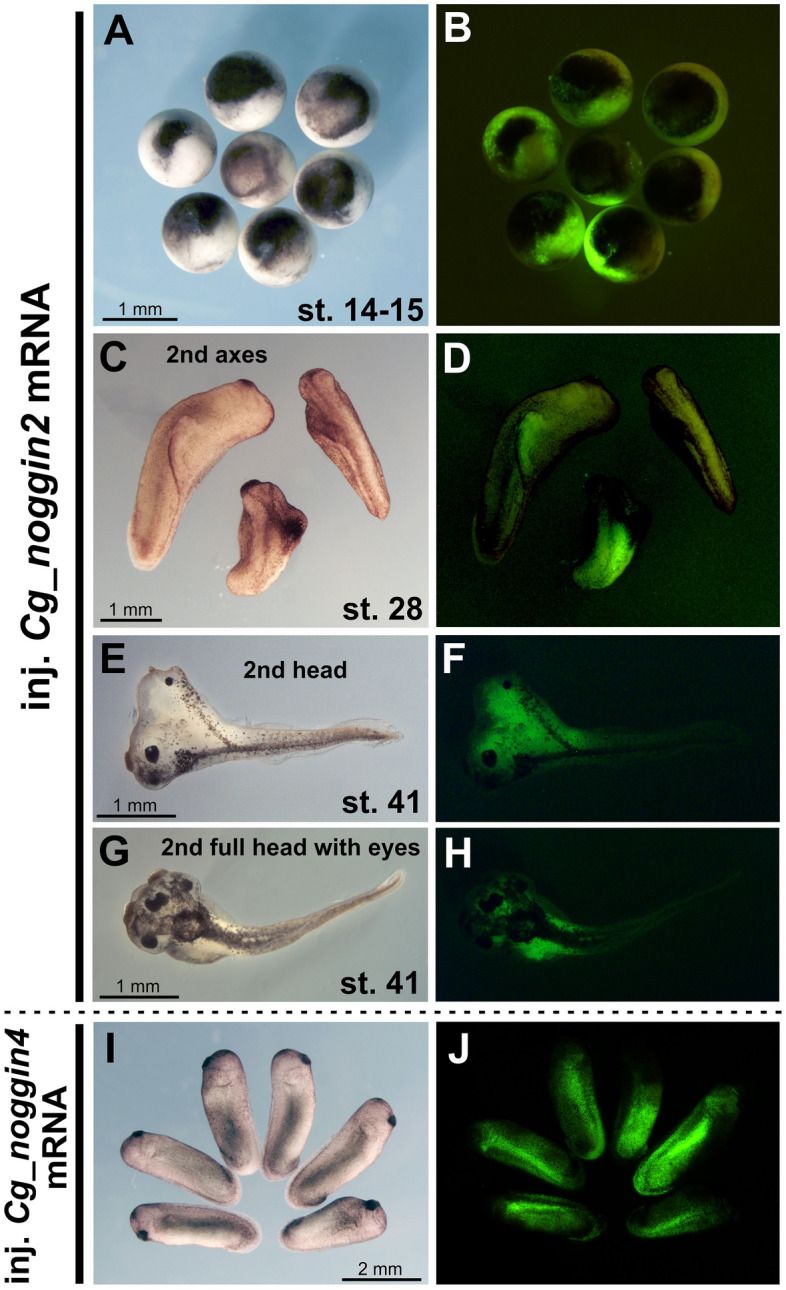
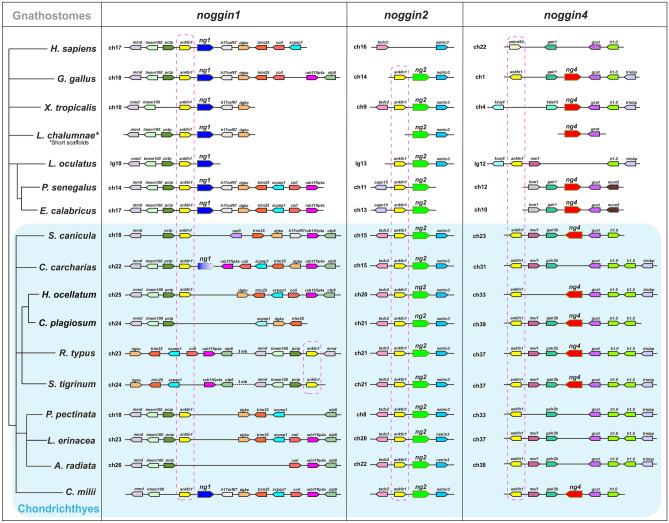
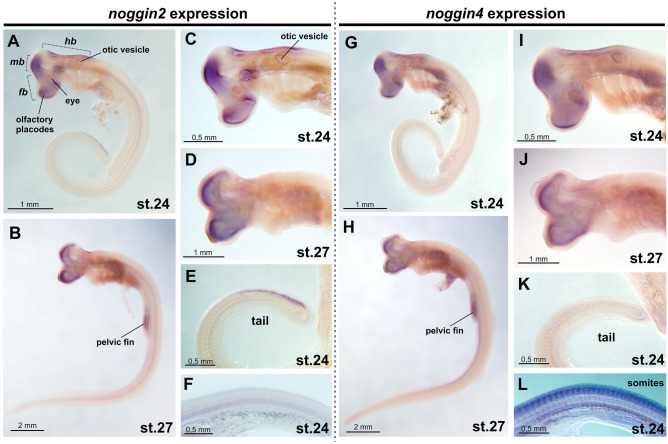
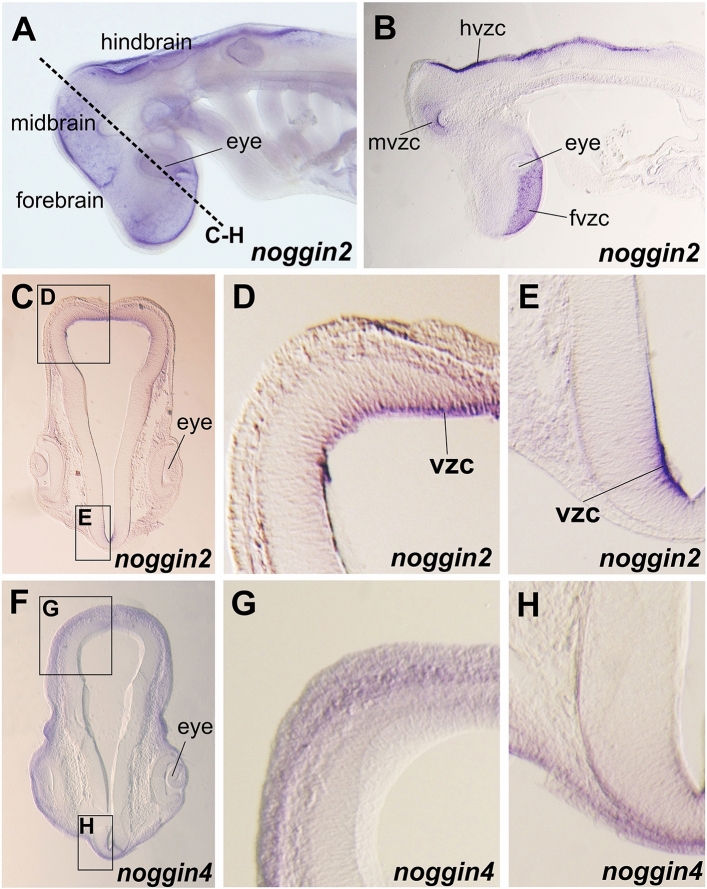
Secreted proteins of the Noggin family serve as pivotal regulators of early development and cell differentiation in all multicellular animals, including vertebrates. Noggin1 was identified first among all Noggins. Moreover, it was described as the first known embryonic inducer specifically secreted by the Spemann organizer and capable of inducing a secondary body axis when expressed ectopically. In the classical default model of neural induction, Noggin1 is presented as an antagonist of BMP signalling, playing a role as a neural inducer. Additionally, Noggin1 is involved in the dorsalization of embryonic mesoderm and later controls the differentiation of various tissues, including muscles, bones, and neural crest derivatives. Hitherto, noggin1 was found in all studied vertebrates. Here, we report the loss of noggin1 in elasmobranchs (sharks, rays and skates), which is a unique case among vertebrates. noggin2 and noggin4 retained in this group and studied in the embryos of the grey bamboo shark Chiloscyllium griseum revealed similarities in expression patterns and functional properties with their orthologues described in other vertebrates. The loss of noggin1 in elasmobranchs may be associated with histological features of the formation of their unique internal cartilaginous skeleton, although additional research is required to establish functional connections between these events.

摘要

Noggin 家族的分泌蛋白在所有多细胞动物中,包括脊椎动物,都是早期发育和细胞分化的关键调节因子。Noggin1 是所有 Noggin 蛋白中首先被鉴定出来的。此外,它被描述为第一个已知的由 Spemann 组织者特异性分泌的胚胎诱导物,能够在外源异位表达时诱导次级体轴。在经典的神经诱导默认模型中,Noggin1 作为 BMP 信号的拮抗剂,发挥神经诱导剂的作用。此外,Noggin1 还参与胚胎中胚层的背侧化,随后控制各种组织的分化,包括肌肉、骨骼和神经嵴衍生物。迄今为止,noggin1 在所有研究过的脊椎动物中都有发现。在这里,我们报告了软骨鱼类(鲨鱼、鳐鱼和𫚉鱼)中 noggin1 的缺失,这在脊椎动物中是一个独特的案例。在该组中保留的 noggin2 和 noggin4 以及在灰竹鲨 Chiloscyllium griseum 的胚胎中研究发现,它们与在其他脊椎动物中描述的同源物具有相似的表达模式和功能特性。软骨鱼类 noggin1 的缺失可能与它们独特的内部软骨骨骼形成的组织学特征有关,尽管需要进一步的研究来建立这些事件之间的功能联系。

https://cdn.ncbi.nlm.nih.gov/pmc/blobs/1dfd/10869764/3d478d647b51/41598_2024_54435_Fig6_HTML.jpg
https://cdn.ncbi.nlm.nih.gov/pmc/blobs/1dfd/10869764/4c5e8612d86a/41598_2024_54435_Fig1_HTML.jpg
https://cdn.ncbi.nlm.nih.gov/pmc/blobs/1dfd/10869764/8651ed739922/41598_2024_54435_Fig2_HTML.jpg
https://cdn.ncbi.nlm.nih.gov/pmc/blobs/1dfd/10869764/ec2d302440c2/41598_2024_54435_Fig3_HTML.jpg
https://cdn.ncbi.nlm.nih.gov/pmc/blobs/1dfd/10869764/29d475017d3c/41598_2024_54435_Fig4_HTML.jpg
https://cdn.ncbi.nlm.nih.gov/pmc/blobs/1dfd/10869764/138eb5a49e18/41598_2024_54435_Fig5_HTML.jpg
https://cdn.ncbi.nlm.nih.gov/pmc/blobs/1dfd/10869764/3d478d647b51/41598_2024_54435_Fig6_HTML.jpg
https://cdn.ncbi.nlm.nih.gov/pmc/blobs/1dfd/10869764/4c5e8612d86a/41598_2024_54435_Fig1_HTML.jpg
https://cdn.ncbi.nlm.nih.gov/pmc/blobs/1dfd/10869764/8651ed739922/41598_2024_54435_Fig2_HTML.jpg
https://cdn.ncbi.nlm.nih.gov/pmc/blobs/1dfd/10869764/ec2d302440c2/41598_2024_54435_Fig3_HTML.jpg
https://cdn.ncbi.nlm.nih.gov/pmc/blobs/1dfd/10869764/29d475017d3c/41598_2024_54435_Fig4_HTML.jpg
https://cdn.ncbi.nlm.nih.gov/pmc/blobs/1dfd/10869764/138eb5a49e18/41598_2024_54435_Fig5_HTML.jpg
https://cdn.ncbi.nlm.nih.gov/pmc/blobs/1dfd/10869764/3d478d647b51/41598_2024_54435_Fig6_HTML.jpg

相似文献

1
Loss of noggin1, a classic embryonic inducer gene, in elasmobranchs.软骨鱼类中 noggin1 (一种经典的胚胎诱导基因)的缺失。
Sci Rep. 2024 Feb 15;14(1):3805. doi: 10.1038/s41598-024-54435-9.
2
Multiple noggins in vertebrate genome: cloning and expression of noggin2 and noggin4 in Xenopus laevis.脊椎动物基因组中的多个头蛋白:非洲爪蟾中头蛋白2和头蛋白4的克隆与表达
Gene Expr Patterns. 2006 Jan;6(2):180-6. doi: 10.1016/j.modgep.2005.06.007. Epub 2005 Sep 15.
3
Discovery of four Noggin genes in lampreys suggests two rounds of ancient genome duplication.七鳃鳗中四个Noggin基因的发现表明了两轮古老的基因组复制。
Commun Biol. 2020 Sep 10;3(1):501. doi: 10.1038/s42003-020-01234-3.
4
Expression of Xenopus tropicalis noggin1 and noggin2 in early development: two noggin genes in a tetrapod.热带爪蟾noggin1和noggin2在早期发育中的表达:四足动物中的两个noggin基因
Gene Expr Patterns. 2004 Dec;5(2):225-30. doi: 10.1016/j.modgep.2004.08.001.
5
Novel functions of Noggin proteins: inhibition of Activin/Nodal and Wnt signaling.Noggin 蛋白的新功能:抑制 Activin/Nodal 和 Wnt 信号。
Development. 2011 Dec;138(24):5345-56. doi: 10.1242/dev.068908. Epub 2011 Nov 9.
6
[Secreted Protein Noggin4 Participates in the Formation of Forebrain Structures in Xenopus laevis by Inhibiting the Wnt/Beta-Catenin Signaling Pathway].[分泌蛋白头蛋白4通过抑制Wnt/β-连环蛋白信号通路参与非洲爪蟾前脑结构的形成]
Ontogenez. 2016 Jul-Aug;47(4):229-34.
7
Embryonic development of glial cells and myelin in the shark, Chiloscyllium punctatum.点纹斑竹鲨中神经胶质细胞和髓磷脂的胚胎发育
Gene Expr Patterns. 2009 Dec;9(8):572-85. doi: 10.1016/j.gep.2009.09.001. Epub 2009 Sep 4.
8
The Molecular Mechanism of Body Axis Induction in Lampreys May Differ from That in Amphibians.文昌鱼体轴诱导的分子机制可能与两栖动物不同。
Int J Mol Sci. 2024 Feb 19;25(4):2412. doi: 10.3390/ijms25042412.
9
A staging table for the embryonic development of the brownbanded bamboo shark (Chiloscyllium punctatum).用于棕点锯鲨(Chiloscyllium punctatum)胚胎发育的分期表。
Dev Dyn. 2018 May;247(5):712-723. doi: 10.1002/dvdy.24623. Epub 2018 Mar 10.
10
[The obtaining and analysis of physiological activity of secreted proteins of Noggin family].
Bioorg Khim. 2013 Mar-Apr;39(2):247-52. doi: 10.1134/s1068162013020040.

本文引用的文献

1
Targeted search for scaling genes reveals matrixmetalloproteinase 3 as a scaler of the dorsal-ventral pattern in Xenopus laevis embryos.靶向搜索缩放基因揭示基质金属蛋白酶 3 是非洲爪蟾胚胎背腹模式的缩放因子。
Dev Cell. 2022 Jan 10;57(1):95-111.e12. doi: 10.1016/j.devcel.2021.11.021. Epub 2021 Dec 16.
2
BMP antagonists in tissue development and disease.组织发育与疾病中的骨形态发生蛋白拮抗剂
Matrix Biol Plus. 2021 Jun 11;11:100071. doi: 10.1016/j.mbplus.2021.100071. eCollection 2021 Aug.
3
Shark and ray genomics for disentangling their morphological diversity and vertebrate evolution.
鲨鱼和鳐鱼基因组学解析其形态多样性和脊椎动物进化
Dev Biol. 2021 Sep;477:262-272. doi: 10.1016/j.ydbio.2021.06.001. Epub 2021 Jun 6.
4
MEGA11: Molecular Evolutionary Genetics Analysis Version 11.MEGA11:分子进化遗传学分析版本 11。
Mol Biol Evol. 2021 Jun 25;38(7):3022-3027. doi: 10.1093/molbev/msab120.
5
Mineralization of the Vertebral Column (Holocephali; Chondrichthyes).脊柱矿化(全头亚纲;软骨鱼纲)。
Front Genet. 2020 Nov 26;11:571694. doi: 10.3389/fgene.2020.571694. eCollection 2020.
6
Discovery of four Noggin genes in lampreys suggests two rounds of ancient genome duplication.七鳃鳗中四个Noggin基因的发现表明了两轮古老的基因组复制。
Commun Biol. 2020 Sep 10;3(1):501. doi: 10.1038/s42003-020-01234-3.
7
The expression of FoxG1 in the early development of the European river lamprey Lampetra fluviatilis demonstrates significant heterochrony with that in other vertebrates.欧洲河七鳃鳗(Lampetra fluviatilis)早期发育过程中FoxG1的表达与其他脊椎动物相比显示出显著的异时性。
Gene Expr Patterns. 2019 Dec;34:119073. doi: 10.1016/j.gep.2019.119073. Epub 2019 Sep 28.
8
Oviparous elasmobranch development inside the egg case in 7 key stages.卵胎生软骨鱼在卵壳内的 7 个关键阶段的发育。
PLoS One. 2018 Nov 6;13(11):e0206984. doi: 10.1371/journal.pone.0206984. eCollection 2018.
9
Calcified cartilage or bone? Collagens in the tessellated endoskeletons of cartilaginous fish (sharks and rays).骨化软骨还是骨?软骨鱼类(鲨鱼和鳐鱼)镶嵌内骨骼中的胶原
J Struct Biol. 2017 Oct;200(1):54-71. doi: 10.1016/j.jsb.2017.09.005. Epub 2017 Sep 18.
10
Phylotranscriptomic consolidation of the jawed vertebrate timetree.有颌脊椎动物时间树的系统转录组整合
Nat Ecol Evol. 2017 Sep;1(9):1370-1378. doi: 10.1038/s41559-017-0240-5. Epub 2017 Jul 24.