Department of Neurosurgery, Shanghai Children's Hospital, Shanghai Jiao Tong University, Luding Rd. 355, Shanghai, People's Republic of China.
Eur J Med Res. 2024 Feb 17;29(1):136. doi: 10.1186/s40001-024-01727-5.
To explore the clinical features, diagnosis, treatment and prognosis of Langerhans cell histiocytosis (LCH) of the skull in children.
This study retrospectively summarized the clinical manifestations, treatment methods and follow-up status of children with skull LCH who were admitted to the Department of Neurosurgery of Shanghai Children's Hospital from January 2014 to June 2021.
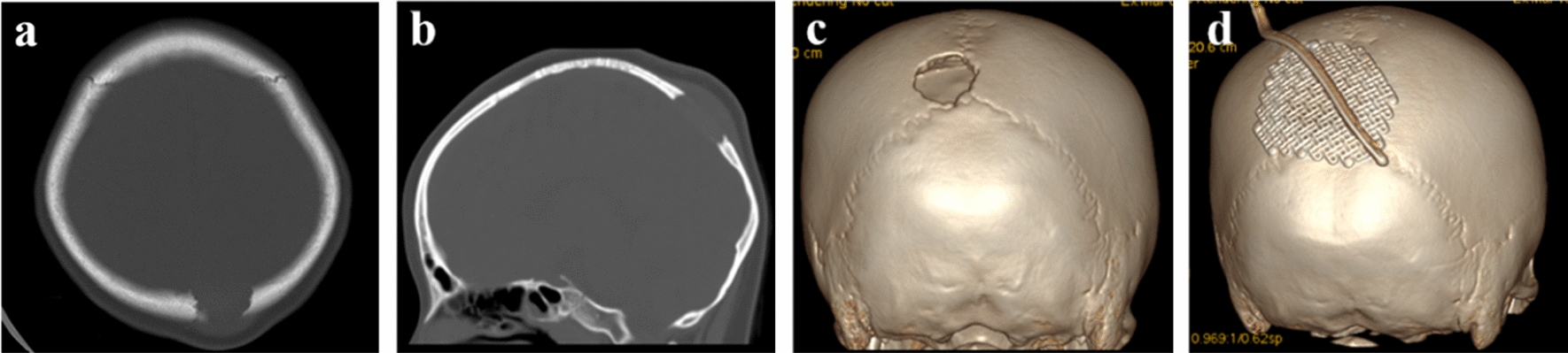
A total of 23 patients confirmed by histology as LCH received hospitalization treatment, including 14 males and 9 females, aged (5.76 ± 3.86) years old. The clinical manifestations were mostly incidentally discovered head masses that gradually enlarged (19 cases, 82.61%). Only 2 cases are affected by multiple systems, while the rest are affected by single systems. 9 patients were involved in multiple skull lesions, and 14 patients had local skull lesions. All patients underwent surgical intervention, with 17 patients undergoing total resection and 6 patients undergoing biopsy. 21 patients received chemotherapy after surgery. The median follow-up was 2.46 years (range 0.33-6.83 years). 21 patients had their symptoms and signs under control or even resolved, and 2 patients experienced recurrence during follow-up. The overall control rate reached 91.30%.
Personalized treatment plans according to different clinical types. Regular outpatient follow-up is crucial to monitor disease recurrence and late effects.
探讨儿童颅骨朗格汉斯细胞组织细胞增生症(LCH)的临床特征、诊断、治疗及预后。
本研究回顾性总结了 2014 年 1 月至 2021 年 6 月期间上海儿童医学中心神经外科收治的 23 例经组织学证实为 LCH 的颅骨 LCH 患儿的临床表现、治疗方法和随访情况。
共 23 例患者经组织学确诊为 LCH,均接受住院治疗,其中男 14 例,女 9 例,年龄(5.76±3.86)岁。临床表现多为逐渐增大的偶然发现的头部肿块(19 例,82.61%)。仅 2 例为多系统受累,其余均为单系统受累。9 例患者有多个颅骨病变,14 例患者有局部颅骨病变。所有患者均接受手术干预,17 例患者行全切术,6 例患者行活检术。术后 21 例行化疗。中位随访时间为 2.46 年(范围 0.33-6.83 年)。21 例患者症状和体征得到控制甚至缓解,2 例患者在随访中复发。总体控制率达 91.30%。
根据不同的临床类型制定个体化的治疗方案。定期门诊随访对于监测疾病复发和晚期效应至关重要。