Cubillos-Zapata Carolina, Troncoso-Acevedo Fernanda, Díaz-García Elena, Alfaro Enrique, Gotera-Rivera Carolina, Pérez-Warnisher Teresa, Peces-Barba Germán, Seijo Luis M, García-Río Francisco
Grupo de Enfermedades Respiratorias, Servicio de Neumología, Hospital Universitario La Paz-IdiPAZ, Madrid, Spain.
Centro de Investigación Biomédica en Red en Enfermedades Respiratorias, Madrid, Spain.
ERJ Open Res. 2024 Feb 19;10(1). doi: 10.1183/23120541.00777-2023. eCollection 2024 Jan.
Intermittent hypoxaemia and obstructive sleep apnoea (OSA) have been linked to lung cancer through as yet unidentified pathophysiological mechanisms. This study evaluates the effect of OSA on serum levels of biomarkers of immunosurveillance, lymphangiogenesis and intrinsic tumour cell aggressiveness in high-risk individuals screened for lung cancer and patients with established lung cancer.
Serum samples from individuals participating in a lung cancer screening cohort (SAILS study) or with newly diagnosed lung cancer (SAIL study) were analysed. All patients underwent home sleep apnoea testing. Soluble levels of programmed cell death-1 (PD-1), programmed cell death ligand-1 (PD-L1), cytotoxic T-lymphocyte antigen-4, midkine (MDK), paraspeckle component-1 (PSPC1), transforming growth factor-β1 (TGF-β1), SMAD3, matrix metalloproteinase-2 and co-stimulus receptor of the tumour necrosis factor family of receptors (CD137) were determined by ELISA.
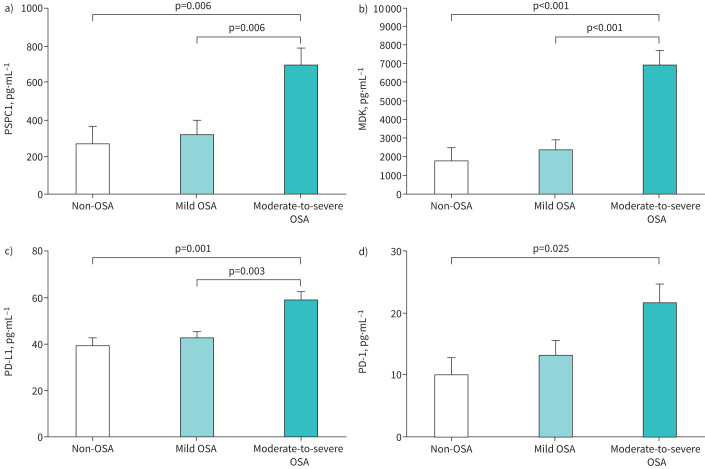
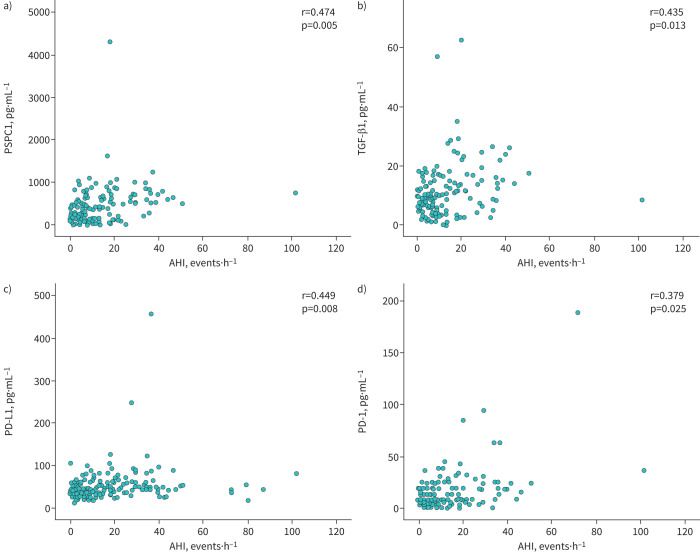
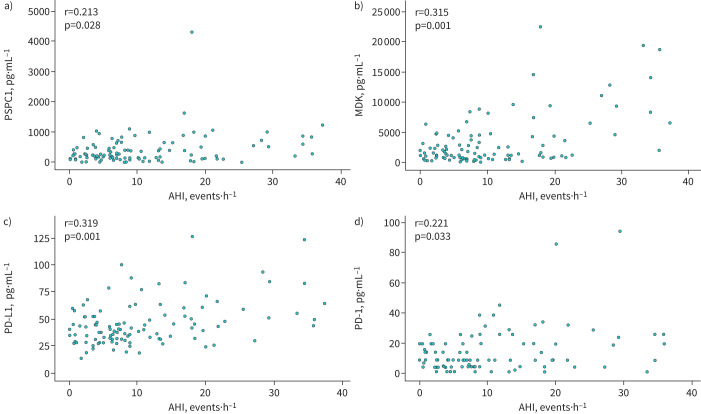
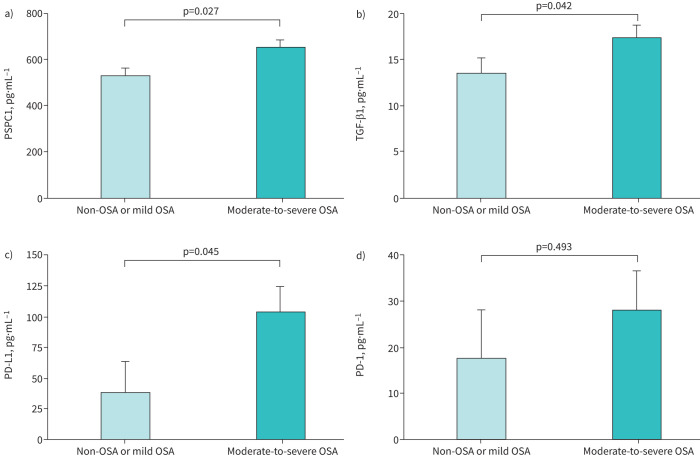
The presence of moderate-to-severe OSA was associated with increased levels of PSPC1, MDK, PD-L1 and PD-1 in screened individuals, and with higher values of PSPC1, TGF-β1, PD-L1 and PD-1 in patients with established lung cancer. The findings correlated with nocturnal intermittent hypoxaemia indices.
Moderate-to-severe OSA is associated with increased expression of serum biomarkers of immune evasion, lymphangiogenesis and tumour cell aggressiveness in high-risk individuals screened for lung cancer and those with established disease.
间歇性低氧血症和阻塞性睡眠呼吸暂停(OSA)通过尚未明确的病理生理机制与肺癌相关联。本研究评估了OSA对肺癌筛查高危个体及确诊肺癌患者血清中免疫监视、淋巴管生成和肿瘤细胞内在侵袭性生物标志物水平的影响。
分析了参与肺癌筛查队列(SAILS研究)或新诊断肺癌患者(SAIL研究)的血清样本。所有患者均接受家庭睡眠呼吸暂停检测。通过酶联免疫吸附测定法(ELISA)测定程序性细胞死亡蛋白1(PD-1)、程序性细胞死亡配体1(PD-L1)、细胞毒性T淋巴细胞抗原4、中期因子(MDK)、旁斑组分1(PSPC1)、转化生长因子-β1(TGF-β1)、SMAD3、基质金属蛋白酶-2和肿瘤坏死因子受体家族共刺激受体(CD137)的可溶性水平。
在筛查个体中,中重度OSA的存在与PSPC1、MDK、PD-L1和PD-1水平升高相关,在确诊肺癌患者中与PSPC1、TGF-β1、PD-L1和PD-1的更高值相关。这些发现与夜间间歇性低氧血症指数相关。
中重度OSA与肺癌筛查高危个体及确诊患者血清中免疫逃逸、淋巴管生成和肿瘤细胞侵袭性生物标志物的表达增加相关。