Department of Hepatobiliary Oncology, Sun Yat-sen University Cancer Center, State Key Laboratory of Oncology in South China, Guangdong Provincial Clinical Research Center for Cancer, Guangzhou, China.
Front Immunol. 2024 Feb 7;15:1260191. doi: 10.3389/fimmu.2024.1260191. eCollection 2024.
Intrahepatic cholangiocarcinoma (iCCA) is a highly aggressive cancer with a dismal prognosis and few effective therapeutic approaches. This study aimed to investigate the efficacy, safety, and predictive biomarkers of hepatic arterial infusion chemotherapy (FOLFOX-HAIC) in combination with lenvatinib and PD-1 inhibitor for patients with advanced iCCA.
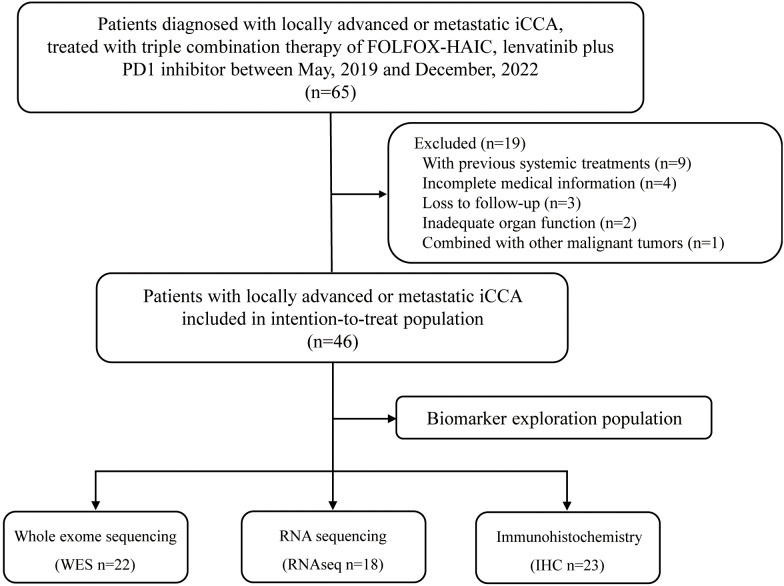
Locally advanced or metastatic iCCA patients receiving the triple combination therapy of lenvatinib, PD-1 inhibitor, and FOLFOX-HAIC were included in this retrospective study. Primary endpoint was the progression-free survival, evaluated using the RECIST criterion. The secondary endpoints included overall survival, objective response rate, and safety. Whole exome and RNA sequencing of tumor biopsy tissues were performed for biomarker exploration.
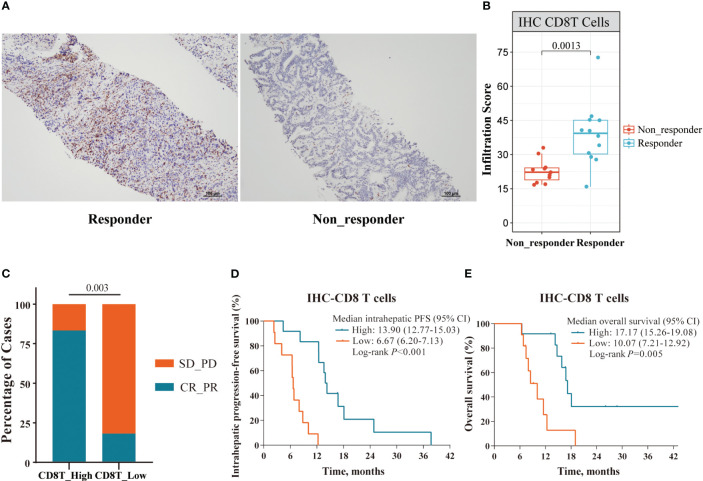
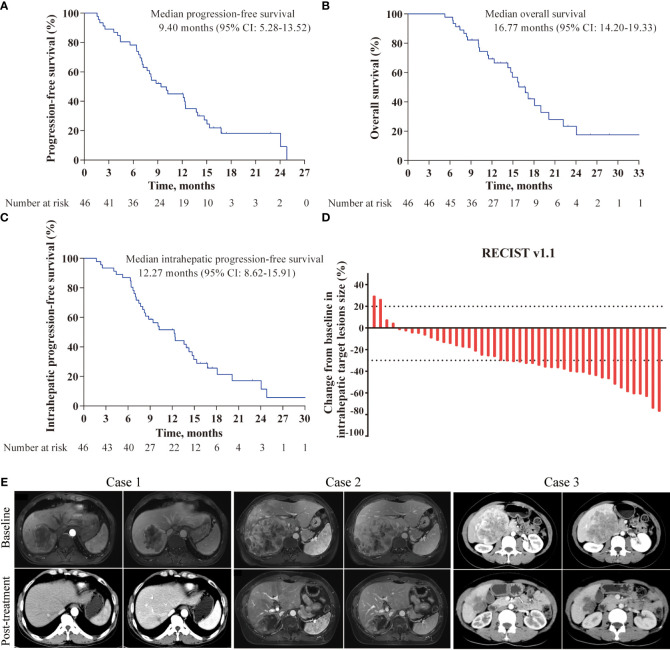
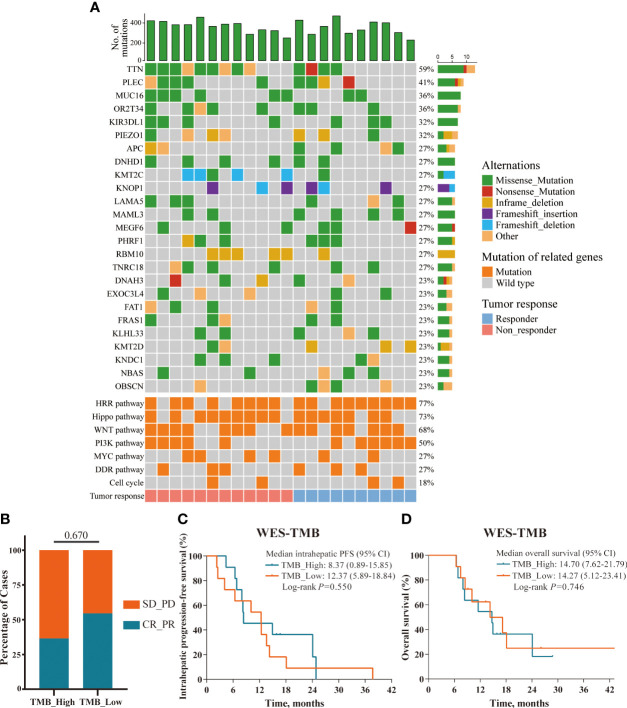
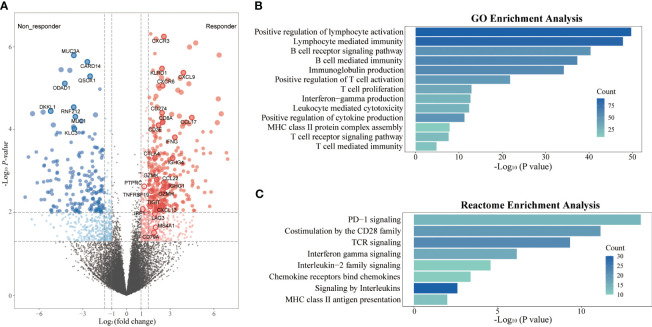
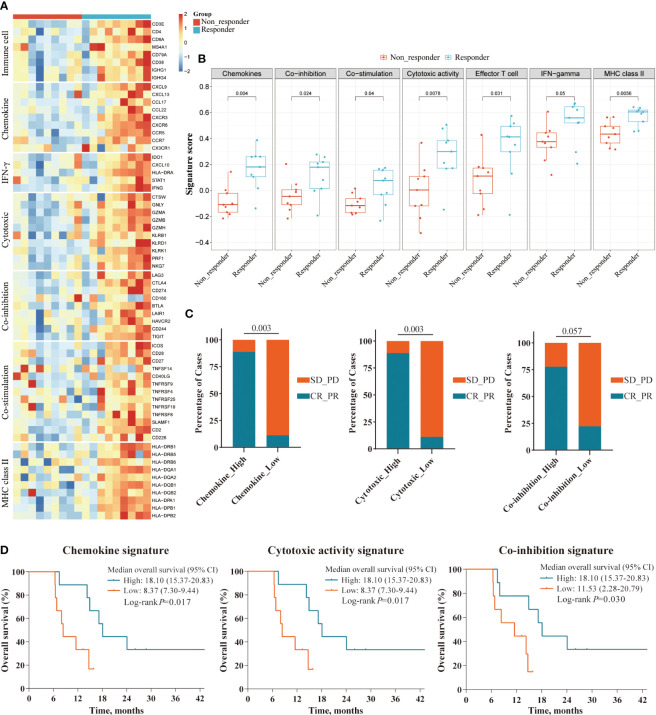
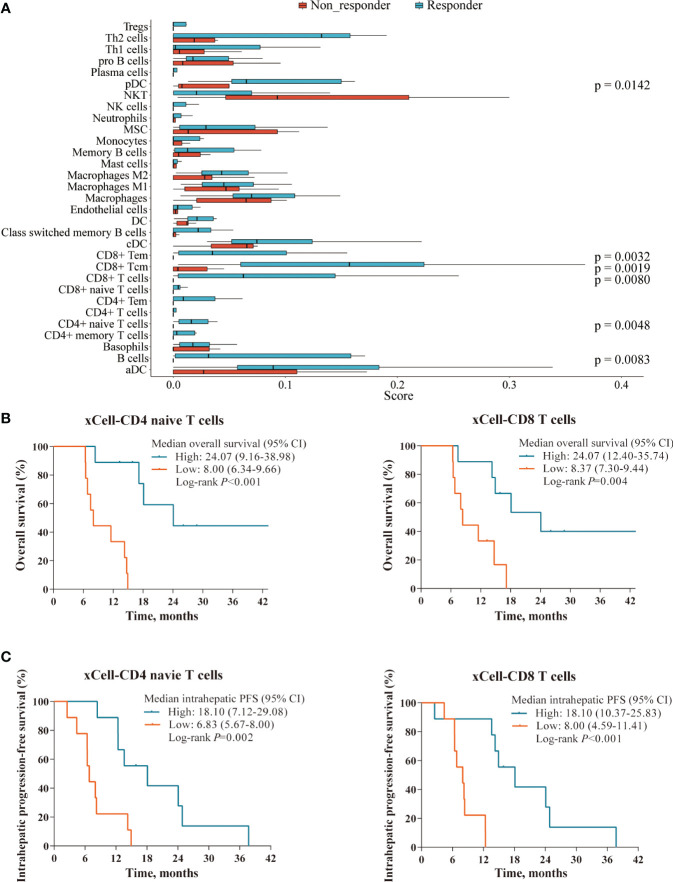
Between May, 2019 and December 2022, a total of 46 patients were included in this study. The primary endpoint showed a median progression-free survival of 9.40 months (95% CI: 5.28-13.52), with a 6-month progression-free survival rate of 76.1%. The median overall survival was 16.77 months (95% CI, 14.20-19.33), with an objective response rate of 47.8% and disease control rate of 91.3% per RECIST. In addition, 4.3% and 8.7% of patients achieved complete response of all lesions and intrahepatic target lesions per mRECIST, respectively. The most common treatment-related adverse events were neutropenia, thrombocytopenia, elevated aspartate aminotransferase and alanine aminotransferase level. Furthermore, integrated analysis of genetic, transcriptomic, and immunohistochemistry data revealed that pre-existing immunity (high expression level of immune-related signatures and intra-tumoral CD8 T cell density) in baseline tumor tissues was associated with superior clinical benefits. However, the evaluation of tumor mutation burden did not show potential predictive value in this triple combination.
FOLFOX-HAIC in combination with lenvatinib and PD-1 inhibitor demonstrated a promising antitumor activity with manageable safety profiles in patients with advanced iCCA. Moreover, our study also revealed new perspectives on potential biomarkers for clinical efficacy.
肝内胆管癌(iCCA)是一种侵袭性很强的癌症,预后较差,治疗方法有限。本研究旨在探讨肝动脉灌注化疗(FOLFOX-HAIC)联合仑伐替尼和 PD-1 抑制剂治疗晚期 iCCA 的疗效、安全性和预测生物标志物。
本回顾性研究纳入了接受仑伐替尼、PD-1 抑制剂和 FOLFOX-HAIC 三联治疗的局部晚期或转移性 iCCA 患者。主要终点是根据 RECIST 标准评估的无进展生存期。次要终点包括总生存期、客观缓解率和安全性。对肿瘤活检组织进行全外显子和 RNA 测序以进行生物标志物探索。
2019 年 5 月至 2022 年 12 月,共纳入 46 例患者。主要终点显示中位无进展生存期为 9.40 个月(95%CI:5.28-13.52),6 个月无进展生存率为 76.1%。中位总生存期为 16.77 个月(95%CI,14.20-19.33),客观缓解率为 47.8%,按 RECIST 标准疾病控制率为 91.3%。此外,按 mRECIST 标准,所有病变和肝内靶病变完全缓解的患者分别为 4.3%和 8.7%。最常见的治疗相关不良事件是中性粒细胞减少、血小板减少、天门冬氨酸氨基转移酶和丙氨酸氨基转移酶水平升高。此外,遗传、转录组和免疫组化数据分析的综合分析表明,基线肿瘤组织中预先存在的免疫(高表达免疫相关标志物和肿瘤内 CD8 T 细胞密度)与更好的临床获益相关。然而,肿瘤突变负荷的评估在该三联治疗中并未显示出潜在的预测价值。
FOLFOX-HAIC 联合仑伐替尼和 PD-1 抑制剂在晚期 iCCA 患者中显示出有希望的抗肿瘤活性,且安全性可管理。此外,我们的研究还揭示了新的潜在临床疗效生物标志物的研究视角。