
椎间盘细胞条件培养基抑制自体骨髓间充质基质细胞和成骨细胞的成骨作用。
Conditioned Medium of Intervertebral Disc Cells Inhibits Osteo-Genesis on Autologous Bone-Marrow-Derived Mesenchymal Stromal Cells and Osteoblasts.
作者信息
Chen Shuimu, Croft Andreas S, Bigdon Sebastian, Albers Christoph E, Li Zhen, Gantenbein Benjamin
机构信息
Tissue Engineering for Orthopedics & Mechanobiology (TOM), Bone & Joint Program, Department for BioMedical Research (DBMR), Faculty of Medicine, University of Bern, 3008 Bern, Switzerland.
Graduate School for Cellular and Biomedical Sciences (GCB), University of Bern, 3012 Bern, Switzerland.
出版信息
Biomedicines. 2024 Feb 6;12(2):376. doi: 10.3390/biomedicines12020376.
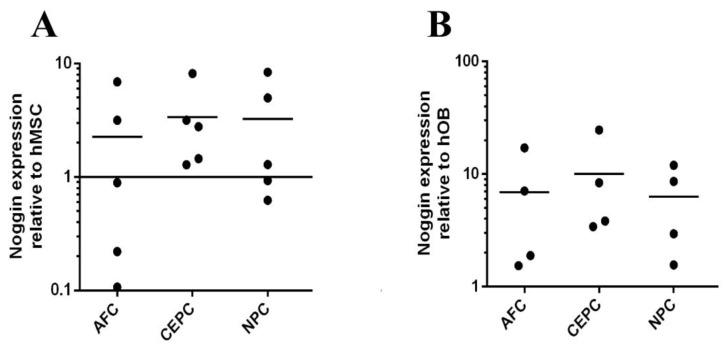
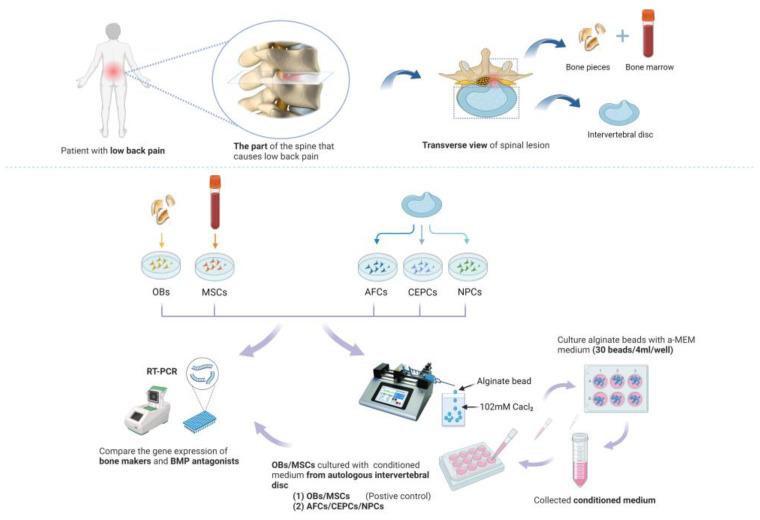
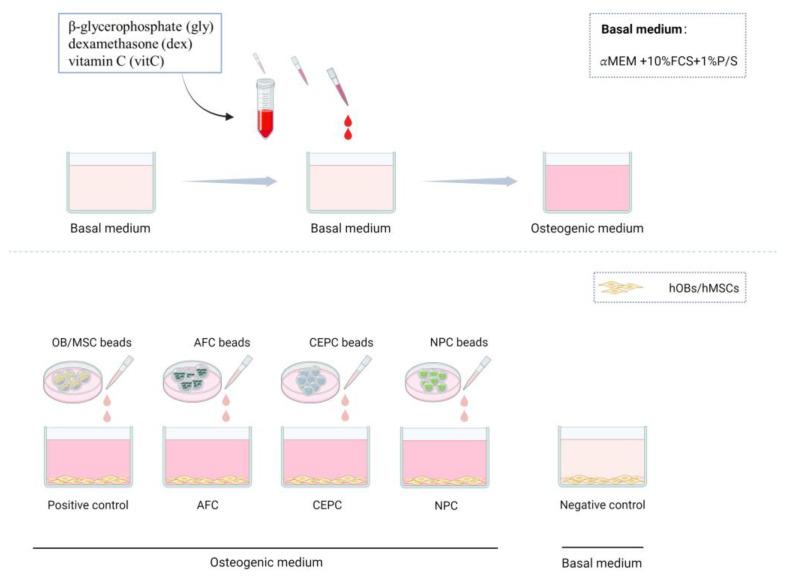
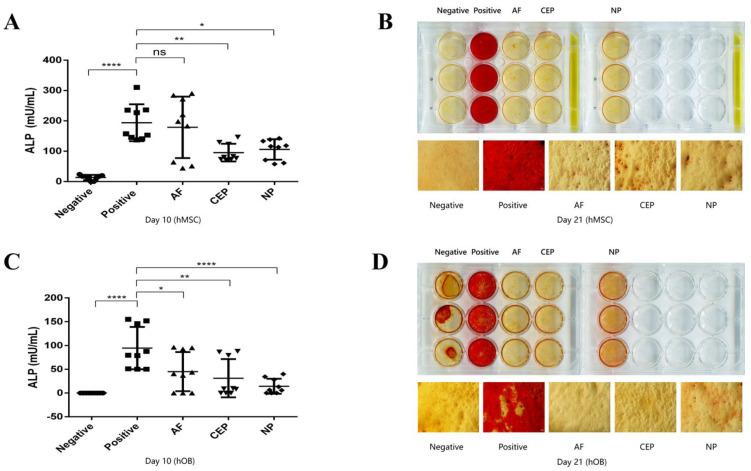
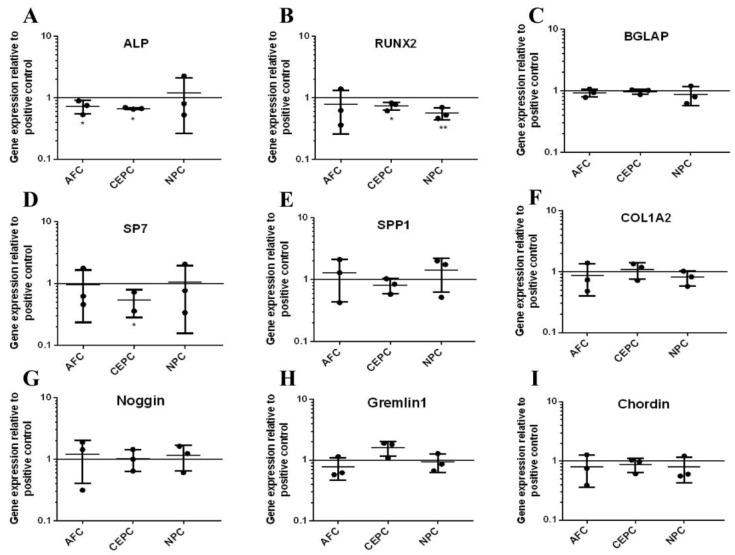
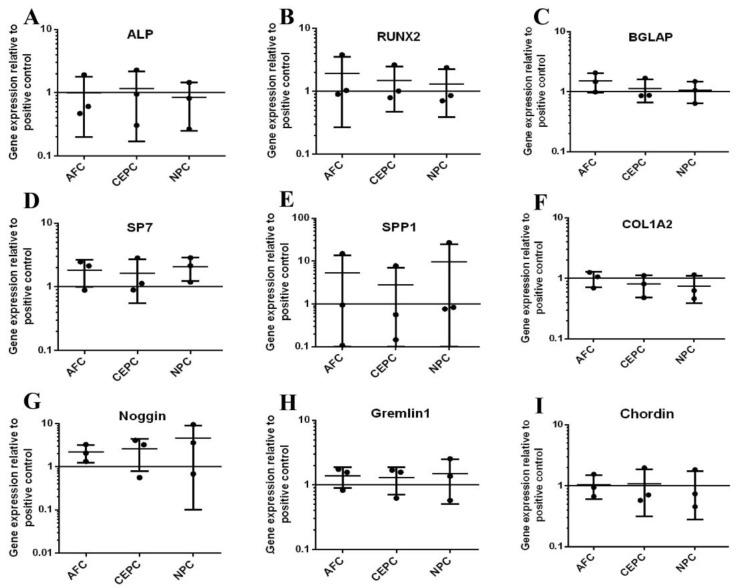
Low back pain (LBP) is associated with the degeneration of human intervertebral discs (IVDs). Despite progress in the treatment of LBP through spinal fusion, some cases still end in non-fusion after the removal of the affected IVD tissue. In this study, we investigated the hypothesis that the remaining IVD cells secrete BMP inhibitors that are sufficient to inhibit osteogenesis in autologous osteoblasts (OBs) and bone marrow mesenchymal stem cells (MSCs). A conditioned medium (CM) from primary human IVD cells in 3D alginate culture was co-cultured with seven donor-matched OB and MSCs. After ten days, osteogenesis was quantified at the transcript level using qPCR to measure the expression of bone-related genes and BMP antagonists, and at the protein level by alkaline phosphatase (ALP) activity. Additionally, cells were evaluated histologically using alizarin red (ALZR) staining on Day 21. For judging ALP activity and osteogenesis, the Noggin expression in samples was investigated to uncover the potential causes. The results after culture with the CM showed significantly decreased ALP activity and the inhibition of the calcium deposit formation in alizarin red staining. Interestingly, no significant changes were found among most bone-related genes and BMP antagonists in OBs and MSCs. Noteworthy, Noggin was relatively expressed higher in human IVD cells than in autologous OBs or MSCs (relative to autologous OB, the average fold change was in 6.9, 10.0, and 6.3 in AFC, CEPC, and NPC, respectively; and relative to autologous MSC, the average fold change was 2.3, 3.4, and 3.2, in AFC, CEPC, and NPC, respectively). The upregulation of Noggin in residual human IVDs could potentially inhibit the osteogenesis of autologous OB and MSC, thus inhibiting the postoperative spinal fusion after discectomy surgery.
下腰痛(LBP)与人类椎间盘(IVD)退变相关。尽管通过脊柱融合术治疗LBP取得了进展,但在切除受影响的IVD组织后,仍有一些病例最终未能融合。在本研究中,我们调查了以下假设:剩余的IVD细胞分泌的骨形态发生蛋白(BMP)抑制剂足以抑制自体成骨细胞(OB)和骨髓间充质干细胞(MSC)的成骨作用。将三维藻酸盐培养的原代人IVD细胞的条件培养基(CM)与七个供体匹配的OB和MSC共同培养。十天后,使用定量聚合酶链反应(qPCR)在转录水平上对成骨作用进行定量,以测量骨相关基因和BMP拮抗剂的表达,并通过碱性磷酸酶(ALP)活性在蛋白质水平上进行定量。此外,在第21天使用茜素红(ALZR)染色对细胞进行组织学评估。为了判断ALP活性和成骨作用,研究了样本中Noggin的表达以揭示潜在原因。用CM培养后的结果显示,ALP活性显著降低,茜素红染色中钙沉积形成受到抑制。有趣的是,在OB和MSC中,大多数骨相关基因和BMP拮抗剂之间未发现显著变化。值得注意的是,Noggin在人IVD细胞中的相对表达高于自体OB或MSC(相对于自体OB,在终板前纤维软骨细胞(AFC)、软骨终板软骨细胞(CEPC)和髓核细胞(NPC)中的平均倍数变化分别为6.9、10.0和6.3;相对于自体MSC,在AFC、CEPC和NPC中的平均倍数变化分别为2.3、3.4和3.2)。残余人IVD中Noggin的上调可能会抑制自体OB和MSC的成骨作用,从而抑制椎间盘切除术后的脊柱融合。
 Zotero 插件