Shaik Tanveer, Bhavsar Jill, Garg Shreya, Gupta Vasu, Kanagala Sai Gautham, Jain Rohit
Avalon University School of Medicine, Willemstad, Curacao.
Government Medical College Baroda, Gujarat, India.
Glob Cardiol Sci Pract. 2024 Jan 3;2024(1):e202409. doi: 10.21542/gcsp.2024.9.
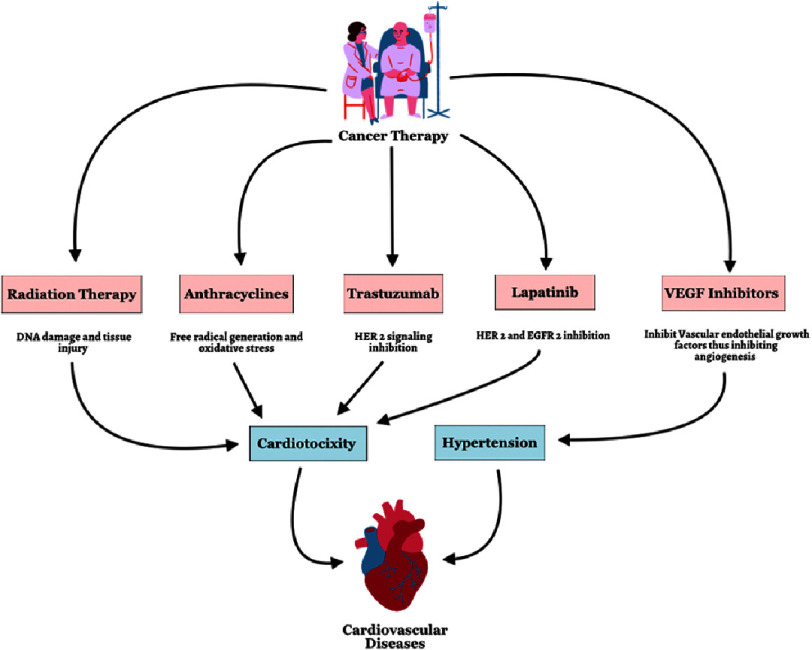
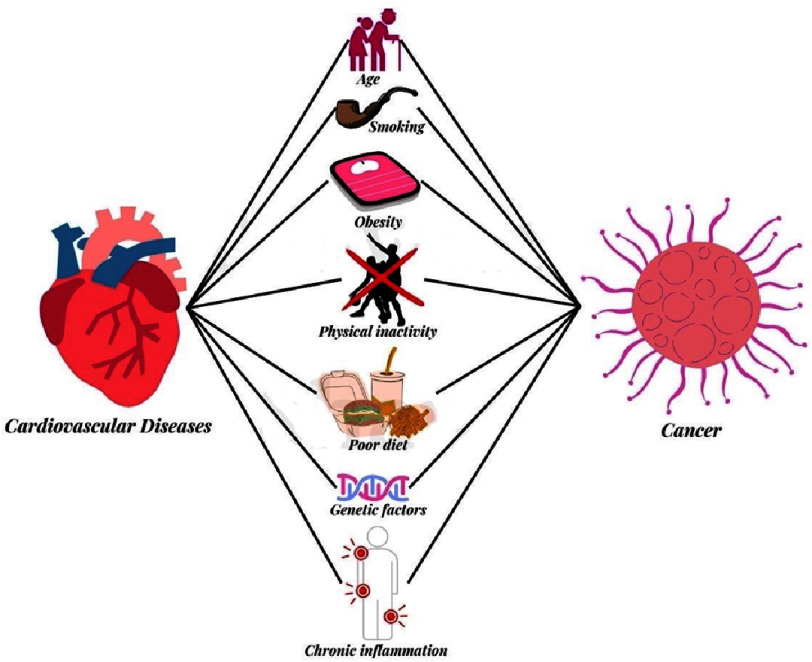
Cancer and cardiovascular disease are two of the leading causes of death worldwide. Although cancer has historically been viewed as a condition characterized by abnormal cell growth and proliferation, it is now recognized that cancer can lead to a variety of cardiovascular diseases. This is due to the direct impact of cancer on the heart and blood vessels, which can cause myocarditis, pericarditis, and vasculitis. Additionally, cancer patients frequently experience systemic effects such as oxidative stress, inflammation, and metabolic dysregulation, which can contribute to the development of cardiovascular risk factors such as hypertension, dyslipidemia, and insulin resistance. It is important to closely monitor patients with cancer, especially those undergoing chemotherapy or radiation therapy, for cardiovascular risk factors and promptly address them. This article aims to explore the clinical implications of the underlying mechanisms connecting cancer and cardiovascular diseases. Our analysis highlights the need for improved cooperation between oncologists and cardiologists, and specialized treatment for cancer survivors.
癌症和心血管疾病是全球两大主要死因。尽管癌症在历史上一直被视为一种以异常细胞生长和增殖为特征的病症,但现在人们认识到癌症会引发多种心血管疾病。这是由于癌症对心脏和血管的直接影响,可导致心肌炎、心包炎和血管炎。此外,癌症患者经常会出现氧化应激、炎症和代谢失调等全身效应,这些都可能促使高血压、血脂异常和胰岛素抵抗等心血管危险因素的形成。密切监测癌症患者,尤其是正在接受化疗或放疗的患者的心血管危险因素并及时加以处理非常重要。本文旨在探讨将癌症与心血管疾病联系起来的潜在机制的临床意义。我们的分析强调了肿瘤学家和心脏病学家加强合作以及对癌症幸存者进行专门治疗的必要性。