Shapouri Sheyda, Sharifi Aziz, Folkedal Ole, Fraser Thomas W K, Vindas Marco A
Biochemistry and Physiology Unit, Faculty of Veterinary Medicine, Norwegian University of Life Sciences, As, Norway.
Department of Biosciences, Faculty of Mathematics and Natural Sciences, University of Oslo, Oslo, Norway.
Front Behav Neurosci. 2024 Feb 12;18:1285413. doi: 10.3389/fnbeh.2024.1285413. eCollection 2024.
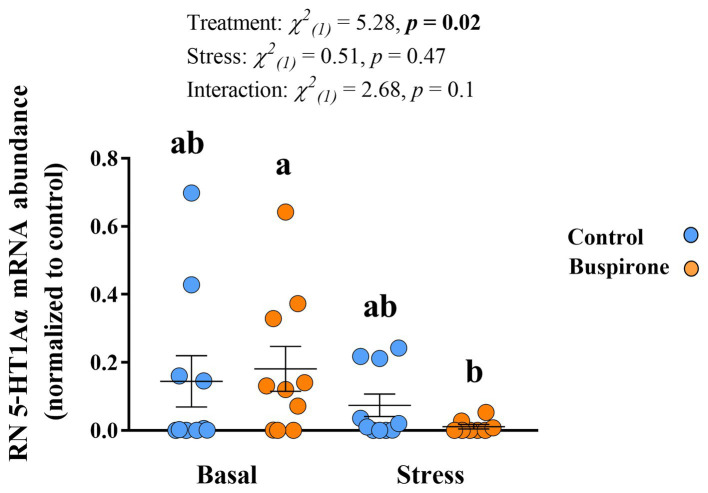
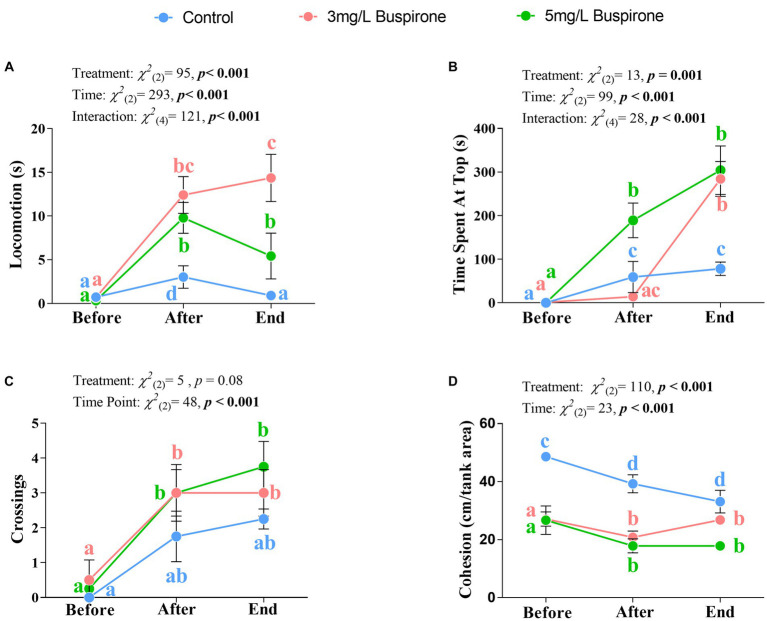
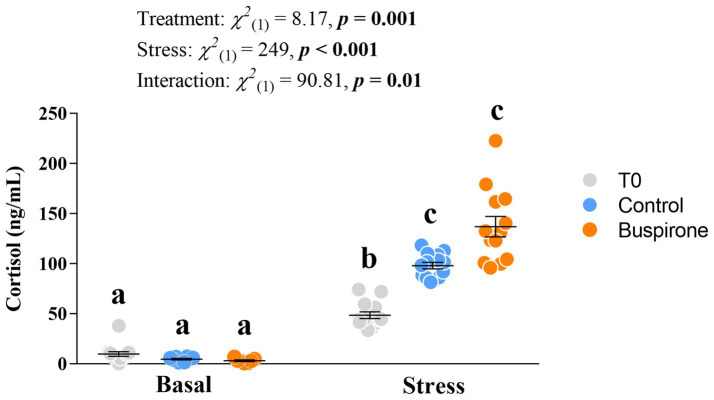
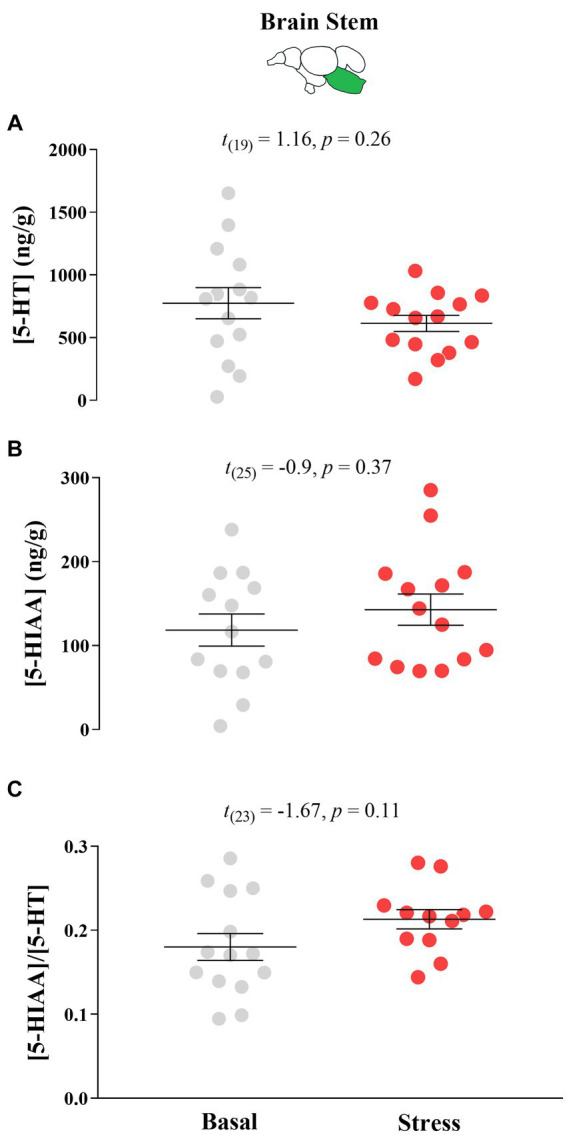
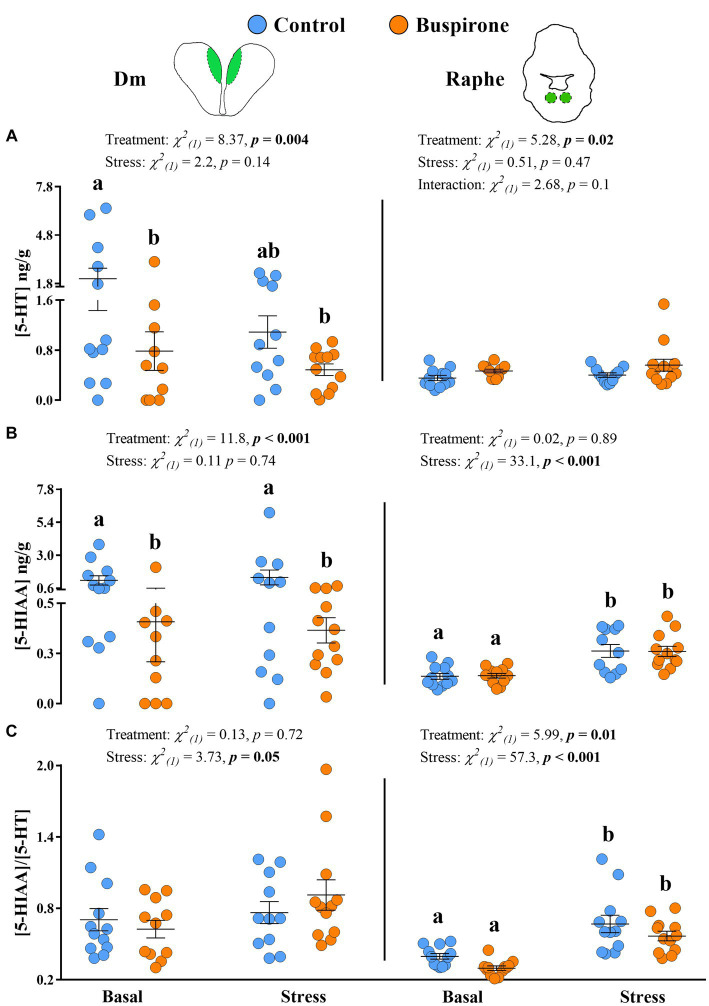
A proportion of farmed salmon in seawater show a behaviorally inhibited, growth stunted profile known as a depression-like state (DLS). These DLS fish are characterized by chronically elevated serotonergic signaling and blood plasma cortisol levels and the inability to react further to acute stress, which is suggestive of chronic stress. In this study, we characterize the neuroendocrine profile of growth stunted freshwater parr and confirm that they show a DLS-like neuroendocrine profile with a blunted cortisol response and no serotonergic increase in response to acute stress. Furthermore, we attempted to reverse this DLS-like profile through pharmacological manipulation of the serotonin (5-HT) system with buspirone, an anxiolytic medication that acts as a serotonin receptor agonist (i.e., decreases serotonergic signaling). We found that while buspirone decreases anxiolytic-type behavior in healthy fish, no quantifiable behavioral change was found in DLS-like fish. However, there was a physiological effect of diminished basal serotonergic signaling. This suggests that at the physiological level, buspirone appears to reverse the neuroendocrine DLS profile. With a deeper understanding of what causes DLS profiles and growth stunting in juvenile fish, steps can be taken in terms of husbandry to prevent repeated stressors and the formation of the DLS profile, potentially reducing losses in aquaculture due to chronic stress.
一部分海水养殖三文鱼表现出行为抑制、生长发育迟缓的状态,即类似抑郁的状态(DLS)。这些处于DLS状态的鱼的特征是血清素能信号和血浆皮质醇水平长期升高,且无法对急性应激做出进一步反应,这表明存在慢性应激。在本研究中,我们描述了生长发育迟缓的淡水幼鱼的神经内分泌特征,并证实它们呈现出类似DLS的神经内分泌特征,皮质醇反应迟钝,对急性应激无血清素能增加。此外,我们试图通过用丁螺环酮对血清素(5-HT)系统进行药理学操作来逆转这种类似DLS的特征,丁螺环酮是一种抗焦虑药物,作为血清素受体激动剂起作用(即降低血清素能信号)。我们发现,虽然丁螺环酮会降低健康鱼类的抗焦虑型行为,但在类似DLS的鱼类中未发现可量化的行为变化。然而,存在基础血清素能信号减弱的生理效应。这表明在生理水平上,丁螺环酮似乎能逆转神经内分泌DLS特征。随着对幼鱼中DLS特征和生长发育迟缓成因的更深入了解,可以在养殖管理方面采取措施,以防止反复出现应激源和DLS特征的形成,从而有可能减少水产养殖中因慢性应激造成的损失。