Kamau Luna, Bennett Kelly L, Ochomo Eric, Herren Jeremy, Agumba Silas, Otieno Samson, Omoke Diana, Matoke-Muhia Damaris, Mburu David, Mwangangi Joseph, Ramaita Edith, Juma Elijah O, Mbogo Charles, Barasa Sonia, Miles Alistair
Centre for Biotechnology Research and Development (CBRD), Kenya Medical Research Institute.
Malaria Vector Genomic Surveillance, Wellcome Trust Sanger Institute.
Res Sq. 2024 Feb 15:rs.3.rs-3953608. doi: 10.21203/rs.3.rs-3953608/v1.
is a primary vector of malaria found in West and Central Africa, but its presence has hitherto never been documented in Kenya. A thorough understanding of vector bionomics is important as it enables the implementation of targeted and effective vector control interventions. Malaria vector surveillance efforts in the country have tended to focus on historically known primary vectors. In the current study, we sought to determine the taxonomic status of samples collected from five different malaria epidemiological zones in Kenya as well asdescribe the population genetic structure and insecticide resistance profiles in relation to other populations.
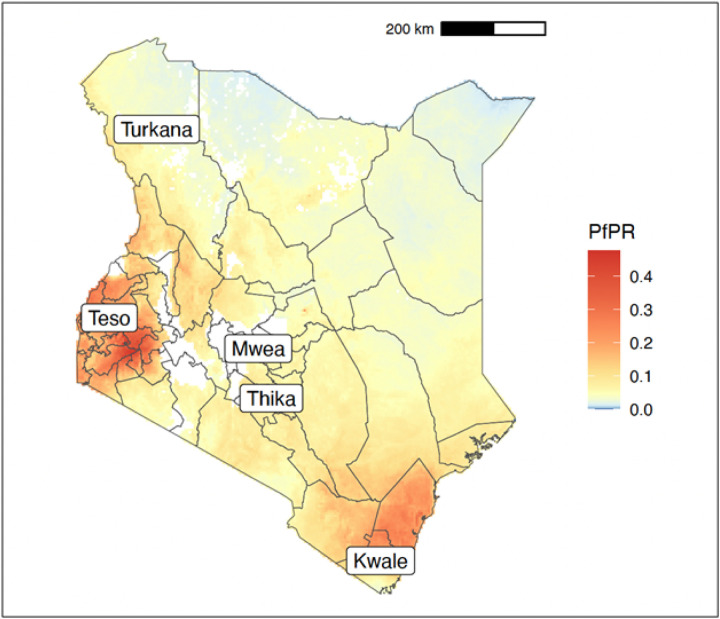
Mosquitoes were sampled as larvae from Busia, Kwale, Turkana, Kirinyaga and Kiambu counties, representing the range of malaria endemicities in Kenya, in 2019 and 2021 and emergent adults analysed using Whole Genome Sequencing data processed in accordance with the 1000 Genomes Project phase 3. Where available, historical samples from the same sites were included for WGS.
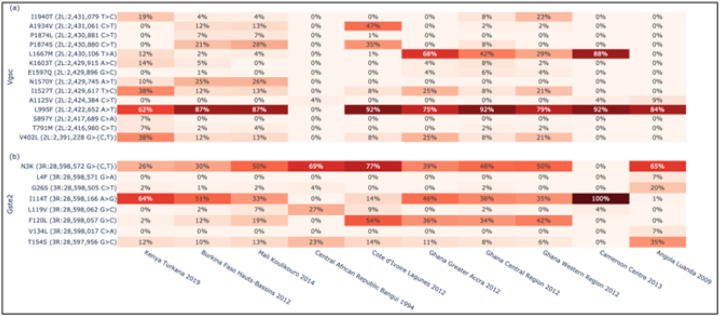
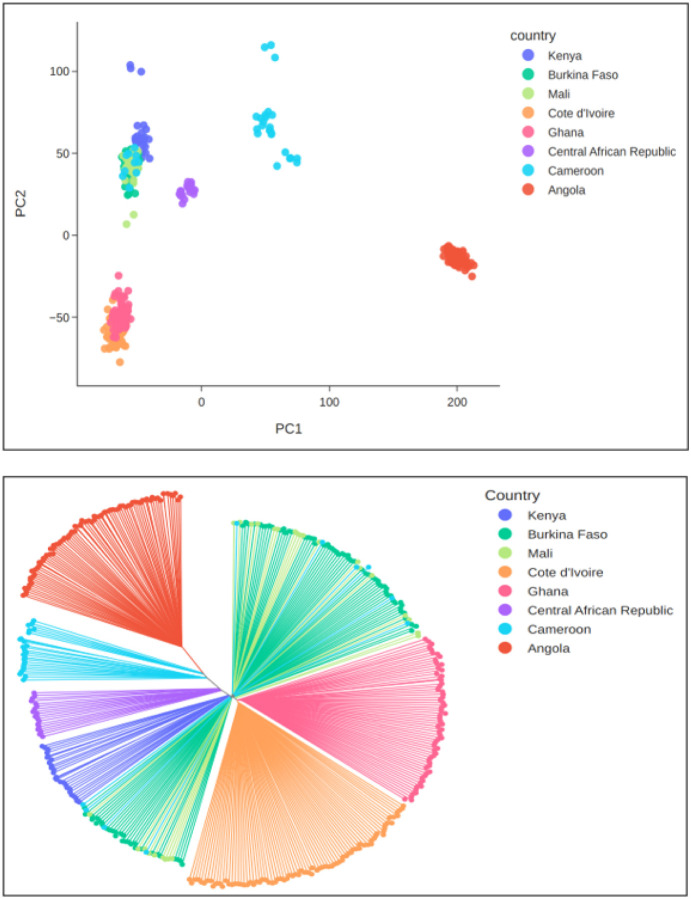
This study reports the detection of for the first time in Kenya. The species was detected in Turkana County across all three time points sampled and its presence confirmed through taxonomic analysis. Additionally, we found a lack of strong population genetic differentiation between from Kenya and those from the more northerly regions of West and Central Africa, suggesting they represent a connected extension to the known species range. Mutations associated with target-site resistance to DDT and pyrethroids and metabolic resistance to DDT were found at high frequencies of ~60%. The profile and frequencies of the variants observed were similar to from West and Central Africa but the ace-1 mutation linked to organophosphate and carbamate resistance present in from coastal West Africa was absent in Kenya.
These findings emphasise the need for the incorporation of genomics in comprehensive and routine vector surveillance to inform on the range of malaria vector species, and their insecticide resistance status to inform the choice of effective vector control approaches.
是在西非和中非发现的疟疾主要传播媒介,但迄今为止在肯尼亚从未有过其存在的记录。全面了解媒介生物特性很重要,因为这有助于实施有针对性且有效的媒介控制干预措施。该国的疟疾媒介监测工作往往集中在历史上已知的主要媒介上。在当前研究中,我们试图确定从肯尼亚五个不同疟疾流行区采集的样本的分类地位,并描述其种群遗传结构以及与其他种群相关的杀虫剂抗性概况。
2019年和2021年,从代表肯尼亚疟疾流行范围的布西亚、夸莱、图尔卡纳、基里尼亚加和基安布县采集幼虫样本作为蚊子样本,并使用根据千人基因组计划第三阶段处理的全基因组测序数据对羽化的成虫进行分析。在可行的情况下,纳入来自同一地点的历史样本进行全基因组测序。
本研究首次报告在肯尼亚检测到。在图尔卡纳县所有三个采样时间点均检测到该物种,并通过分类分析确认了其存在。此外,我们发现肯尼亚的与来自西非和中非更北部地区的之间缺乏强烈的种群遗传分化,这表明它们代表了已知物种范围的连续延伸。发现与滴滴涕和拟除虫菊酯的靶标位点抗性以及对滴滴涕的代谢抗性相关的突变频率高达60%左右。观察到的变体概况和频率与来自西非和中非的相似,但肯尼亚不存在与西非沿海的中存在的与有机磷和氨基甲酸酯抗性相关的ace-1突变。
这些发现强调了将基因组学纳入全面和常规媒介监测的必要性,以了解疟疾媒介物种的范围及其杀虫剂抗性状况,从而为选择有效的媒介控制方法提供依据。