McManus Daniel T, Valanparambil Rajesh M, Medina Christopher B, Hu Yinghong, Scharer Christopher D, Sobierajska Ewelina, Chang Daniel Y, Wieland Andreas, Lee Judong, Nasti Tahseen H, Hashimoto Masao, Ross James L, Prokhnevska Nataliya, Cardenas Maria A, Gill Amanda L, Clark Elisa C, Abadie Kathleen, Kueh Hao Yuan, Kaye Jonathan, Au-Yeung Byron B, Kissick Haydn T, Ahmed Rafi
Emory Vaccine Center, Emory University School of Medicine, Atlanta, GA, USA.
Department of Microbiology and Immunology, Emory University School of Medicine, Atlanta, GA, USA.
Res Sq. 2024 Feb 12:rs.3.rs-3922168. doi: 10.21203/rs.3.rs-3922168/v1.
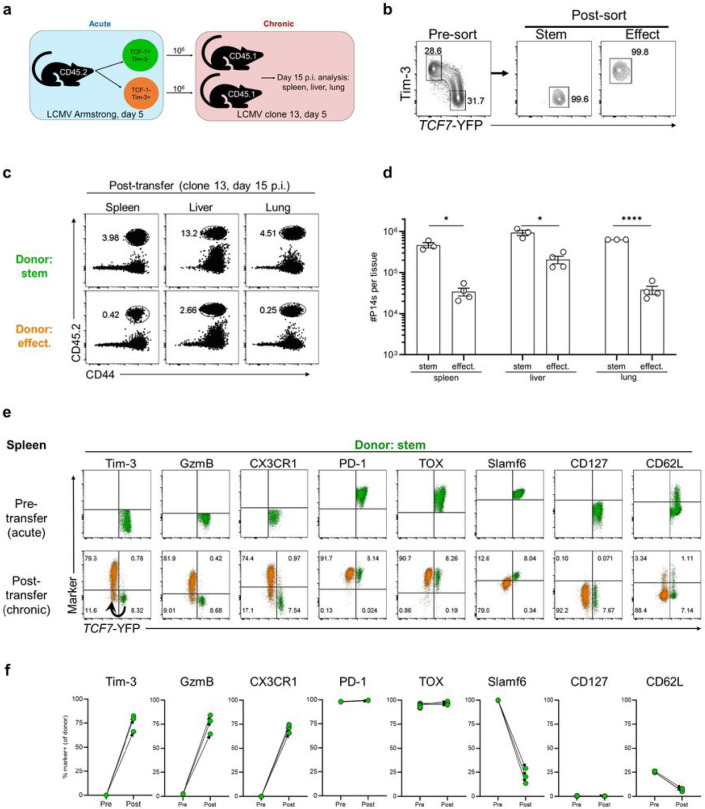
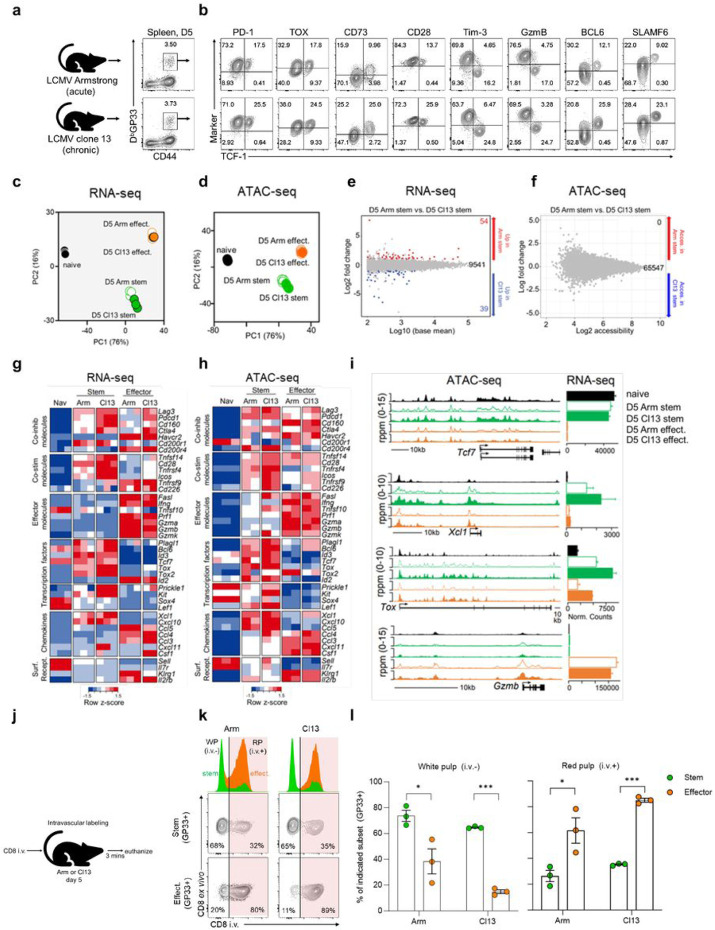
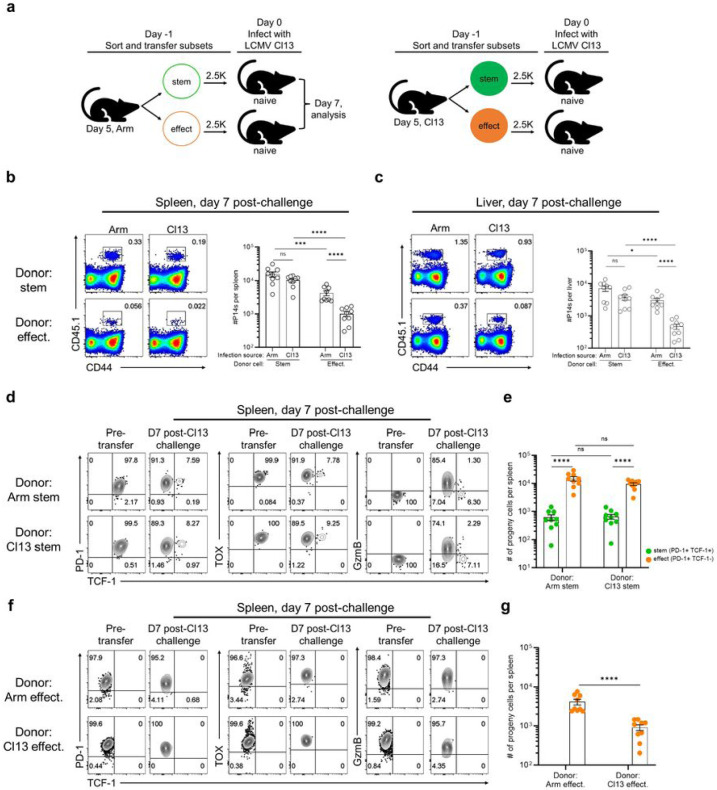
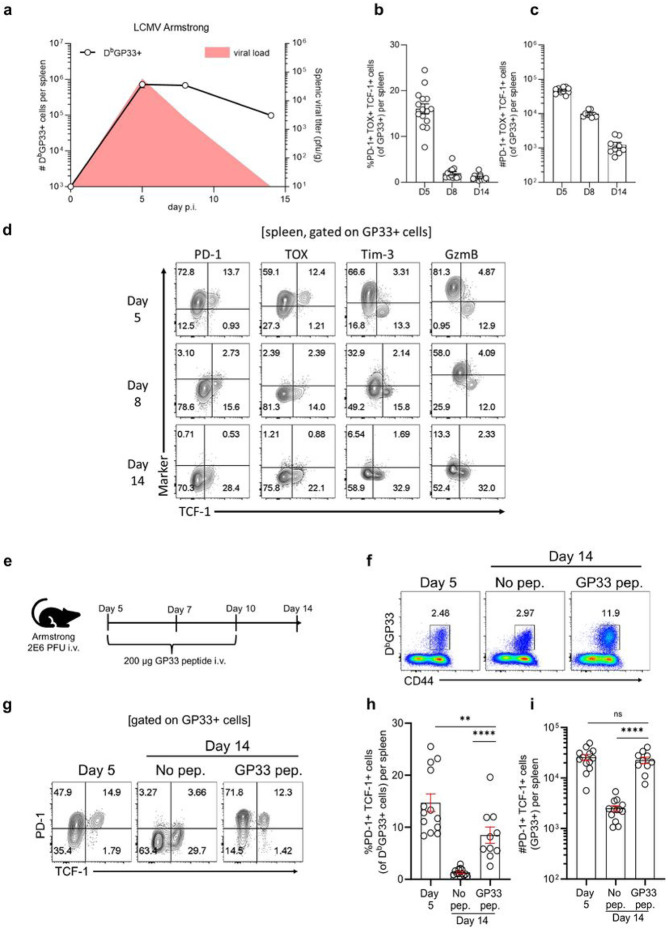
Virus specific PD-1+ TCF-1+ TOX+ stem-like CD8+ T cells are essential for maintaining T cell responses during chronic infection and are also critical for PD-1 directed immunotherapy. In this study we have used the mouse model of chronic LCMV infection to examine when these virus specific stem-like CD8+ T cells are generated during the course of chronic infection and what is the role of antigen in maintaining the stem-like program. We found that these stem-like CD8+ T cells are generated early (day 5) during chronic infection and that antigen is essential for maintaining their stem-like program. This early generation of stem-like CD8+ T cells suggested that the fate commitment to this cell population was agnostic to the eventual outcome of infection and the immune system prepares for a potential chronic infection. Indeed, we found that an identical virus specific stem-cell like CD8+ T cell population was also generated during acute LCMV infection but these cells were lost once the virus was cleared. To determine the fate of these early PD-1+TCF-1+TOX+ stem-like CD8+ T cells that are generated during both acute and chronic LCMV infection we set up two reciprocal adoptive transfer experiments. In the first experiment we transferred day 5 stem-like CD8+ T cells from chronically infected into acutely infected mice and examined their differentiation after viral clearance. We found that these early stem-like CD8+ T cells downregulated canonical markers of the chronic stem-like CD8+ T cells and expressed markers (CD127 and CD62L) associated with central memory CD8+ T cells. In the second experiment, we transferred day 5 stem-like cells from acutely infected mice into chronically infected mice and found that these CD8+ T cells could function like resource cells after transfer into a chronic environment by generating effector CD8+ T cells in both lymphoid and non-lymphoid tissues while also maintaining the number of stem-like CD8+ T cells. These findings provide insight into the generation and maintenance of virus specific stem-like CD8+ T cells that play a critical role in chronic viral infection. In particular, our study highlights the early generation of stem-like CD8+ T cells and their ability to adapt to either an acute or chronic infection. These findings are of broad significance since these novel stem-like CD8+ T cells play an important role in not only viral infections but also in cancer and autoimmunity.
病毒特异性的PD-1+ TCF-1+ TOX+ 干细胞样CD8+ T细胞对于在慢性感染期间维持T细胞反应至关重要,并且对于PD-1导向的免疫疗法也至关重要。在本研究中,我们使用慢性淋巴细胞性脉络丛脑膜炎病毒(LCMV)感染的小鼠模型来研究这些病毒特异性干细胞样CD8+ T细胞在慢性感染过程中何时产生,以及抗原在维持干细胞样程序中的作用是什么。我们发现这些干细胞样CD8+ T细胞在慢性感染早期(第5天)产生,并且抗原对于维持它们的干细胞样程序至关重要。这种干细胞样CD8+ T细胞的早期产生表明,对该细胞群体的命运承诺与感染的最终结果无关,并且免疫系统为潜在的慢性感染做好了准备。事实上,我们发现相同的病毒特异性干细胞样CD8+ T细胞群体在急性LCMV感染期间也会产生,但一旦病毒被清除,这些细胞就会消失。为了确定在急性和慢性LCMV感染期间产生的这些早期PD-1+ TCF-1+ TOX+ 干细胞样CD8+ T细胞的命运,我们进行了两个相互的过继转移实验。在第一个实验中,我们将来自慢性感染小鼠的第5天干细胞样CD8+ T细胞转移到急性感染小鼠中,并在病毒清除后检查它们的分化情况。我们发现这些早期干细胞样CD8+ T细胞下调了慢性干细胞样CD8+ T细胞的典型标志物,并表达了与中央记忆CD8+ T细胞相关的标志物(CD127和CD62L)。在第二个实验中,我们将来自急性感染小鼠的第5天干细胞样细胞转移到慢性感染小鼠中,发现这些CD8+ T细胞在转移到慢性环境后可以像资源细胞一样发挥作用,通过在淋巴组织和非淋巴组织中产生效应性CD8+ T细胞,同时还维持干细胞样CD8+ T细胞的数量。这些发现为在慢性病毒感染中起关键作用的病毒特异性干细胞样CD8+ T细胞的产生和维持提供了见解。特别是,我们的研究强调了干细胞样CD8+ T细胞的早期产生及其适应急性或慢性感染的能力。这些发现具有广泛的意义,因为这些新型干细胞样CD8+ T细胞不仅在病毒感染中起重要作用,而且在癌症和自身免疫中也起重要作用。