Skaug Kristina Lindquist, Engh Marie Ellström, Bø Kari
Department of Sports Medicine, Norwegian School of Sports Sciences, Oslo, Norway
Department of Obstetrics and Gynecology, Akershus University Hospital, Lorenskog, Norway.
Br J Sports Med. 2024 Apr 25;58(9):486-493. doi: 10.1136/bjsports-2023-107365.
Stress urinary incontinence (SUI) is common among females during functional fitness training, such as CrossFit. The aim of this study was to assess the effect of pelvic floor muscle training (PFMT) on SUI in female functional fitness exercisers.
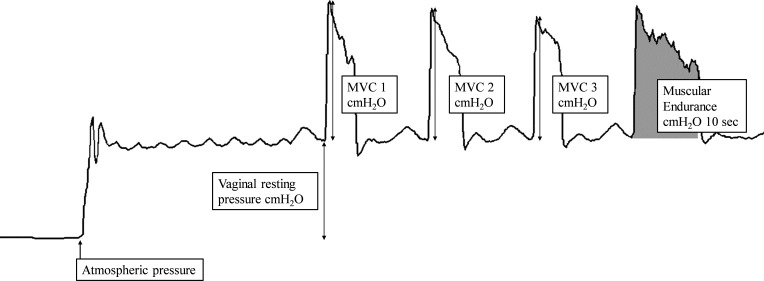
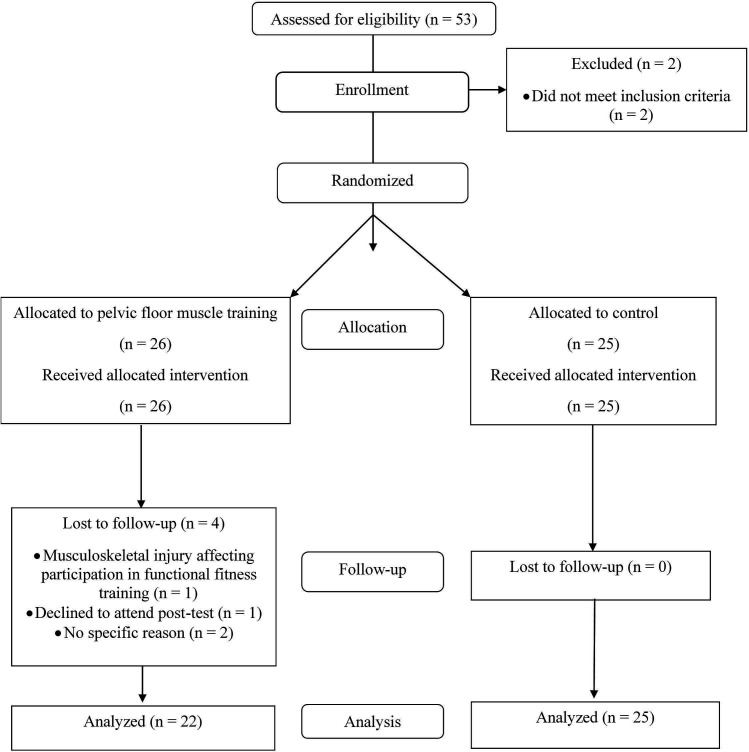
This was an assessor-blinded randomised controlled trial with a PFMT group (n=22) and a control group (n=25). The PFMT group followed a 16-week home-training programme with 3 sets of 8-12 maximum pelvic floor muscle (PFM) contractions daily and weekly follow-up/reminders by phone. The primary outcome was change in a total score of the International Consultation on Incontinence Questionnaire-Urinary Incontinence Short Form (ICIQ-UI-SF). The secondary outcomes were perceived change of symptoms of SUI, change of PFM strength measured by vaginal manometry and symptoms of anal incontinence (AI) and pelvic organ prolapse (POP).
47 women, mean age of 33.5 years (SD: 8.1), participated. At 16 weeks, there was a mean difference between groups of -1.4 (95% CI: -2.6 to -0.2) in the change of the ICIQ-UI-SF score in favour of the PFMT group. The PFMT group completed a mean of 70% (SD: 23) of the prescribed protocol. 64% in the PFMT group versus 8% in the control group reported improved symptoms of SUI (p<0.001, relative risk: 7.96, 95% CI, 2.03 to 31.19). There were no group differences in the change of PFM strength or AI/POP symptoms.
A 16-week home-training programme of the PFM led to improvements in SUI in female functional fitness exercisers. However, PFM strength and AI and POP symptoms did not improve significantly in the PFMT group compared with the control group.
压力性尿失禁(SUI)在女性进行功能性健身训练(如CrossFit)期间很常见。本研究的目的是评估盆底肌训练(PFMT)对女性功能性健身锻炼者压力性尿失禁的影响。
这是一项评估者盲法随机对照试验,分为盆底肌训练组(n = 22)和对照组(n = 25)。盆底肌训练组遵循为期16周的家庭训练计划,每天进行3组,每组8 - 12次最大盆底肌(PFM)收缩,并通过电话进行每周随访/提醒。主要结局是国际尿失禁咨询委员会尿失禁简表(ICIQ - UI - SF)总分的变化。次要结局是压力性尿失禁症状的感知变化、通过阴道测压测量的盆底肌力量变化以及肛门失禁(AI)和盆腔器官脱垂(POP)的症状。
47名女性参与,平均年龄33.5岁(标准差:8.1)。16周时,国际尿失禁咨询委员会尿失禁简表评分变化的组间平均差异为 - 1.4(95%可信区间: - 2.6至 - 0.2),有利于盆底肌训练组。盆底肌训练组平均完成了规定方案的70%(标准差:23)。盆底肌训练组64%的人报告压力性尿失禁症状改善,而对照组为8%(p < 0.001,相对风险:7.96,95%可信区间,2.03至31.19)。盆底肌力量或肛门失禁/盆腔器官脱垂症状的变化在两组间无差异。
为期16周的盆底肌家庭训练计划使女性功能性健身锻炼者的压力性尿失禁得到改善。然而,与对照组相比,盆底肌训练组的盆底肌力量、肛门失禁和盆腔器官脱垂症状并未显著改善。