Department of Pharmacology, Kasturba Medical College, Manipal, Manipal Academy of Higher Education, Manipal, Karnataka, 576104, India.
Department of Pharmacology and Toxicology, National Institute of Pharmaceutical Education and Research (NIPER), Hajipur, Industrial area Hajipur, Vaishali, Bihar, 844102, India.
Biol Trace Elem Res. 2024 Dec;202(12):5395-5412. doi: 10.1007/s12011-024-04116-5. Epub 2024 Feb 28.
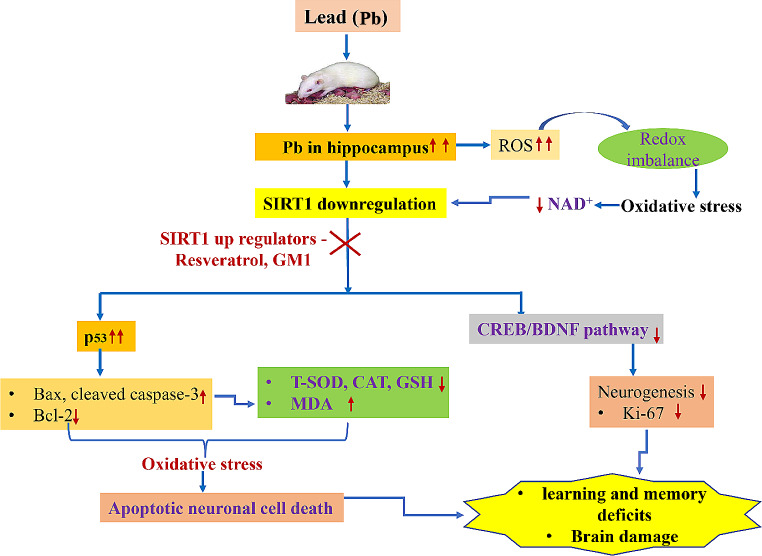
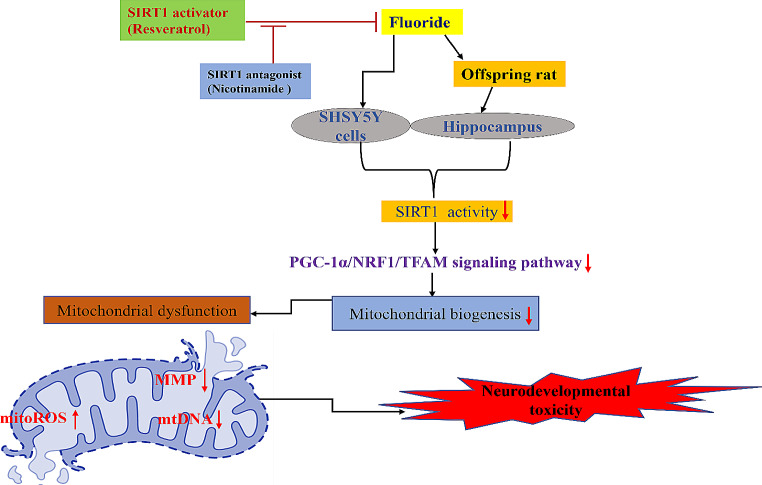
The formation of the central nervous system is a meticulously planned and intricate process. Any modification to this process has the potential to disrupt the structure and operation of the brain, which could result in deficiencies in neurological growth. When neurotoxic substances are present during the early stages of development, they can be exceptionally dangerous. Prenatally, the immature brain is extremely vulnerable and is therefore at high risk in pregnant women associated with occupational exposures. Lead, fluoride, aluminum, and cadmium are examples of possibly toxic trace elements that have been identified as an environmental concern in the aetiology of a number of neurological and neurodegenerative illnesses. SIRT1, a member of the sirtuin family has received most attention for its potential neuroprotective properties. SIRT1 is an intriguing therapeutic target since it demonstrates important functions to increase neurogenesis and cellular lifespan by modulating multiple pathways. It promotes axonal extension, neurite growth, and dendritic branching during the development of neurons. Additionally, it contributes to neurogenesis, synaptic plasticity, memory development, and neuroprotection. This review summarizes the possible role of SIRT1 signalling pathway in potentially toxic trace elements -induced neurodevelopmental toxicity, highlighting some molecular pathways such as mitochondrial biogenesis, CREB/BDNF and PGC-1α/NRF1/TFAM.
中枢神经系统的形成是一个经过精心规划和复杂的过程。任何对这个过程的修改都有可能破坏大脑的结构和功能,从而导致神经生长缺陷。在发育早期存在神经毒性物质时,它们可能特别危险。在胎儿期,未成熟的大脑极其脆弱,因此与职业暴露相关的孕妇面临着极高的风险。铅、氟化物、铝和镉等可能有毒的微量元素已被确定为多种神经和神经退行性疾病病因学中的环境问题。SIRT1 是 sirtuin 家族的一员,因其潜在的神经保护特性而受到最多关注。SIRT1 是一个有趣的治疗靶点,因为它通过调节多种途径来增加神经发生和细胞寿命,从而发挥重要作用。它在神经元发育过程中促进轴突延伸、神经突生长和树突分支。此外,它还参与神经发生、突触可塑性、记忆发育和神经保护。本综述总结了 SIRT1 信号通路在潜在有毒微量元素诱导的神经发育毒性中的可能作用,强调了一些分子途径,如线粒体生物发生、CREB/BDNF 和 PGC-1α/NRF1/TFAM。