Institute of Cellular and Integrative Physiology, Center for Experimental Medicine, University Medical Center Hamburg-Eppendorf, Hamburg, Germany.
Hamburg Center of Kidney Health, Hamburg, Germany.
Nat Commun. 2024 Mar 1;15(1):1897. doi: 10.1038/s41467-024-46273-0.
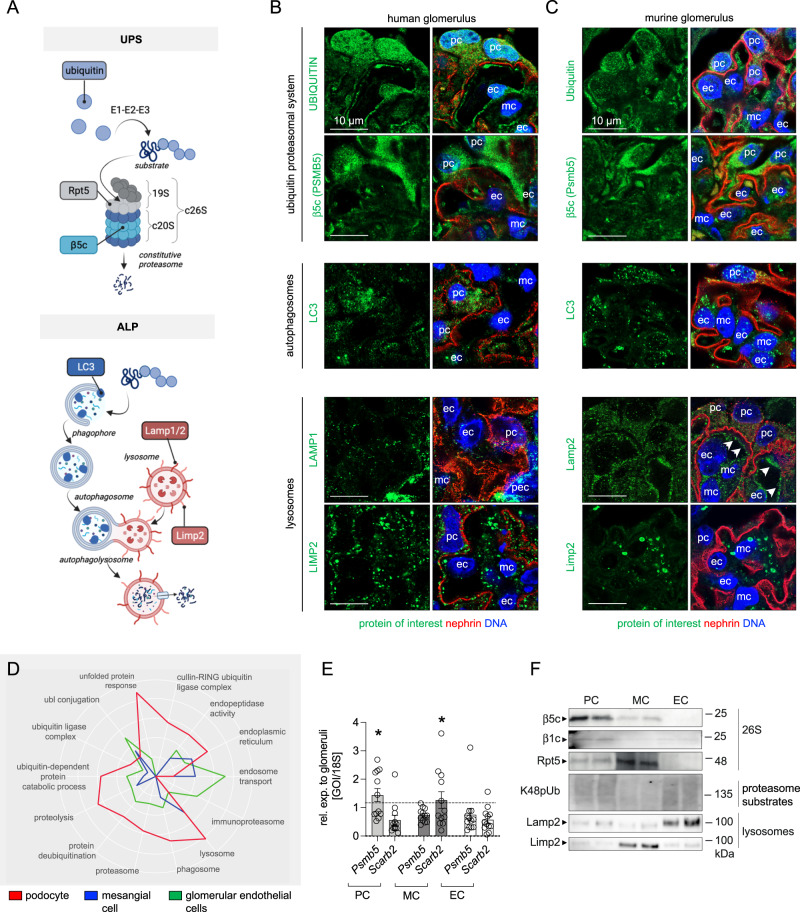
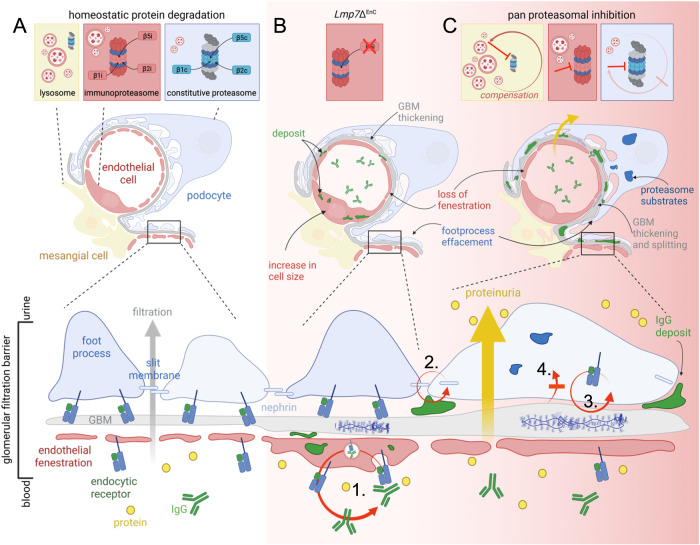
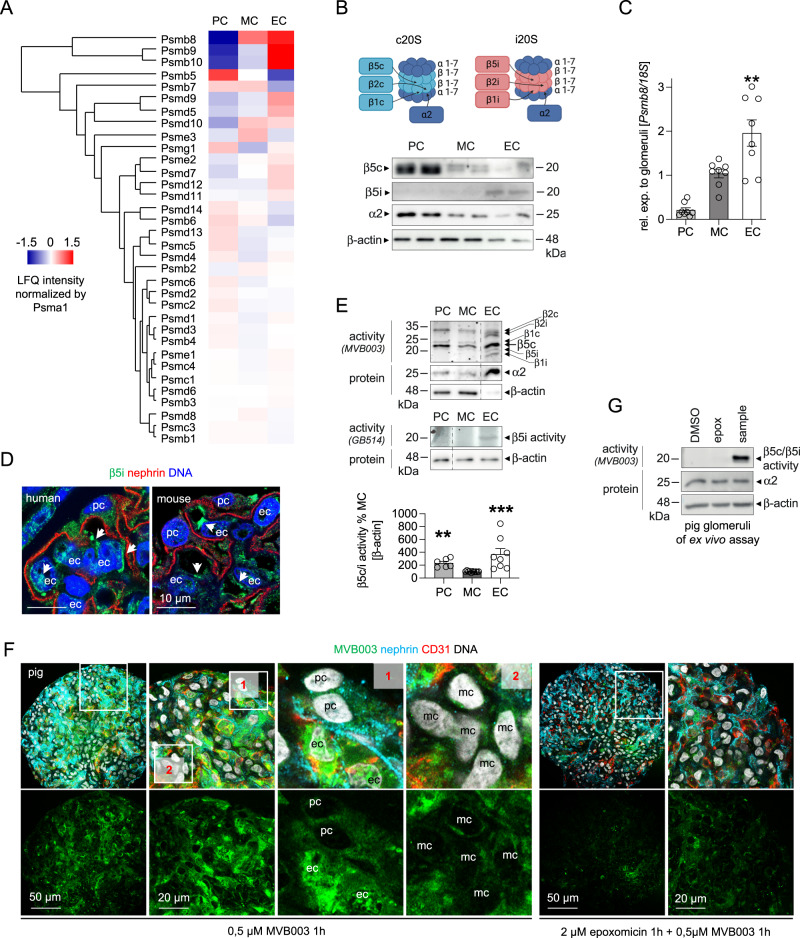
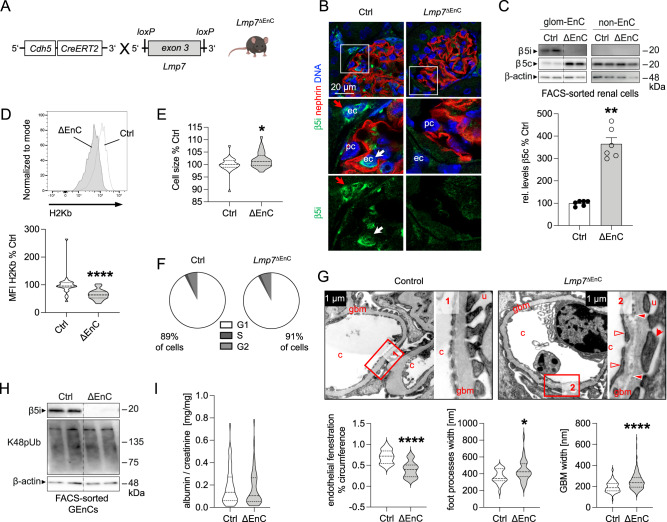
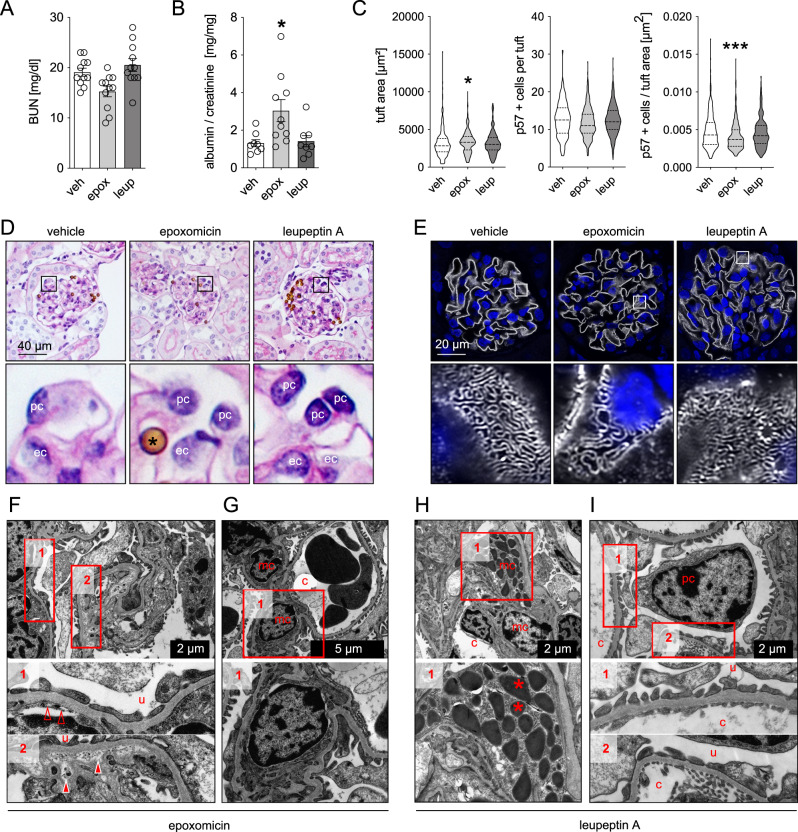
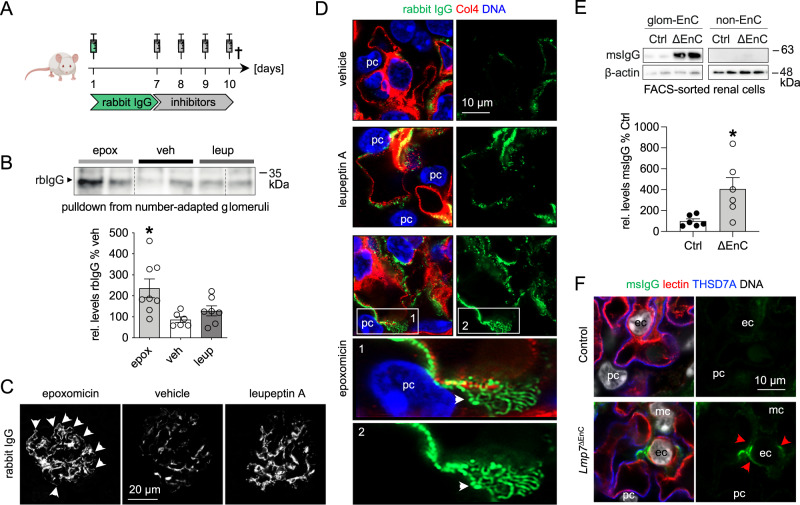
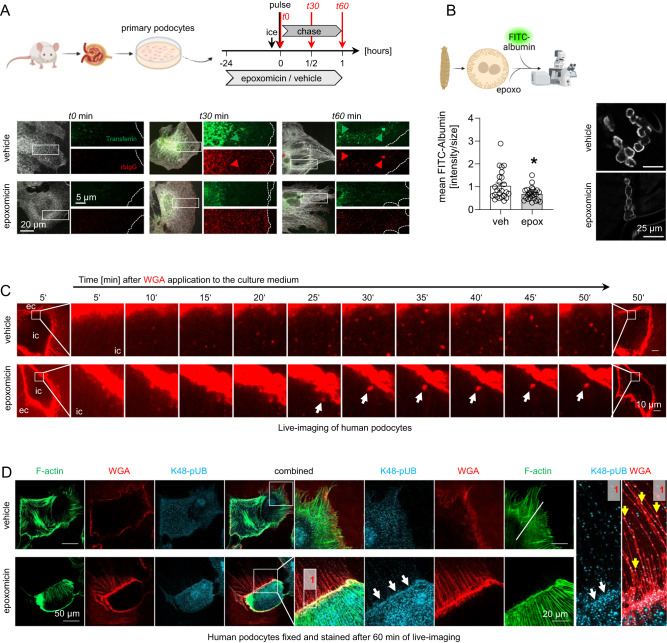
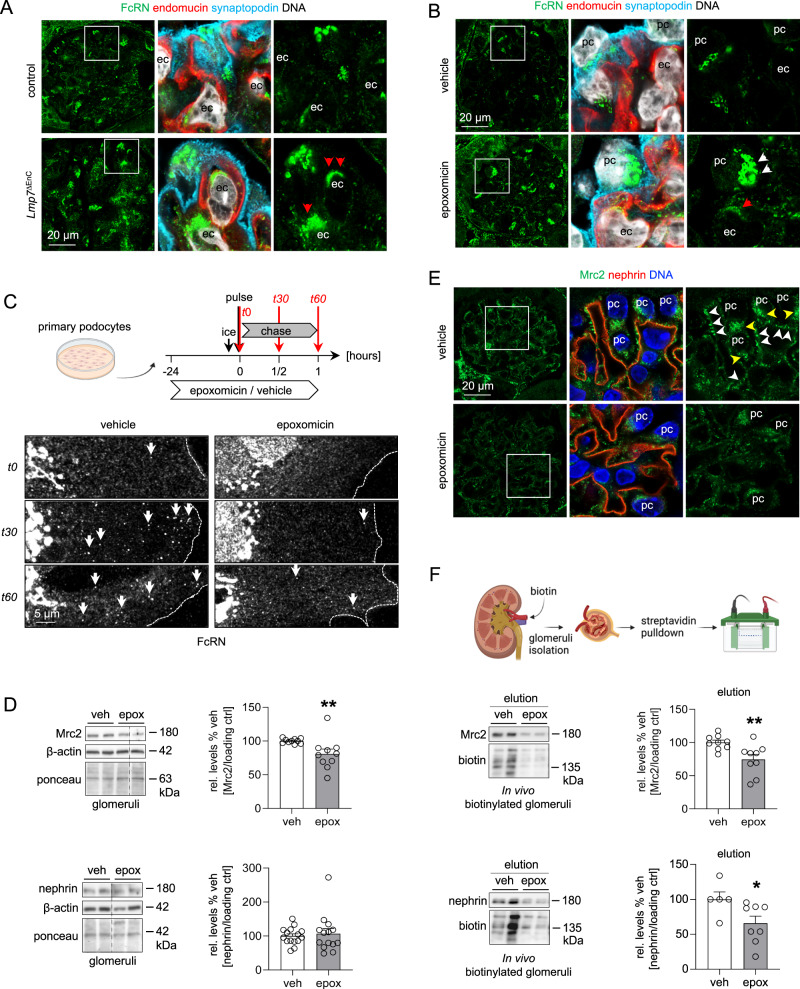
Kidney filtration is ensured by the interaction of podocytes, endothelial and mesangial cells. Immunoglobulin accumulation at the filtration barrier is pathognomonic for glomerular injury. The mechanisms that regulate filter permeability are unknown. Here, we identify a pivotal role for the proteasome in a specific cell type. Combining genetic and inhibitor-based human, pig, mouse, and Drosophila models we demonstrate that the proteasome maintains filtration barrier integrity, with podocytes requiring the constitutive and glomerular endothelial cells the immunoproteasomal activity. Endothelial immunoproteasome deficiency as well as proteasome inhibition disrupt the filtration barrier in mice, resulting in pathologic immunoglobulin deposition. Mechanistically, we observe reduced endocytic activity, which leads to altered membrane recycling and endocytic receptor turnover. This work expands the concept of the (immuno)proteasome as a control protease orchestrating protein degradation and antigen presentation and endocytosis, providing new therapeutic targets to treat disease-associated glomerular protein accumulations.
肾小球滤过功能由足细胞、内皮细胞和系膜细胞相互作用来保证。免疫球蛋白在滤过屏障中的蓄积是肾小球损伤的特征性表现。然而,调节滤过通透性的机制尚不清楚。在这里,我们确定了蛋白酶体在特定细胞类型中的关键作用。通过结合遗传和抑制剂的人类、猪、鼠和果蝇模型,我们证明了蛋白酶体维持滤过屏障的完整性,其中足细胞需要组成型和肾小球内皮细胞的免疫蛋白酶体活性。内皮细胞免疫蛋白酶体缺陷以及蛋白酶体抑制会破坏小鼠的滤过屏障,导致病理性免疫球蛋白沉积。从机制上讲,我们观察到内吞作用活性降低,这导致了膜的再循环和内吞受体周转率的改变。这项工作扩展了(免疫)蛋白酶体作为一种控制蛋白酶的概念,它协调蛋白降解、抗原呈递和内吞作用,为治疗与疾病相关的肾小球蛋白蓄积提供了新的治疗靶点。