Lee Sumin, Ye Qianying, Yang Hyeyun, Lee Sojung, Kim YeJi, Lee Nahyun, Gonzalez-Cox Darwin, Yi Dong-Keun, Kim Soo-Yong, Choi Sangho, Choi Taesoo, Kim Man S, Hong Seong Su, Choi Chun Whan, Lee Yoonsung, Park Yong Hwan
Department of Microbiology, Ajou University School of Medicine, Suwon, 16499, Republic of Korea.
Department of Biomedical Sciences, Graduate School of Ajou University, Suwon, Republic of Korea.
Sci Rep. 2024 Mar 4;14(1):5237. doi: 10.1038/s41598-024-55651-z.
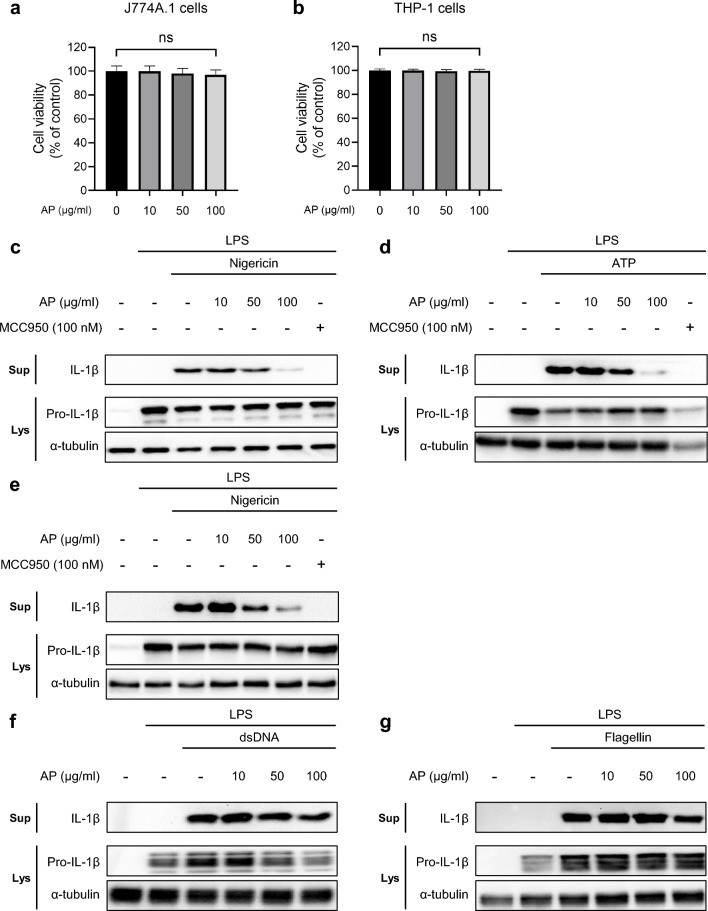
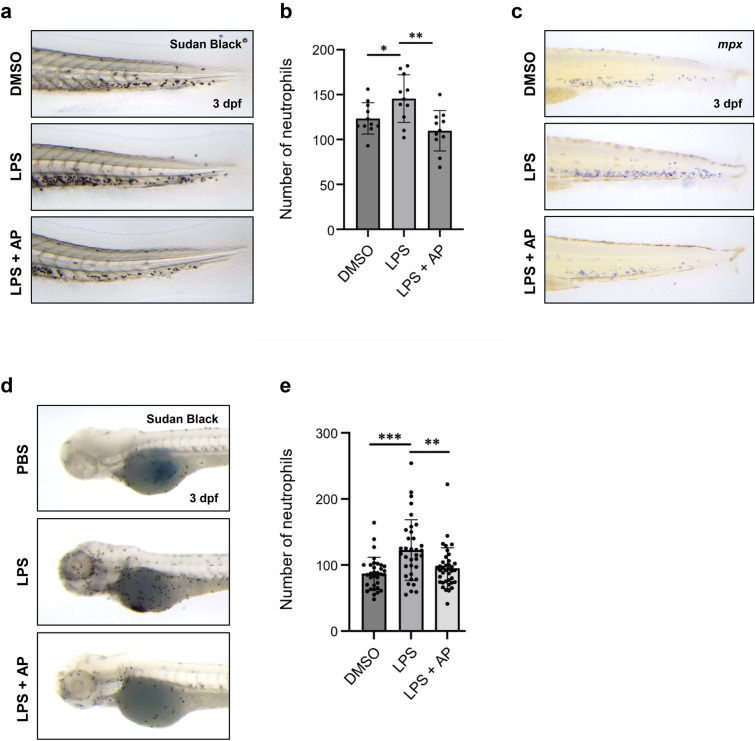
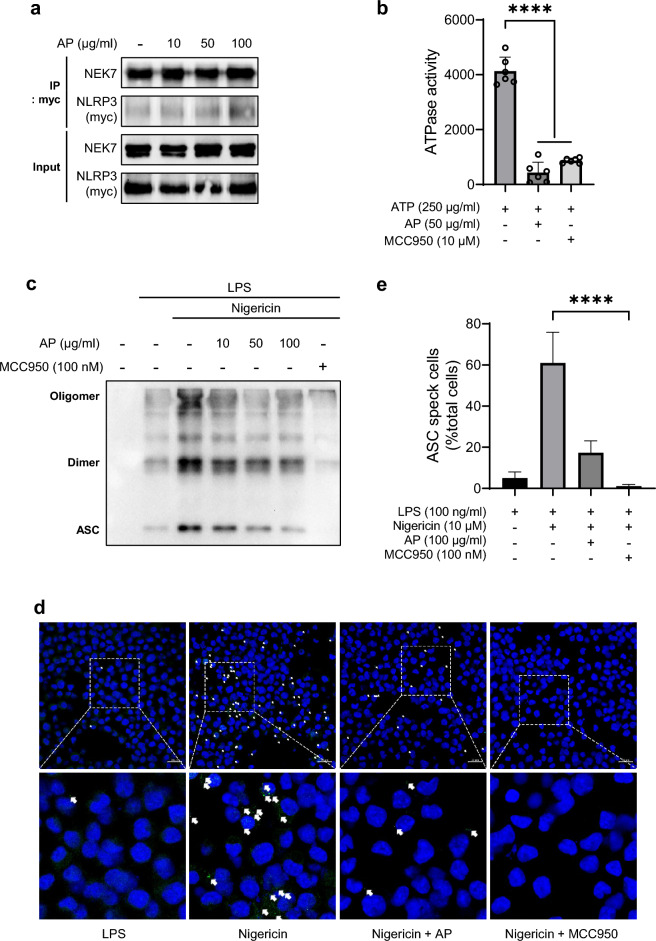
Inflammation is implicated as a cause in many diseases. Most of the anti-inflammatory agents in use are synthetic and there is an unmet need for natural substance-derived anti-inflammatory agents with minimal side effects. Aiouea padiformis belongs to the Lauraceae family and is primarily found in tropical regions. While some members of the Aiouea genus are known to possess anti-inflammatory properties, the anti-inflammatory properties of Aiouea padiformis extract (AP) have not been investigated. In this study, we aimed to examine the anti-inflammatory function of AP through the NOD-, LRR- and pyrin domain-containing protein 3 (NLRP3) inflammasome and elucidate the underlying mechanisms. Treatment with AP inhibited the secretion of interleukin-1 beta (IL-1β) mediated by NLRP3 inflammasome in J774A.1 and THP-1 cells without affecting the viability. In addition, AP treatment did not influence NF-κB signaling, potassium efflux, or intracellular reactive oxygen species (ROS) production-all of which are associated with NLRP3 inflammasome activation. However, intriguingly, AP treatment significantly reduced the ATPase activity of NLRP3, leading to the inhibition of ASC oligomerization and speck formation. Consistent with cellular experiments, the anti-inflammatory property of AP in vivo was also evaluated using an LPS-induced inflammation model in zebrafish, demonstrating that AP hinders NLRP3 inflammasome activation.
炎症被认为是许多疾病的病因。目前使用的大多数抗炎药都是合成药物,因此对副作用最小的天然物质衍生的抗炎药存在未满足的需求。掌叶木姜子属于樟科,主要分布在热带地区。虽然已知木姜子属的一些成员具有抗炎特性,但掌叶木姜子提取物(AP)的抗炎特性尚未得到研究。在本研究中,我们旨在通过含核苷酸结合寡聚化结构域样受体蛋白3(NLRP3)炎性小体来研究AP的抗炎功能,并阐明其潜在机制。用AP处理可抑制J774A.1和THP-1细胞中由NLRP3炎性小体介导的白细胞介素-1β(IL-1β)分泌,且不影响细胞活力。此外,AP处理不影响NF-κB信号传导、钾外流或细胞内活性氧(ROS)生成,而这些均与NLRP3炎性小体激活相关。然而,有趣的是,AP处理显著降低了NLRP3的ATP酶活性,导致ASC寡聚化和斑点形成受到抑制。与细胞实验结果一致,还使用斑马鱼的脂多糖诱导炎症模型评估了AP在体内的抗炎特性,结果表明AP可阻碍NLRP3炎性小体激活。