Ervina Ervina, Berget Ingunn, Skeie Siv Borghild, L Almli Valérie
Department of Sensory and Consumer Sciences, Nofima, Norwegian Institute of Food, Fisheries and Aquaculture Research, Ås, 1430, Norway.
Department of Chemistry, Biotechnology and Food Science (KBM), The Norwegian University of Life Science, Ås, 1433, Norway.
Open Res Eur. 2024 Feb 2;1:127. doi: 10.12688/openreseurope.14117.3. eCollection 2021.
Taste sensitivity has been reported to influence children's eating behaviour and contribute to their food preferences and intake. This study aimed to investigate the associations between taste sensitivity, eating behaviour, food frequency and BMI (Body Mass Index) in preadolescents.
Preadolescents' taste sensitivity was measured by detection threshold of sweetness (sucrose), sourness (citric acid), saltiness (sodium chloride), bitterness (caffeine, quinine), and umami (monosodium glutamate). In addition, the Child Eating Behaviour Questionnaire (CEBQ), the Food Propensity Questionnaire (FPQ) measuring food frequency, and the children's body weight and height were completed by the parents. A total of 69 child-parent dyads participated (preadolescents mean age =10.9 years).
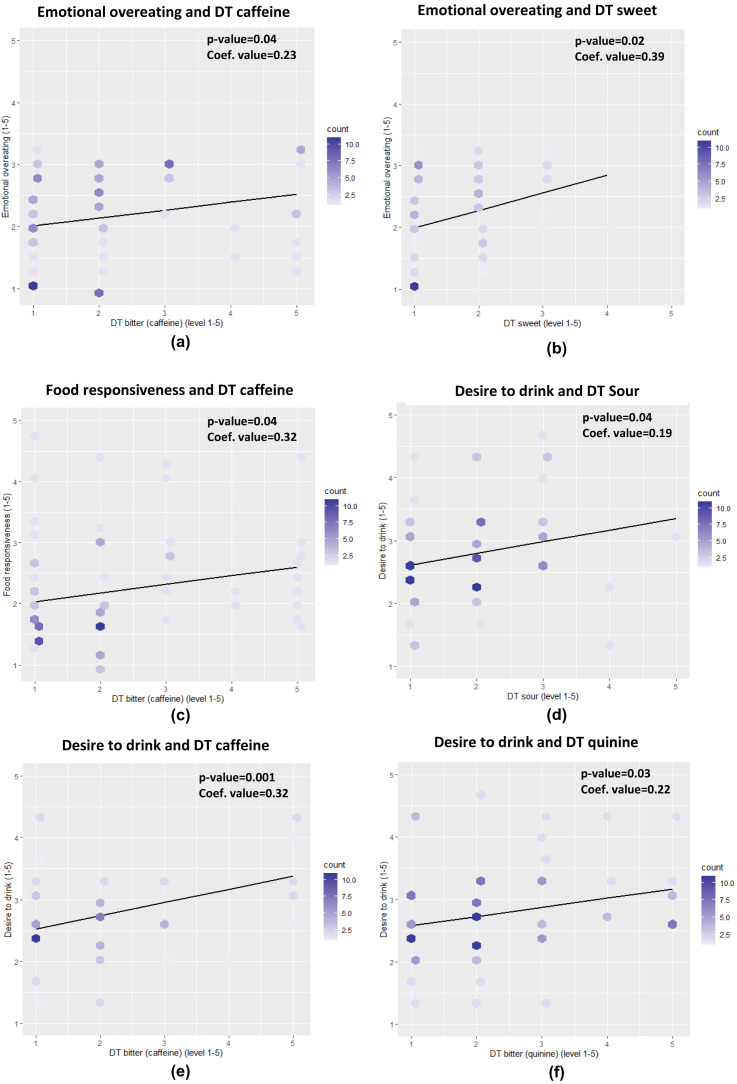
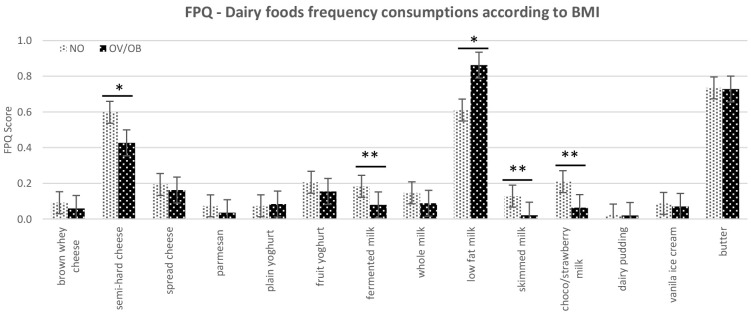
Taste sensitivity to caffeine bitterness was significantly associated with eating behaviour in food responsiveness, emotional overeating, and desire to drink. The preadolescents who were less sensitive to caffeine bitterness had higher food responsiveness scores. Those who were less sensitive to caffeine bitterness and to sweetness had higher emotional overeating scores. In addition, preadolescents who were less sensitive to sourness and bitterness of both caffeine and quinine demonstrated to have higher scores in desire to drink. There was no association between taste sensitivity and FPQ, but significant differences were observed across preadolescents' BMI for FPQ of dairy food items, indicating higher consumption of low-fat milk in the overweight/obese compared to the underweight/normal-weight subjects. There was no significant difference in taste sensitivity according to BMI. Preadolescents' eating behaviour differed across BMI, demonstrating a positive association between BMI and food approach, and a negative association between BMI and food avoidance.
This study contributes to the preliminary understanding of the relationships between taste sensitivity and eating behaviour in preadolescents. The results may be used to develop effective strategies to promote healthy eating practices by considering taste sensitivity in preadolescents.
据报道,味觉敏感度会影响儿童的饮食行为,并影响他们的食物偏好和摄入量。本研究旨在调查青春期前儿童的味觉敏感度、饮食行为、食物频率与体重指数(BMI)之间的关联。
通过测量对甜味(蔗糖)、酸味(柠檬酸)、咸味(氯化钠)、苦味(咖啡因、奎宁)和鲜味(味精)的检测阈值来评估青春期前儿童的味觉敏感度。此外,由家长完成儿童饮食行为问卷(CEBQ)、测量食物频率的食物倾向问卷(FPQ),以及儿童的体重和身高测量。共有69对儿童-家长参与研究(青春期前儿童平均年龄 = 10.9岁)。
对咖啡因苦味的味觉敏感度与食物反应性、情绪性暴饮暴食和饮水欲望等饮食行为显著相关。对咖啡因苦味不太敏感的青春期前儿童食物反应性得分较高。对咖啡因苦味和甜味都不太敏感的儿童情绪性暴饮暴食得分较高。此外,对咖啡因和奎宁的酸味和苦味都不太敏感的青春期前儿童在饮水欲望方面得分较高。味觉敏感度与FPQ之间没有关联,但在青春期前儿童的BMI中,乳制品的FPQ存在显著差异,表明超重/肥胖儿童比体重过轻/正常体重儿童摄入的低脂牛奶更多。根据BMI,味觉敏感度没有显著差异。青春期前儿童的饮食行为因BMI而异,表明BMI与食物趋近之间呈正相关,与食物回避之间呈负相关。
本研究有助于初步了解青春期前儿童味觉敏感度与饮食行为之间的关系。研究结果可用于制定有效的策略,通过考虑青春期前儿童的味觉敏感度来促进健康的饮食习惯。