
颞下颌关节髁突中白细胞介素-1β刺激的大鼠软骨细胞的转录组学分析及富血小板血浆的作用
Transcriptomics analyses of IL-1β-stimulated rat chondrocytes in temporomandibular joint condyles and effect of platelet-rich plasma.
作者信息
Liu Shasha, Wu Chaolun, Zhang Yuxin
机构信息
Department of Rehabilitation Medicine, The Ninth People's Hospital, Shanghai Jiao Tong University School of Medicine, Shanghai, 200011, China.
Department of Rehabilitation Medicine, Sijing Hospital of the Songjiang District of Shanghai, Shanghai, 201600 China.
出版信息
Heliyon. 2024 Feb 20;10(4):e26739. doi: 10.1016/j.heliyon.2024.e26739. eCollection 2024 Feb 29.
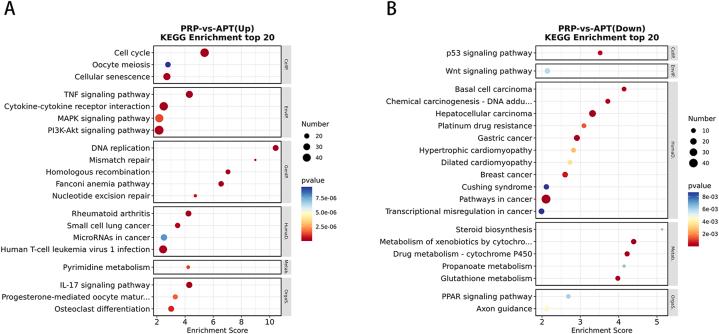
The biological mechanism of action of platelet-rich plasma (PRP) in the treatment of temporomandibular joint (TMJ) osteoarthritis remains unclear. This study explored the mechanisms underlying interleukin (IL)-1β-induced inflammation and investigated the effect of PRP on TMJ condylar chondrocytes. Primary chondrocytes were isolated from the TMJ condyle of 4-week-old rats, and differentially expressed genes among three treatment groups (phosphate-buffered saline [control], IL-1β, and IL-1β + PRP) were identified using RNA-seq and characterized using Gene Ontology and Kyoto Encyclopedia of Genes and Genomes path-enrichment analyses. IL-1β caused inflammatory injury to chondrocytes by upregulating the TNF, NF-κB, and IL-17 signaling pathways and downregulating the MAPK and PI3K/Akt signaling pathways. PRP activated the MAPK and PI3K/Akt signaling pathways, exerting a protective effect on IL-1β-induced chondrocytes. PRP also activated the TNF and IL-17 signaling pathways, producing an inflammatory effect. Additionally, PRP increased the mRNA expression of the matrix catabolism-related genes , , and ; the proliferative markers Mki67 and PCNA; and the anti-apoptotic genes of the Bcl-2 family ( and ), while reducing the expression of the pro-apoptotic genes and . The findings suggest that the protective effect of PRP on IL-1β-induced chondrocyte injury is mainly achieved via MAPK-PI3K/Akt signaling, increasing cell proliferation and inhibiting cell apoptosis.
富血小板血浆(PRP)治疗颞下颌关节(TMJ)骨关节炎的生物学作用机制尚不清楚。本研究探讨了白细胞介素(IL)-1β诱导炎症的潜在机制,并研究了PRP对TMJ髁突软骨细胞的影响。从4周龄大鼠的TMJ髁突分离出原代软骨细胞,使用RNA测序鉴定三个治疗组(磷酸盐缓冲盐水[对照组]、IL-1β和IL-1β + PRP)之间差异表达的基因,并使用基因本体论和京都基因与基因组百科全书通路富集分析对其进行表征。IL-1β通过上调TNF、NF-κB和IL-17信号通路以及下调MAPK和PI3K/Akt信号通路对软骨细胞造成炎症损伤。PRP激活MAPK和PI3K/Akt信号通路,对IL-1β诱导的软骨细胞发挥保护作用。PRP还激活TNF和IL-17信号通路,产生炎症效应。此外,PRP增加了与基质分解代谢相关基因、和的mRNA表达;增殖标志物Mki67和PCNA;以及Bcl-2家族的抗凋亡基因(和),同时降低了促凋亡基因和的表达。研究结果表明,PRP对IL-1β诱导的软骨细胞损伤的保护作用主要通过MAPK-PI3K/Akt信号通路实现,增加细胞增殖并抑制细胞凋亡。



 Zotero 插件