Liu Guihong, Chen Tao, Zhang Xin, Hu Binbin, Shi Huashan
Guihong Liu Department of Biotherapy, State Key Laboratory of Biotherapy, Cancer Center, West China Hospital, Sichuan University, Chengdu, China.
Tao Chen Department of Cardiology, The First Affiliated Hospital of China Medical University, Shenyang, China.
Heliyon. 2024 Feb 9;10(5):e25747. doi: 10.1016/j.heliyon.2024.e25747. eCollection 2024 Mar 15.
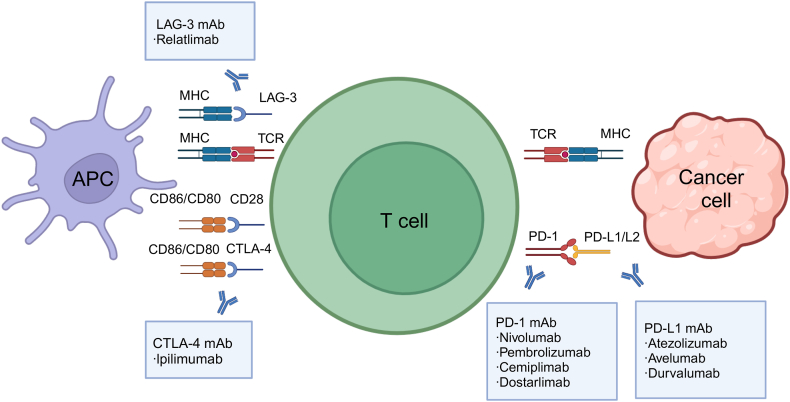
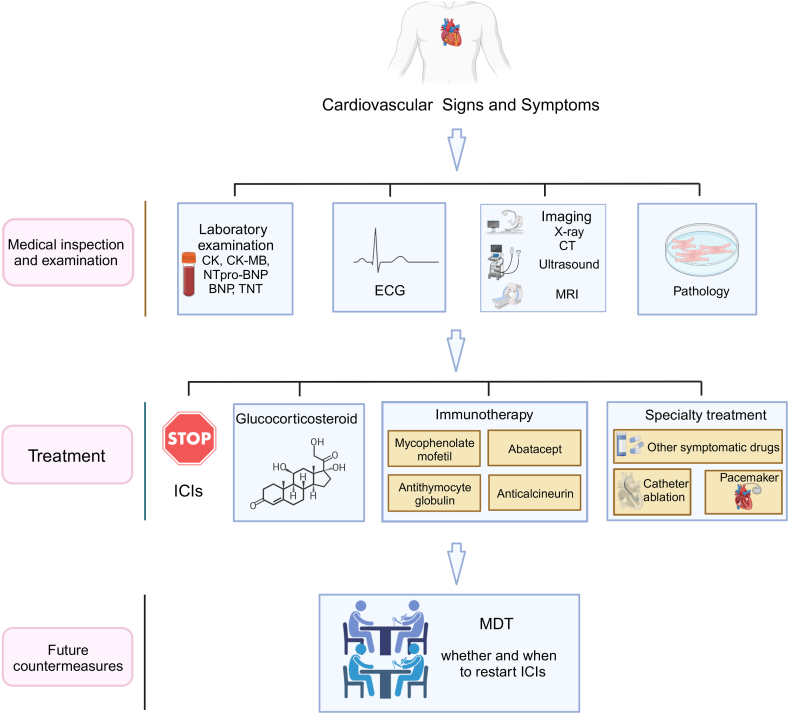
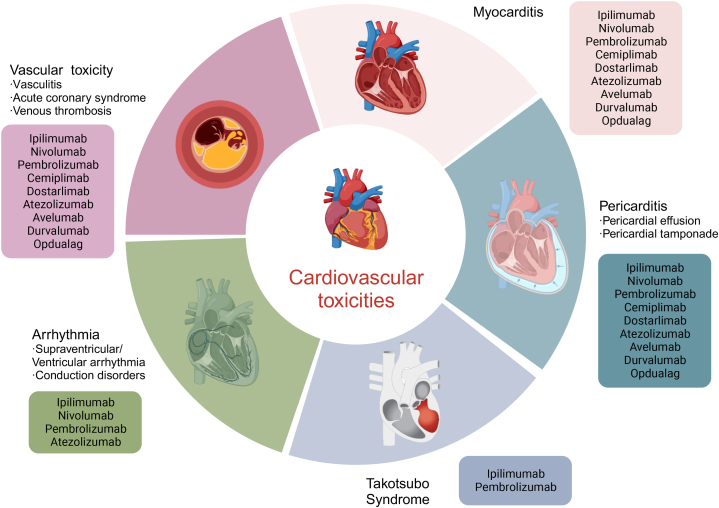
Immune checkpoint inhibitors (ICIs) have revolutionary effects on therapeutic strategies for multiple malignancies. Their efficacy depends on their ability to reactivate the host immune system to fight cancer cells. However, adverse reactions to ICIs are common and involve several organs, limiting their use in clinical practice. Although the incidence of cardiovascular toxicity is relatively low, it is associated with serious consequences and high mortality rates. The primary cardiovascular toxicities include myocarditis, pericarditis, Takotsubo syndrome, arrhythmia, vasculitis, acute coronary syndrome, and venous thromboembolism. Currently, the mechanism underlying ICI-associated cardiovascular toxicity remains unclear and underexplored. The diagnosis and monitoring of ICI-associated cardiovascular toxicities mainly include the following indicators: symptoms, signs, laboratory examination, electrocardiography, imaging, and pathology. Treatments are based on the grade of cardiovascular toxicity and mainly include drug withdrawal, corticosteroid therapy, immunosuppressants, and conventional cardiac treatment. This review focuses on the incidence, underlying mechanisms, clinical manifestations, diagnoses, and treatment strategies.
免疫检查点抑制剂(ICIs)对多种恶性肿瘤的治疗策略具有革命性影响。它们的疗效取决于重新激活宿主免疫系统对抗癌细胞的能力。然而,ICIs的不良反应很常见,涉及多个器官,限制了它们在临床实践中的应用。尽管心血管毒性的发生率相对较低,但它会带来严重后果和高死亡率。主要的心血管毒性包括心肌炎、心包炎、Takotsubo综合征、心律失常、血管炎、急性冠状动脉综合征和静脉血栓栓塞。目前,ICI相关心血管毒性的潜在机制仍不清楚且未得到充分研究。ICI相关心血管毒性的诊断和监测主要包括以下指标:症状、体征、实验室检查、心电图、影像学和病理学。治疗基于心血管毒性的分级,主要包括停药、皮质类固醇治疗、免疫抑制剂和传统心脏治疗。本综述重点关注其发生率、潜在机制、临床表现、诊断和治疗策略。