Feng Cuijie, Bonetti Lorenzo, Lu Hui, Zhou Zhongbo, Lotti Tommaso, Jia Mingsheng, Rizzardi Giacomo, De Nardo Luigi, Malpei Francesca
Department of Civil and Environmental Engineering, Politecnico di Milano, Piazza Leonardo da Vinci, 32, 20133, Milan, Italy.
School of Civil Engineering, Sun Yat-sen University, 519082, Zhuhai, China.
Environ Sci Ecotechnol. 2024 Feb 1;21:100397. doi: 10.1016/j.ese.2024.100397. eCollection 2024 Sep.
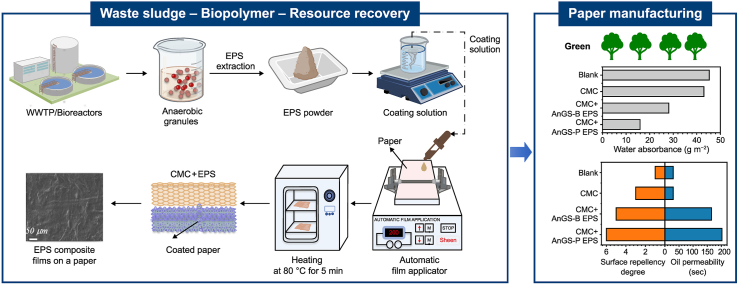
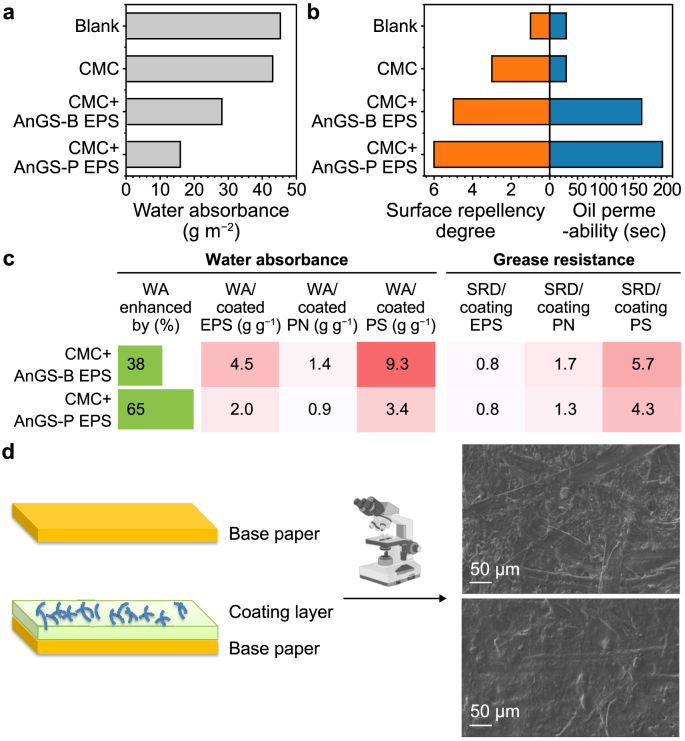
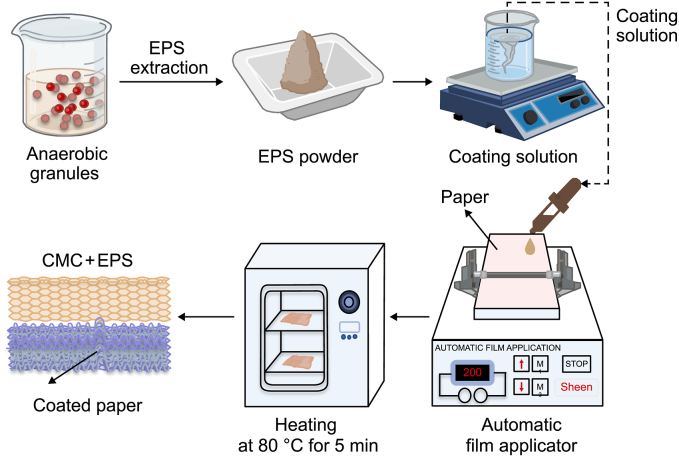
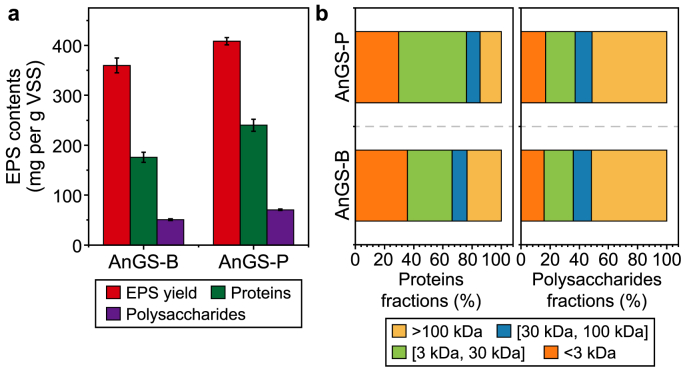
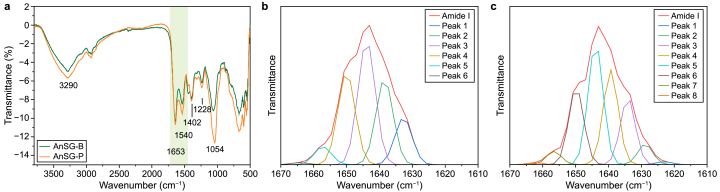
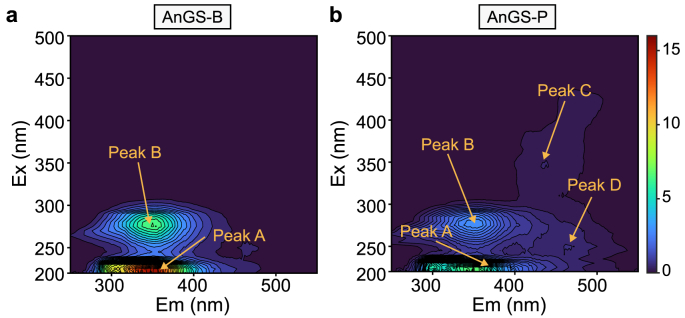
Recovering extracellular polymeric substances (EPS) from waste granular sludge offers a cost-effective and sustainable approach for transforming wastewater resources into industrially valuable products. Yet, the application potential of these EPS in real-world scenarios, particularly in paper manufacturing, remains underexplored. Here we show the feasibility of EPS-based biomaterials, derived from anaerobic granular sludges, as novel coating agents in paper production. We systematically characterised the rheological properties of various EPS-based suspensions. When applied as surface sizing agents, these EPS-based biomaterials formed a distinct, ultra-thin layer on paper, as evidenced by scanning electron microscopy. A comprehensive evaluation of water and oil penetration, along with barrier properties, revealed that EPS-enhanced coatings markedly diminished water absorption while significantly bolstering oil and grease resistance. Optimal performance was observed in EPS variants with elevated protein and hydrophobic contents, correlating with their superior rheological characteristics. The enhanced water-barrier and grease resistance of EPS-coated paper can be attributed to its non-porous, fine surface structure and the functional groups in EPS, particularly the high protein content and hydrophobic humic-like substances. This research marks the first demonstration of utilizing EPS from anaerobic granular sludge as paper-coating biomaterials, bridging a critical knowledge gap in the sustainable use of biopolymers in industrial applications.
从废弃颗粒污泥中回收细胞外聚合物(EPS)为将废水资源转化为具有工业价值的产品提供了一种经济高效且可持续的方法。然而,这些EPS在实际场景中的应用潜力,尤其是在造纸业中的应用潜力,仍未得到充分探索。在此,我们展示了源自厌氧颗粒污泥的基于EPS的生物材料作为造纸生产中新型涂布剂的可行性。我们系统地表征了各种基于EPS的悬浮液的流变特性。当用作表面施胶剂时,这些基于EPS的生物材料在纸张上形成了一层独特的超薄层,扫描电子显微镜证实了这一点。对水和油渗透以及阻隔性能的综合评估表明,EPS增强涂层显著减少了吸水性,同时显著增强了耐油脂性。在蛋白质和疏水性含量较高的EPS变体中观察到了最佳性能,这与其优异的流变特性相关。EPS涂层纸增强的防水和耐油脂性可归因于其无孔、精细的表面结构以及EPS中的官能团,特别是高蛋白质含量和类似腐殖质的疏水性物质。这项研究首次证明了利用厌氧颗粒污泥中的EPS作为纸张涂布生物材料,填补了生物聚合物在工业应用中可持续利用方面的关键知识空白。