Kazez Muhammed, Agar Anil, Key Sefa, Ayas Orhan, Gürbüz Mustafa Ümit
Department of Orthopedics and Traumatology, Elazıg Fethi Sekin City Hospital, Elazığ, TUR.
Department of Orthopedics and Traumatology, Firat University Hospital, Firat University, Elazığ, TUR.
Cureus. 2024 Feb 1;16(2):e53404. doi: 10.7759/cureus.53404. eCollection 2024 Feb.
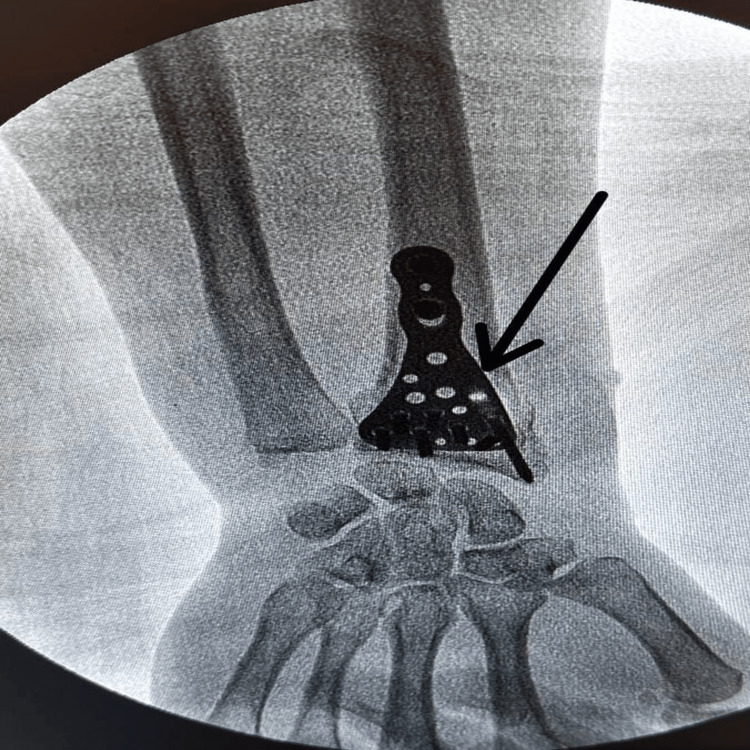
Purpose This study aimed to compare the clinical outcomes of patients who underwent volar plate osteosynthesis for high-energy distal radius fracture (DRFx) and carpal tunnel release (CTR) for acute or subacute carpal tunnel syndrome (CTS) with patients who did not undergo CTR. Methods This study is a retrospective evaluation of all high-energy DRFx treated with volar plate osteosynthesis in a regional hospital between January 2021 and January 2023. All adult patients (≥18 years) who underwent open reduction and internal fixation were included in the study after obtaining approval from the internal review board of our institution. Only patients who underwent plate osteosynthesis of the volar aspect through a modified Henry incision and patients who underwent CTR through a classic separate incision were included in the study. Clinical results include hand dynamometry, visual analog scale (VAS) scores, and physical examination findings of patients who underwent volar plate osteosynthesis because of high-energy DRFx and CTR due to CTS in the acute and subacute periods were retrospectively examined. Results Among the patients who underwent volar plate osteosynthesis because of high-energy DRFx, no statistically significant difference was detected between the hand grip strength and VAS scores of patients who underwent CTR because of acute CTS and subacute CTS at the sixth postoperative week (p>0.05). Conclusion Prophylactic CTR may be performed in the same session in selected cases, such as DRFx caused by a high-energy injury, to establish a scale for DRFx at a high risk of CTS and avoid delays in treatment. CTR for transient CTS detected in the subacute period during outpatient follow-up does not improve clinical outcomes.
目的 本研究旨在比较因高能桡骨远端骨折(DRFx)接受掌侧钢板接骨术以及因急性或亚急性腕管综合征(CTS)接受腕管松解术(CTR)的患者与未接受CTR的患者的临床结局。方法 本研究是对2021年1月至2023年1月间在某地区医院接受掌侧钢板接骨术治疗的所有高能DRFx进行的回顾性评估。所有接受切开复位内固定的成年患者(≥18岁)在获得本机构内部审查委员会批准后纳入研究。本研究仅纳入通过改良Henry切口进行掌侧钢板接骨术的患者以及通过经典单独切口进行CTR的患者。回顾性检查因高能DRFx接受掌侧钢板接骨术以及因急性和亚急性CTS接受CTR的患者的临床结果,包括手握力测量、视觉模拟量表(VAS)评分和体格检查结果。结果 在因高能DRFx接受掌侧钢板接骨术的患者中,术后第六周因急性CTS和亚急性CTS接受CTR的患者的握力和VAS评分之间未检测到统计学显著差异(p>0.05)。结论 在某些特定情况下,如高能损伤导致的DRFx,可在同一次手术中进行预防性CTR,以确定CTS高风险DRFx的标准并避免治疗延误。门诊随访期间在亚急性期检测到的短暂性CTS进行CTR并不能改善临床结局。