Wu Fan, Chen Caiming, Lin Guo, Wu Chengkun, Xie Jingzhi, Lin Kongwen, Dai Xingchen, Chen Zhengyue, Ye Keng, Yuan Ying, Chen Zhimin, Ma Huabin, Lin Zishan, Xu Yanfang
Department of Nephrology, Blood Purification Research Center, The First Affiliated Hospital, Fujian Medical University, Fuzhou, 350005, China.
Research Center for Metabolic Chronic Kidney Disease, The First Affiliated Hospital, Fujian Medical University, Fuzhou, 350005, China.
Cell Mol Life Sci. 2024 Mar 4;81(1):114. doi: 10.1007/s00018-024-05136-z.
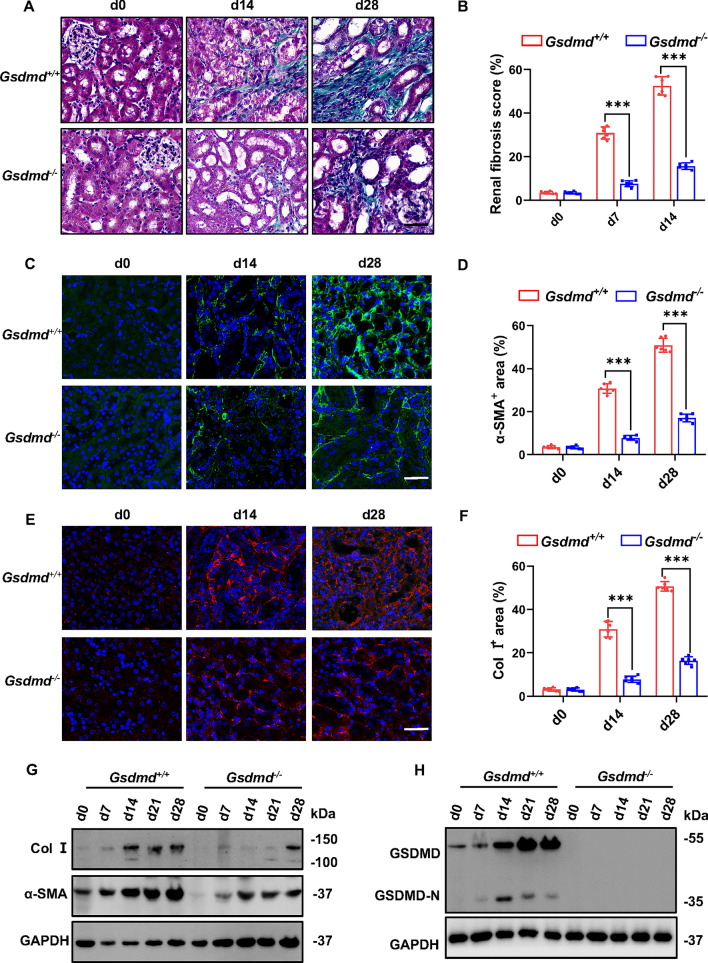
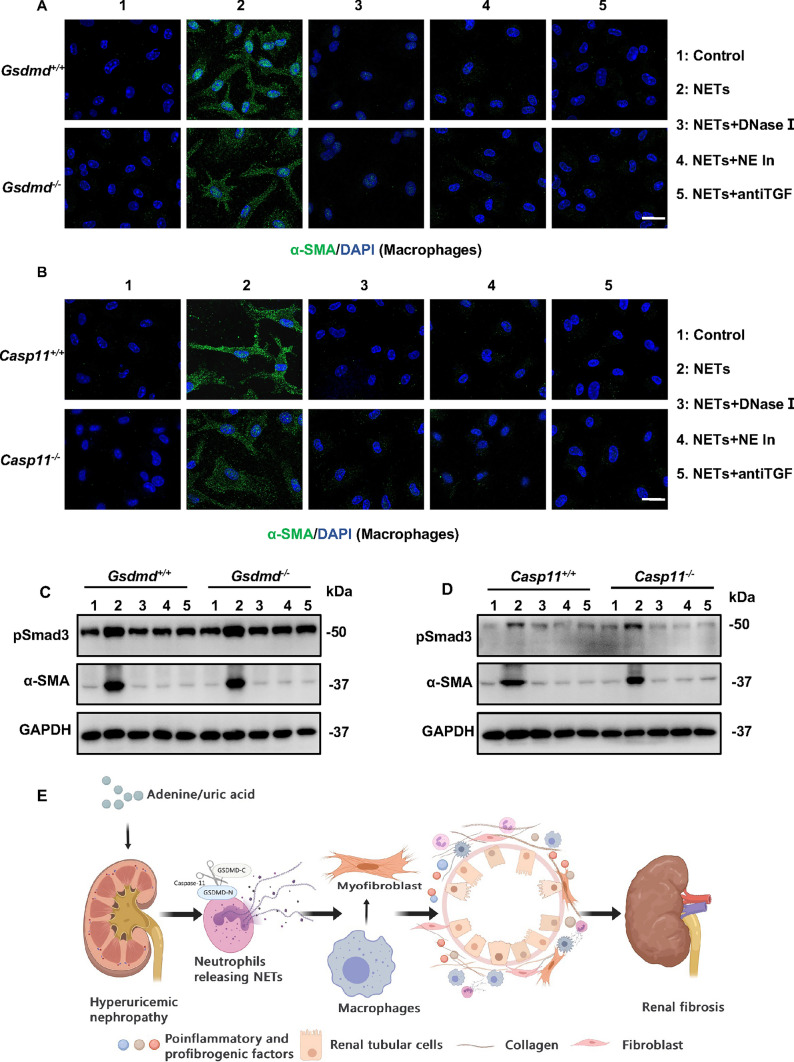
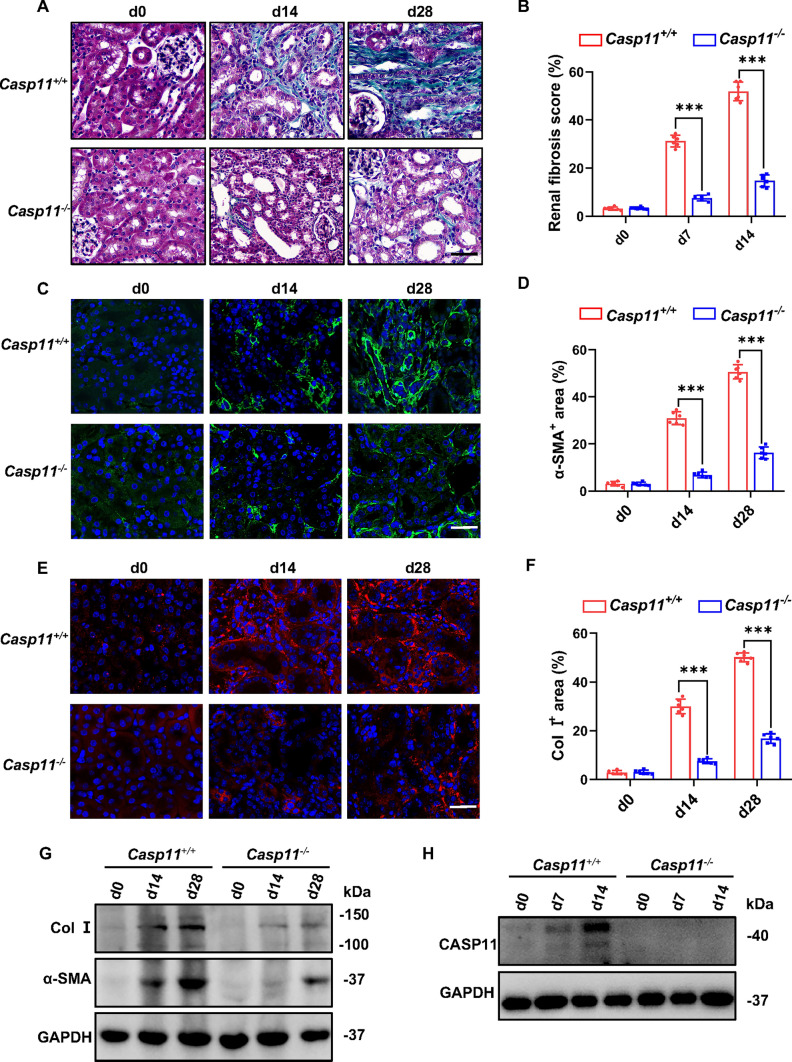
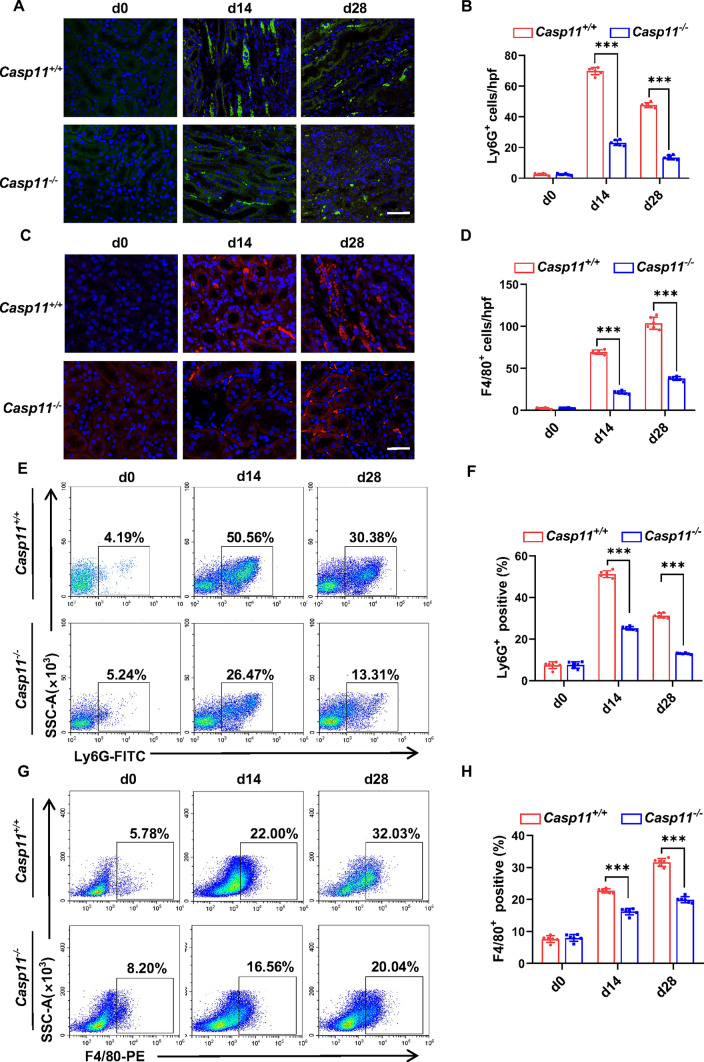
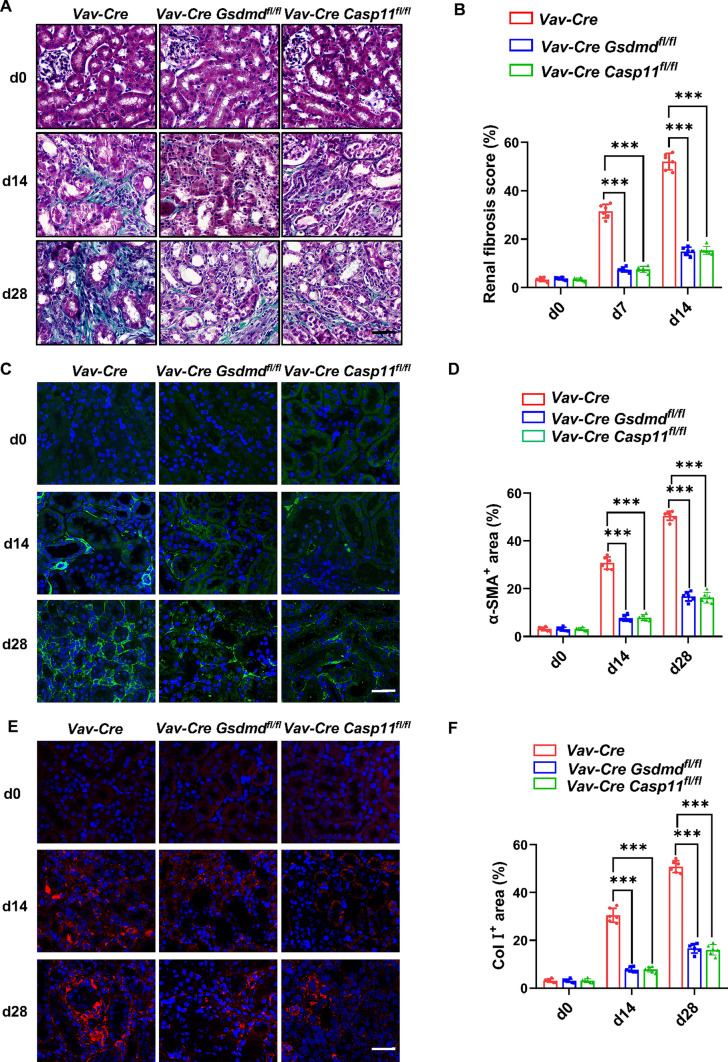
Hyperuricemia is an independent risk factor for chronic kidney disease (CKD) and promotes renal fibrosis, but the underlying mechanism remains largely unknown. Unresolved inflammation is strongly associated with renal fibrosis and is a well-known significant contributor to the progression of CKD, including hyperuricemia nephropathy. In the current study, we elucidated the impact of Caspase-11/Gasdermin D (GSDMD)-dependent neutrophil extracellular traps (NETs) on progressive hyperuricemic nephropathy. We found that the Caspase-11/GSDMD signaling were markedly activated in the kidneys of hyperuricemic nephropathy. Deletion of Gsdmd or Caspase-11 protects against the progression of hyperuricemic nephropathy by reducing kidney inflammation, proinflammatory and profibrogenic factors expression, NETs generation, α-smooth muscle actin expression, and fibrosis. Furthermore, specific deletion of Gsdmd or Caspase-11 in hematopoietic cells showed a protective effect on renal fibrosis in hyperuricemic nephropathy. Additionally, in vitro studies unveiled the capability of uric acid in inducing Caspase-11/GSDMD-dependent NETs formation, consequently enhancing α-smooth muscle actin production in macrophages. In summary, this study demonstrated the contributory role of Caspase-11/GSDMD in the progression of hyperuricemic nephropathy by promoting NETs formation, which may shed new light on the therapeutic approach to treating and reversing hyperuricemic nephropathy.
高尿酸血症是慢性肾脏病(CKD)的独立危险因素,并促进肾纤维化,但其潜在机制仍 largely 未知。未解决的炎症与肾纤维化密切相关,是包括高尿酸血症肾病在内的 CKD 进展的一个众所周知的重要因素。在本研究中,我们阐明了半胱天冬酶 -11/ Gasdermin D(GSDMD)依赖性中性粒细胞胞外陷阱(NETs)对进行性高尿酸血症肾病的影响。我们发现半胱天冬酶 -11/ GSDMD 信号在高尿酸血症肾病的肾脏中明显被激活。敲除 Gsdmd 或半胱天冬酶 -11 通过减少肾脏炎症、促炎和促纤维化因子表达、NETs 生成、α-平滑肌肌动蛋白表达和纤维化来预防高尿酸血症肾病的进展。此外,在造血细胞中特异性敲除 Gsdmd 或半胱天冬酶 -11 对高尿酸血症肾病的肾纤维化具有保护作用。此外,体外研究揭示了尿酸诱导半胱天冬酶 -11/ GSDMD 依赖性 NETs 形成的能力,从而增强巨噬细胞中 α-平滑肌肌动蛋白的产生。总之,本研究证明了半胱天冬酶 -11/ GSDMD 通过促进 NETs 形成在高尿酸血症肾病进展中的作用,这可能为治疗和逆转高尿酸血症肾病的治疗方法提供新的思路。