Southeast Livestock Unit, Brazilian Agricultural Research Corporation (EMBRAPA), São Carlos, SP, Brazil.
School of Agricultural and Veterinary Sciences, São Paulo State University (UNESP), Jaboticabal, SP, Brazil.
Int J Parasitol Drugs Drug Resist. 2024 Apr;24:100527. doi: 10.1016/j.ijpddr.2024.100527. Epub 2024 Feb 28.
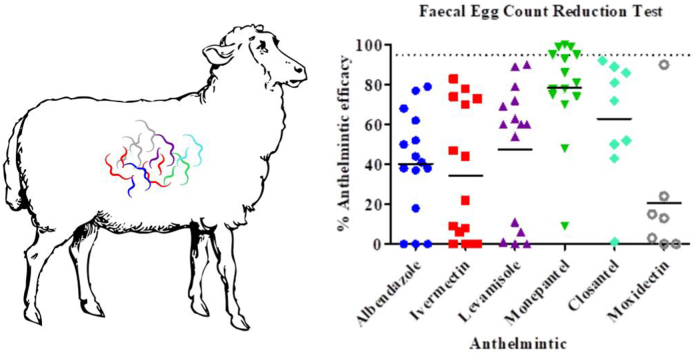
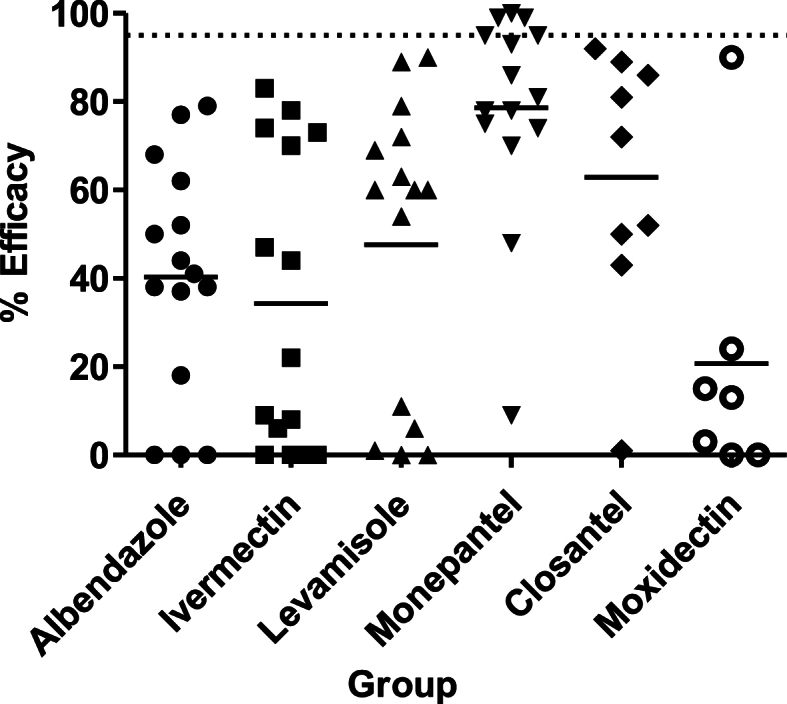
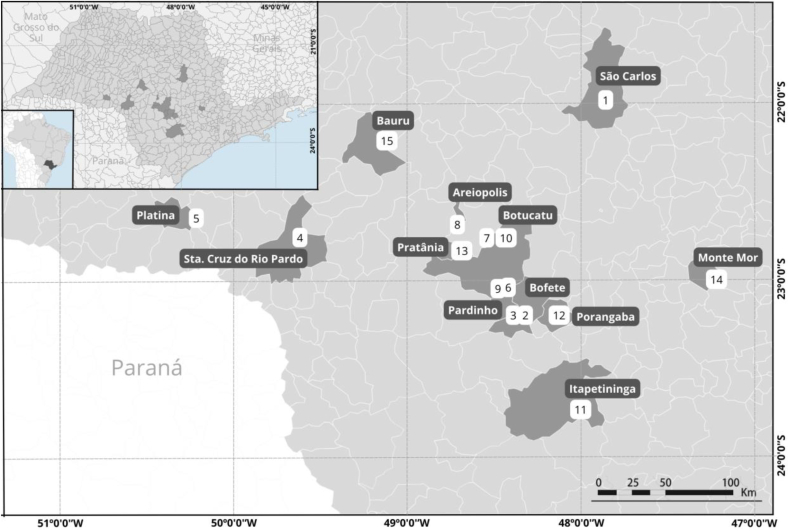
Haemonchus contortus and Trichostrongylus colubriformis are the most important gastrointestinal nematodes causing serious losses in sheep production of tropical and subtropical regions. Prophylaxis of gastrointestinal nematode infections is based on anthelmintics use, but their frequent administration selects multiple-resistant parasites. To evaluate how the situation has changed over the last decades, the anthelmintic resistance status of gastrointestinal nematodes in sheep flocks was assessed in the current study and compared to previous surveys. In each one of the 15 flocks evaluated, animals (n ≥ 7) were allocated into at least five groups and treated as follows: 1) untreated control; 2) albendazole; 3) levamisole; 4) ivermectin; and 5) monepantel. If more animals were available, two additional groups were included: 6) closantel, and 7) moxidectin. The faecal egg count reduction test (FECRT) was carried out to evaluate the pre- and post-treatment using the SHINY tool. Haemonchus spp. was the most prevalent nematode from faecal cultures. The mean efficacy of albendazole was 40%. Only in two farms, levamisole presented a relatively high percentage of reduction in the FECRT about 90%, while ivermectin and moxidectin presented the worst mean efficacy of 34% and 21% among all farms, respectively. Like other anthelmintics, closantel demonstrated low efficacy (63%) across all farms evaluated. Monepantel presented an overall mean efficacy of 79%, but it was the only anthelmintic that presented efficacy ≥95%, in five farms. The results revealed that gastrointestinal nematodes with multiple anthelmintic resistance were prevalent in all 15 sheep herds. The research suggests that nematodes are becoming more and more resistant to various anthelmintic compounds, which has made the problem worse. This circumstance highlights the necessity to put into practice sustainable and long-lasting methods to prevent gastrointestinal nematode infections in sheep husbandry.
捻转血矛线虫和哥伦比亚食道口线虫是引起热带和亚热带地区绵羊生产严重损失的最重要的胃肠道线虫。胃肠道线虫感染的预防基于驱虫药的使用,但它们的频繁使用会选择出具有多重耐药性的寄生虫。为了评估过去几十年来情况的变化,本研究评估了绵羊群中胃肠道线虫的驱虫药耐药状况,并将其与以前的调查进行了比较。在评估的 15 个羊群中的每一个中,动物(n≥7)被分配到至少五个组中,并按以下方式进行处理:1)未处理的对照组;2)阿苯达唑;3)左旋咪唑;4)伊维菌素;5)莫昔克丁。如果有更多的动物可用,则包括两个额外的组:6)氯硝柳胺和 7)米尔贝肟。使用 SHINY 工具进行粪便卵计数减少试验(FECRT),以评估治疗前后的情况。从粪便培养中,捻转血矛线虫是最普遍的线虫。阿苯达唑的平均疗效为 40%。仅在两个农场中,左旋咪唑在 FECRT 中表现出相对较高的降低百分比,约为 90%,而伊维菌素和米尔贝肟在所有农场中的平均疗效最差,分别为 34%和 21%。与其他驱虫药一样,氯硝柳胺在所有评估的农场中表现出低疗效(63%)。莫昔克丁的总体平均疗效为 79%,但它是唯一在五个农场中表现出疗效≥95%的驱虫药。研究结果表明,具有多种驱虫药耐药性的胃肠道线虫在所有 15 个绵羊群中都很普遍。研究表明,线虫对各种驱虫化合物的耐药性越来越强,这使得问题更加严重。这种情况突出表明,有必要实施可持续和持久的方法来预防绵羊养殖业中的胃肠道线虫感染。