Joulaei Hassan, Keshani Parisa, Kashfinejad Seyed Mohammadsadegh, Foroozanfar Zohre, Mohsenpour Mohammad Ali, Fararouei Mohammad
Health Policy Research Center, Institute of Health Shiraz University of Medical Sciences Shiraz Iran.
Department of Epidemiology Shiraz University of Medical Sciences Shiraz Iran.
Health Sci Rep. 2024 Mar 7;7(3):e1940. doi: 10.1002/hsr2.1940. eCollection 2024 Mar.
In line with the global trend, the number of elderly is rising in Iran. It should be noted that the nutritional and health needs of these people, especially those living in nursing houses, are extremely significant. The present study aimed to identify the nutritional and health status and uncover their relationship with received care services by elderlies residing in nursing homes.
All 373 elderlies living in the nursing homes in Shiraz entered the study, and the requisite data were collected by references to elderlies' files, respective nurses, and elderlies themselves.
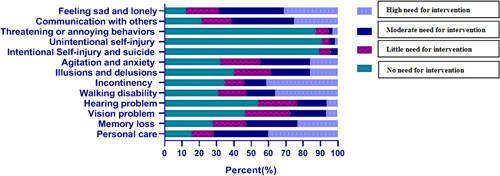
The majority of the elderlies were at risk of malnutrition (62.5% of the total population, 55.4% of females, and approximately 44.6% of males). Elderlies with no insurance coverage mainly fell into the at-risk and malnutrition categories. There was a significant relationship between the needs assessment scores, reflecting the need for physical and psychological actions, and elderlies' malnutrition (odds ratio = 1.87, 95% confidence interval: 1.79-1.95). For each unit increase in the Physical and psychological need score, the odds of exposure to malnutrition (vs. nonmalnourished and at risk of malnutrition) was 1.87 times after adjustment for confounders.
The results of our study revealed that most of the elderlies living in the nursing homes of Shiraz had some levels of malnutrition such as at-risk for malnutrition (62.5%) and malnourished (18.9%). Based on these results, it is suggested that health policy-makers take practical steps toward promoting the nutritional care of old people and direct extra supervision to nursing homes and all healthcare provisions.
顺应全球趋势,伊朗老年人数量正在增加。应当注意的是,这些人群,尤其是住在养老院的老年人的营养和健康需求极为重要。本研究旨在确定养老院中老年人的营养与健康状况,并揭示其与所接受护理服务之间的关系。
设拉子所有373名住在养老院的老年人均纳入本研究,所需数据通过查阅老年人档案、询问各自的护士以及老年人本人来收集。
大多数老年人存在营养不良风险(占总人口的62.5%,女性占55.4%,男性约占44.6%)。没有保险覆盖的老年人主要属于有风险和营养不良类别。反映身体和心理护理需求的需求评估得分与老年人的营养不良之间存在显著关系(优势比=1.87,95%置信区间:1.79 - 1.95)。在对混杂因素进行调整后,身体和心理需求得分每增加一个单位,出现营养不良(相对于非营养不良和有营养不良风险)的几率是1.87倍。
我们的研究结果显示,设拉子养老院中的大多数老年人存在一定程度的营养不良,如营养不良风险(62.5%)和营养不良(18.9%)。基于这些结果,建议卫生政策制定者采取切实措施促进老年人的营养护理,并对养老院和所有医疗保健机构进行额外监督。