Center for Food Safety and Applied Nutrition, U.S. Food and Drug Administration, College Park, MD, United States of America.
Joint Institute of Food Safety and Applied Nutrition, College Park, MD, United States of America.
PLoS One. 2024 Mar 8;19(3):e0299922. doi: 10.1371/journal.pone.0299922. eCollection 2024.
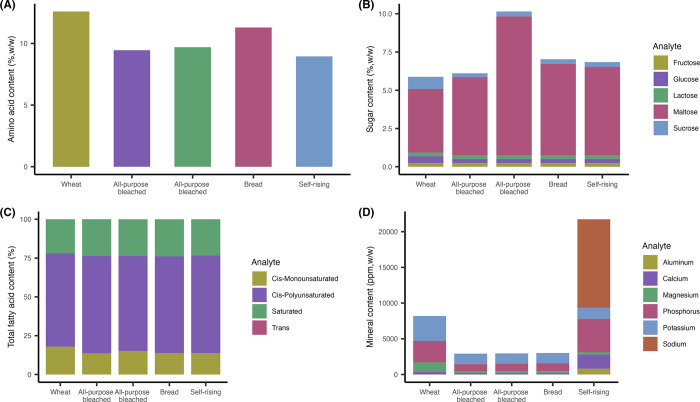
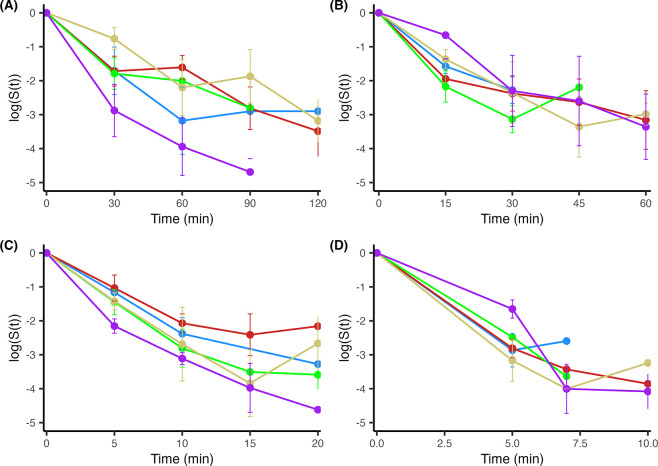
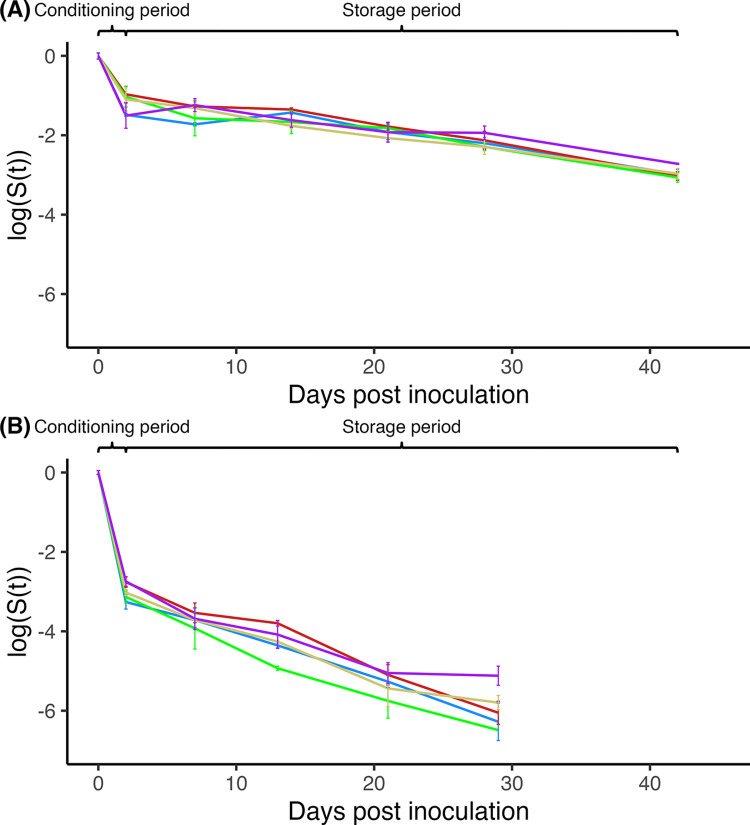
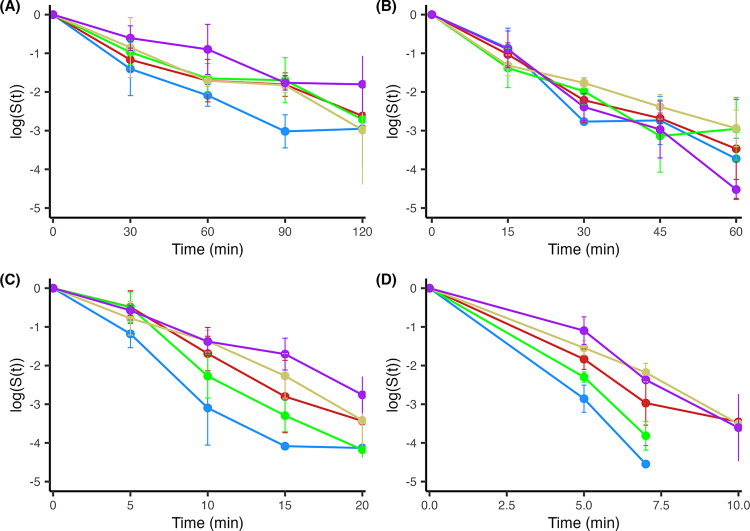
Foodborne outbreaks associated with Shiga toxin-producing Escherichia coli (STEC) contaminated wheat flour have been an increasing food safety concern in recent decades. However, there is little literature aimed at investigating the impact of different flour types on the persistence of STEC during storage and thermal inactivation. Therefore, two serovars of STEC, O121 and O157, were selected to inoculate each of five different types of common wheat flours: whole wheat, bleached, unbleached, bread, and self-rising. Inoculated flours were examined for the stability of STEC during storage for up to 42 days at room temperature (RT) and aw 0.56. Additionally, the thermal resistance of O121 and O157 under isothermal conditions at 60, 70, 80, and 90°C was analyzed for the inoculated flours. STEC storage persistence at RT was generally not affected by flour type, however, decreases of 1.2 and 2.4 log CFU/day within whole wheat flour for O121 and O157, respectively, were significantly lower than other flours. Though few differences were identified in relation to flour type, O121 exhibited significantly better survival rates than O157 during both equilibrium and storage periods. Compared to an approximate 6 log reduction in the population of O157, O121 population levels were reduced by a significantly lower amount (3 log) during the entire storage period at RT. At each isothermal temperature, the impact of flour type on the thermal resistance capabilities of O121 or O157 was not a significant factor and resulted in similar survival curves regardless of serovar. Instead of exhibiting linear survival curves, both O121 and O157 displayed nonlinear curves with some shoulder/tail effect. Similar for both O121 and O157, the predicted decimal reduction time (D-value) decreased from approximately 25 min to around 8 min as the isothermal temperature increased from 60°C to 90°C. Results reported here can contribute to risk assessment models concerning contamination of STEC in wheat flour and add to our understanding of the impacts of flour type and STEC serovar on desiccation stability during storage and isothermal inactivation during thermal treatment.
食源性大肠杆菌(STEC)污染的小麦粉引起的爆发近年来一直是食品安全的一个日益严重的问题。然而,关于不同类型的面粉对 STEC 在储存和热失活过程中持久性的影响,文献却很少。因此,选择了两种 STEC 血清型 O121 和 O157,分别接种到五种常见的小麦粉中:全麦、漂白、未漂白、面包和自发。接种的面粉在室温(RT)和 aw0.56 下储存长达 42 天,以检查 STEC 的稳定性。此外,还分析了 O121 和 O157 在 60、70、80 和 90°C 恒温条件下的耐热性。在 RT 下,STEC 的储存持久性通常不受面粉类型的影响,然而,O121 和 O157 在全麦面粉中的下降速度分别为每天 1.2 和 2.4 log CFU,明显低于其他面粉。尽管在面粉类型方面差异不大,但 O121 的存活率明显优于 O157,无论是在平衡期还是储存期。与 O157 种群数量约减少 6 个对数级相比,在整个 RT 储存期内,O121 的种群数量减少了明显较低的数量(3 个对数级)。在每个等温温度下,面粉类型对 O121 或 O157 的耐热性的影响不是一个重要因素,无论血清型如何,都导致了相似的存活曲线。与线性存活曲线相反,O121 和 O157 都显示出具有一些肩部/尾部效应的非线性曲线。对于 O121 和 O157 来说,相同的是,预测的十进制减少时间(D 值)从大约 25 分钟降低到大约 8 分钟,当等温温度从 60°C 升高到 90°C 时。这里报告的结果可以为 STEC 在小麦粉中的污染风险评估模型做出贡献,并增加我们对面粉类型和 STEC 血清型对储存过程中干燥稳定性和热处理过程中等温失活的影响的理解。