Institute of Science and Technology for Brain-Inspired Intelligence, Fudan University, Shanghai, 200433, China.
Shanghai Center for Mathematical Sciences, Fudan University, Shanghai, 200433, China.
NPJ Syst Biol Appl. 2024 Mar 8;10(1):27. doi: 10.1038/s41540-024-00354-4.
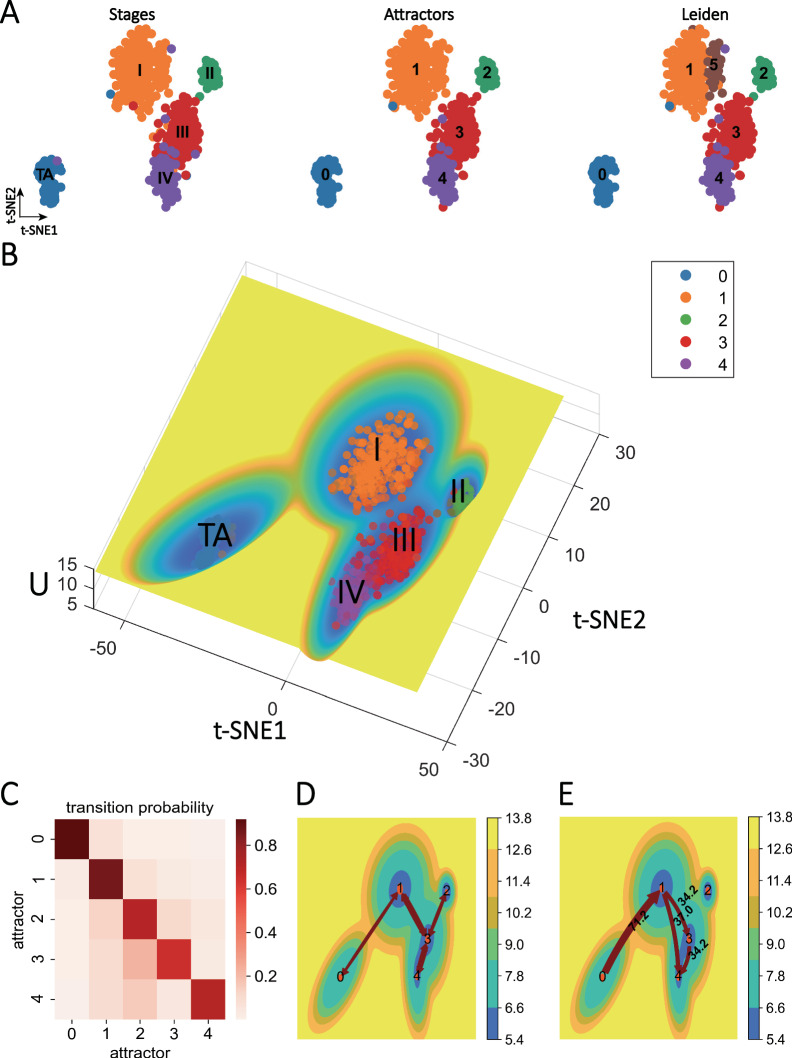
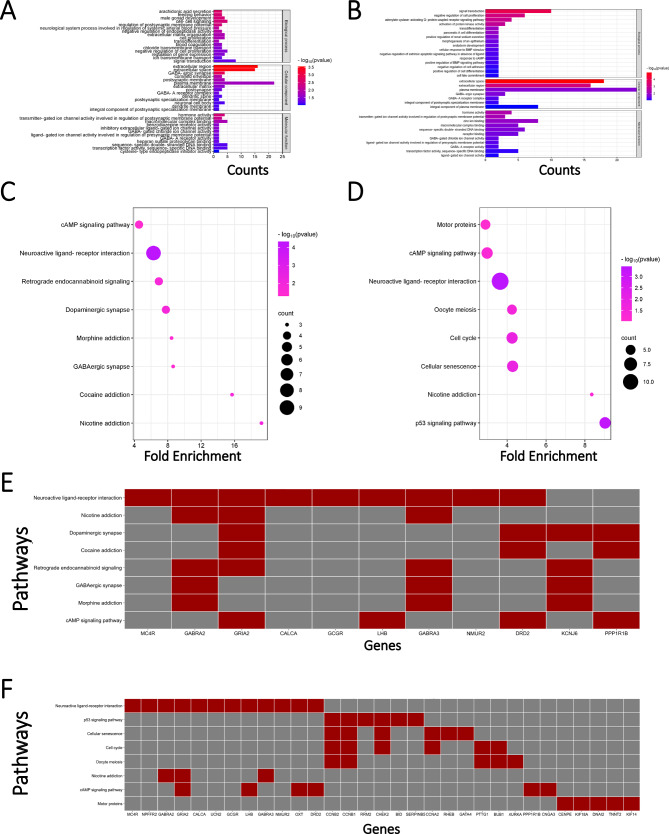
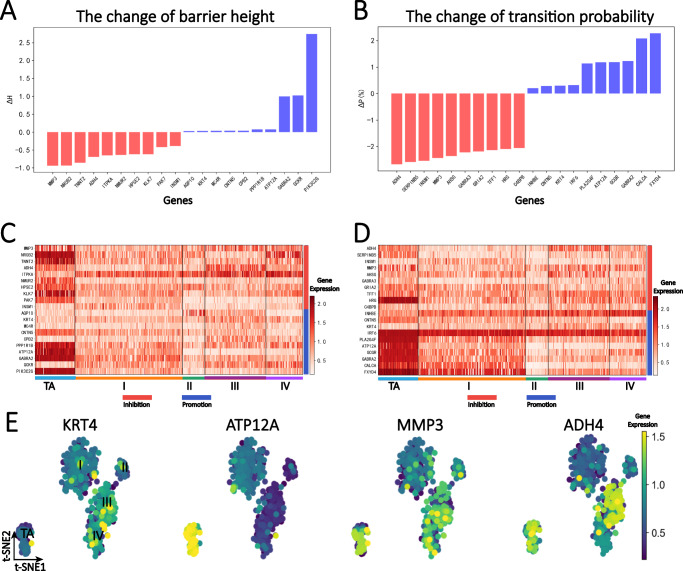
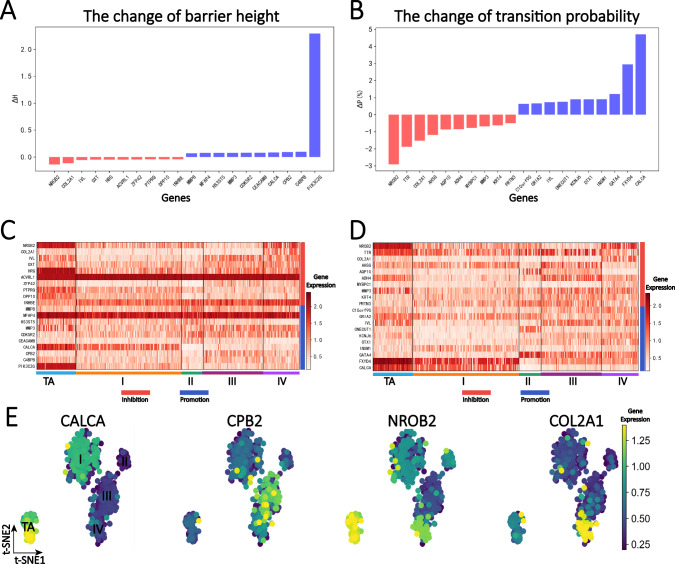
The evolution of cancer is a complex process characterized by stable states and transitions among them. Studying the dynamic evolution of cancer and revealing the mechanisms of cancer progression based on experimental data is an important topic. In this study, we aim to employ a data-driven energy landscape approach to analyze the dynamic evolution of cancer. We take Kidney renal clear cell carcinoma (KIRC) as an example. From the energy landscape, we introduce two quantitative indicators (transition probability and barrier height) to study critical shifts in KIRC cancer evolution, including cancer onset and progression, and identify critical genes involved in these transitions. Our results successfully identify crucial genes that either promote or inhibit these transition processes in KIRC. We also conduct a comprehensive biological function analysis on these genes, validating the accuracy and reliability of our predictions. This work has implications for discovering new biomarkers, drug targets, and cancer treatment strategies in KIRC.
癌症的进化是一个复杂的过程,其特征是稳定状态和它们之间的转变。研究癌症的动态进化并基于实验数据揭示癌症进展的机制是一个重要的课题。在这项研究中,我们旨在采用数据驱动的能量景观方法来分析癌症的动态进化。我们以肾透明细胞癌(KIRC)为例。从能量景观中,我们引入了两个定量指标(转移概率和势垒高度)来研究 KIRC 癌症进化中的关键转变,包括癌症的发生和进展,并确定参与这些转变的关键基因。我们的结果成功地识别了在 KIRC 中促进或抑制这些转变过程的关键基因。我们还对这些基因进行了全面的生物学功能分析,验证了我们预测的准确性和可靠性。这项工作对于在 KIRC 中发现新的生物标志物、药物靶点和癌症治疗策略具有重要意义。