Gleeson Tara A, Kaiser Christina, Lawrence Catherine B, Brough David, Allan Stuart M, Green Jack P
Division of Neuroscience, School of Biological Sciences, Faculty of Biology, Medicine and Health, University of Manchester, Manchester, UK.
Geoffrey Jefferson Brain Research Centre, The Manchester Academic Health Science Centre, Northern Care Alliance NHS Foundation Trust, University of Manchester, Manchester, UK.
bioRxiv. 2024 Mar 1:2024.02.27.582284. doi: 10.1101/2024.02.27.582284.
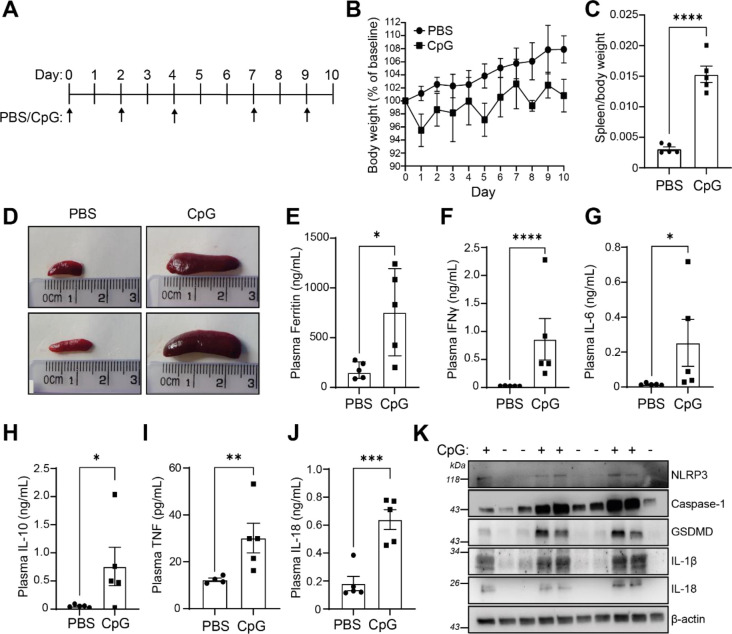
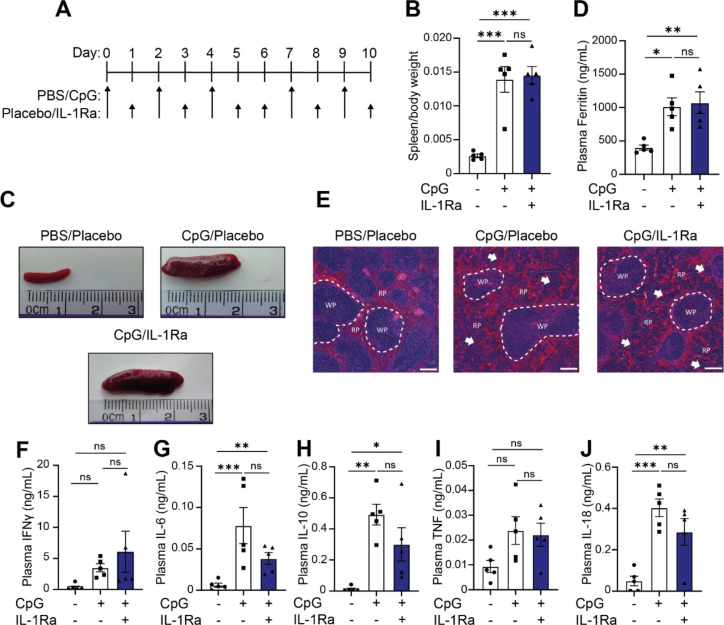
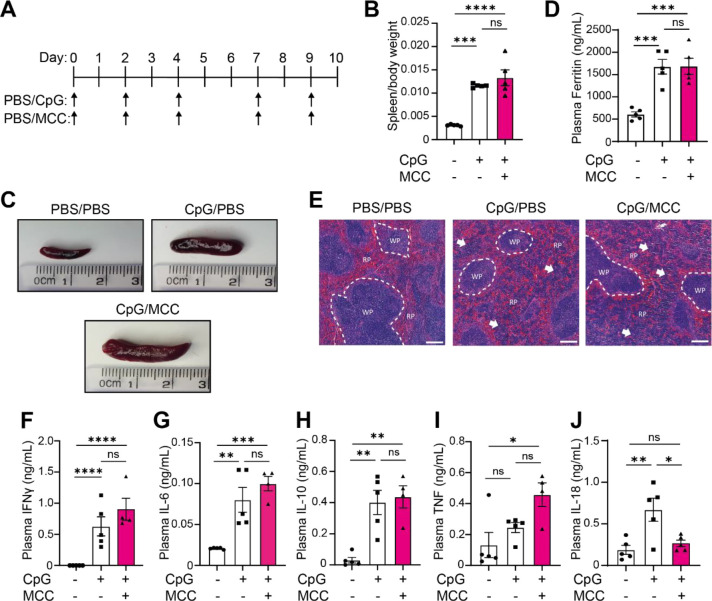
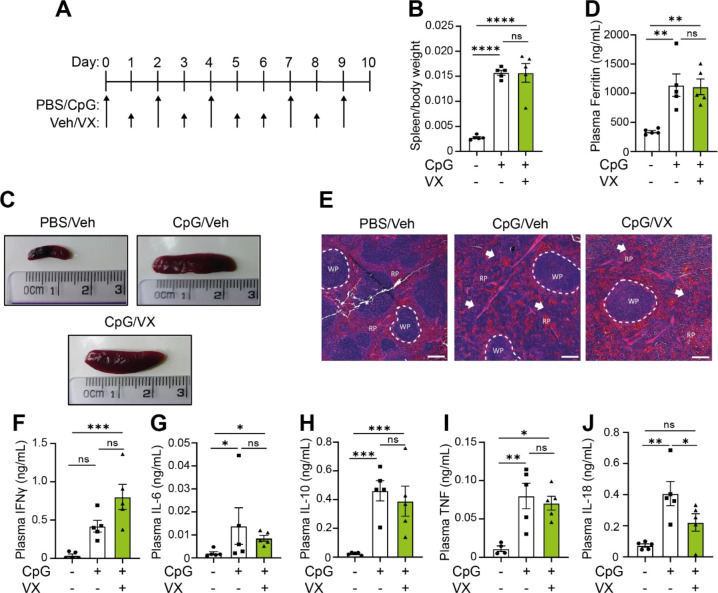
Hyperinflammatory disease is associated with an aberrant immune response resulting in cytokine storm. One such instance of hyperinflammatory disease is known as macrophage activation syndrome (MAS). The pathology of MAS can be characterised by significantly elevated serum levels of interleukin (IL)-18 and interferon (IFN)-γ. Given the role for IL-18 in MAS, we sought to establish the role of inflammasomes in the disease process. Using a murine model of CpG-DNA induced MAS, we discovered that the expression of the NLRP3 inflammasome was increased and correlated with IL-18 production. Inhibition of the NLRP3 inflammasome, or downstream caspase-1, prevented MAS-mediated upregulation of plasma IL-18 but interestingly did not alleviate key features of hyperinflammatory disease including hyperferritinaemia and splenomegaly. Furthermore IL-1 receptor blockade with IL-1Ra did not prevent the development of CpG-induced MAS, despite being clinically effective in the treatment of MAS. These data demonstrate that in the development of MAS, the NLRP3 inflammasome was essential for the elevation in plasma IL-18, a key cytokine in clinical cases of MAS, but was not a driving factor in the pathogenesis of CpG-induced MAS.
高炎症性疾病与异常免疫反应相关,可导致细胞因子风暴。巨噬细胞活化综合征(MAS)就是这样一种高炎症性疾病。MAS的病理特征可表现为血清白细胞介素(IL)-18和干扰素(IFN)-γ水平显著升高。鉴于IL-18在MAS中的作用,我们试图确定炎性小体在疾病过程中的作用。利用CpG-DNA诱导的MAS小鼠模型,我们发现NLRP3炎性小体的表达增加,且与IL-18的产生相关。抑制NLRP3炎性小体或下游的半胱天冬酶-1可阻止MAS介导的血浆IL-18上调,但有趣的是,并未减轻高炎症性疾病的关键特征,包括高铁蛋白血症和脾肿大。此外,尽管IL-1Ra阻断IL-1受体在MAS临床治疗中有效,但并不能阻止CpG诱导的MAS的发展。这些数据表明,在MAS的发展过程中,NLRP3炎性小体对于血浆IL-18(MAS临床病例中的关键细胞因子)的升高至关重要,但不是CpG诱导的MAS发病机制中的驱动因素。